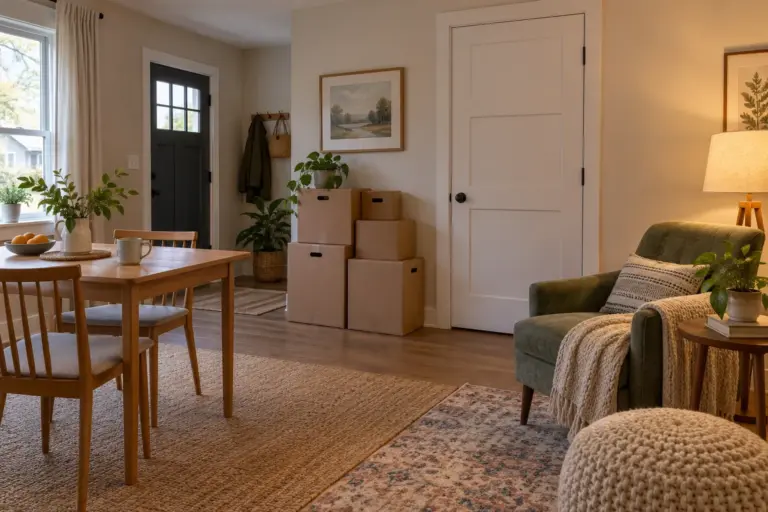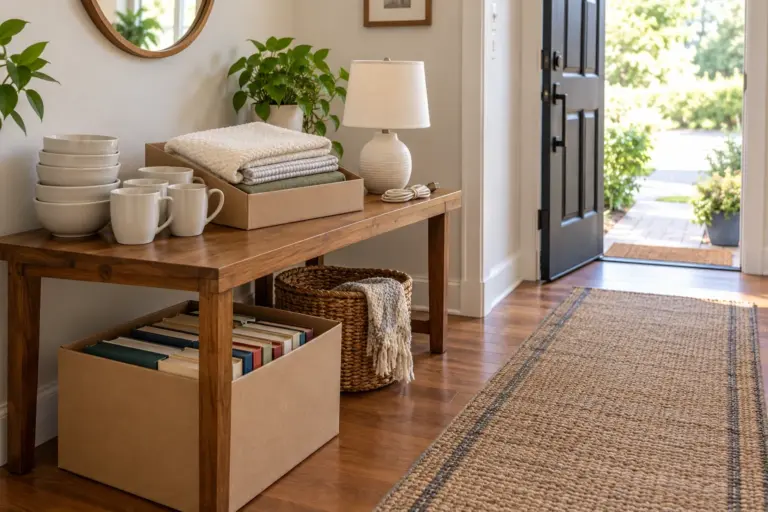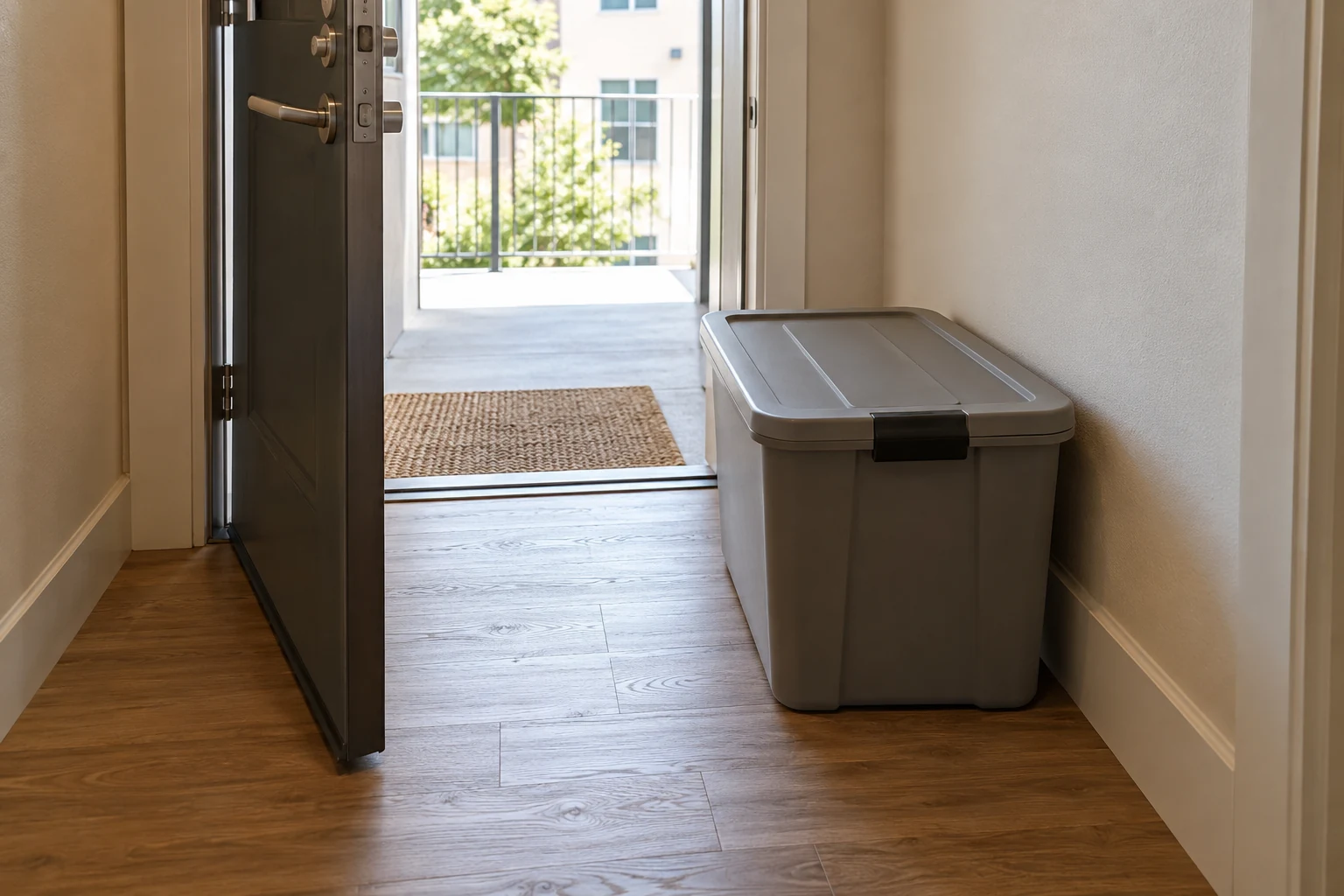
In a Feng Shui reading, clutter can invite reflection on how a space feels. But you do not need a symbolic explanation to decide where to begin. A useful first question is whether accumulated things make something you need to do harder: getting to bed, reaching breakfast, or finding room to work. Mindful Design School also asks how a person feels about their home and themselves, rather than treating visible mess as the whole story. Start with one impeded use and a small change you can check. The aim is not a perfectly tidy home; it is a spot that works better for the people who use it.
Clutter Is About Use, Not Perfect Tidiness
Mindful Design School describes clutter as a problem when it changes how someone goes about their day or how they feel about their home or themselves. It also calls attention to objects that stop someone moving around a space. That makes use a more helpful starting point than counting objects. What are you trying to do here? Can you do it without working around the things in the way? If the space feels difficult to live with, is that how you experience it, or an expectation you feel you should meet?
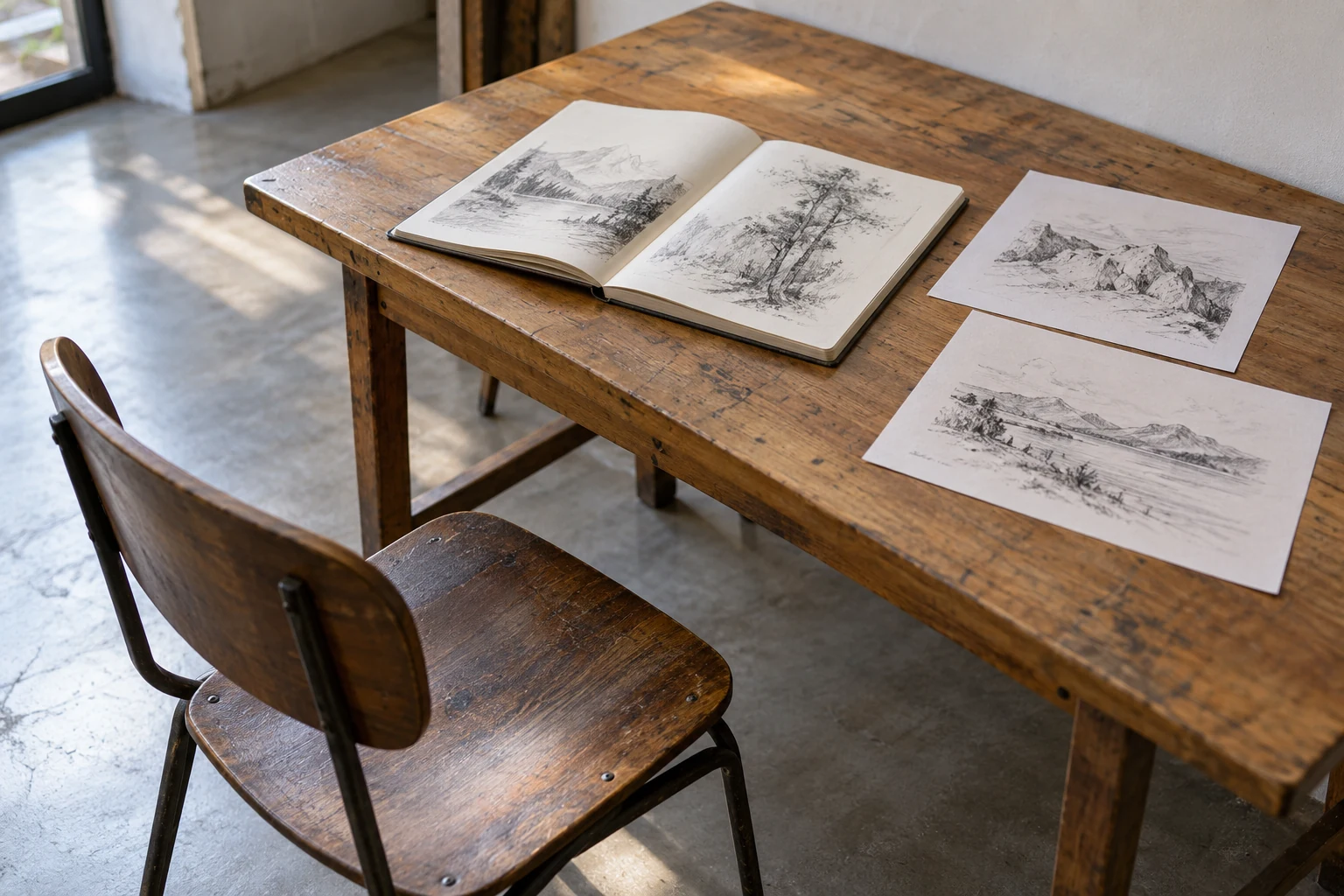
Consider two versions of the same desk. In the first, papers for an active project occupy one defined part of the desktop. The person can find the current page and still has a patch where they can write or use a computer. The papers are visible, but they support the work underway. In the second, those papers spread across the patch needed for that work. Each time the person sits down, they must shift the stack or work elsewhere. The papers have not become different objects; their position now obstructs the desk’s needed use.
The same distinction applies around a bed or entry. A bag set down while someone is getting ready to leave may be part of an activity in progress. If bags and other belongings make the route to the door difficult to walk, that is a specific obstruction. Clothes briefly laid out for use beside a bed are different from belongings that make the path to the bed difficult. Mindful Design School names difficult paths to both the bed and the front door as ordinary household problems worth noticing.
People sharing a home may have different tolerances for visible materials and different needs for a surface. One person’s active project need not be cleared away merely because another prefers a bare desk; equally, a shared route still needs to work for those who walk it. The useful question is not “Who is the tidy person?” but “Which use needs space, and whose things are involved?”
Mindful Design School explicitly allows that some messiness can help ideas develop. It also cautions that pressure to keep a perfectly tidy house can produce unhelpful guilt. Neither a working pile nor a preference for clear surfaces is a character verdict. Nor can an observer determine someone’s feelings from the number of objects in a room. If a resident says a spot feels straining, that report matters; if they are comfortable with materials that remain usable, appearance alone does not settle the question.
What the Feng Shui Lens Adds—and What You Can Observe
Mindful Design School says it looks at clutter and other objects through a Feng Shui lens. That lens offers a way to reflect on a space: a resident might notice that a crowded entry feels unwelcoming to them, or that clearing a desk changes how they experience sitting down to work. Those are interpretations and personal responses. They should not be presented as facts proved by the presence of a pile.
Alongside that reflection are conditions someone can identify more directly. Is the route to the front door difficult to walk? Is the part of the desk needed for today’s task covered? Is the item used every morning behind things that must first be moved? These questions name a place, a needed activity and an obstruction. They also make a modest change possible: move what blocks the activity, then see whether that particular use improves.
This is why ordinary access makes a sensible first response even if Feng Shui is what prompted you to look. You do not have to decide what a stack symbolizes before you can make a route passable. Conversely, a newly clear route tells you something about access; it does not reveal the cause of a person’s difficulties elsewhere in life. A pile cannot establish a resident’s personality, health or finances. Treat any wider meaning as an optional reflection, not a diagnosis drawn from objects.
Mindful Design School recommends beginning with common-sense corrections—such as repairs, removing items and decluttering—before more advanced Feng Shui adjustments. For this purpose, there is no need to map the whole home or assign a hidden significance to every shelf. The practical question is narrower: what can the people who live here now reach, walk through or use?
The Feng Shui Society states that Feng Shui cannot guarantee wealth, health or happiness. That limit does not diminish the smaller, testable possibility at hand. Moving belongings from a needed path may make that path easier to walk. Whether the change also feels meaningful is something a resident can say for themselves.
Choose the First Spot by the Use It Blocks
Begin by looking at places involved in an ordinary day: the entry, the path to the bed, and a desk or dining surface used often. Rather than surveying everything on them, name what each place must allow. The entry must let someone come and go; the bed must be reachable; a work surface must have enough usable space for the work done there. Mindful Design School specifically includes difficult walks to the bed and front door among the problems to notice at home.
If one of those routes is obstructed, choose one blocked route first. A passage you need to walk through is a clearer priority than a shelf that merely looks crowded. If both routes work, choose one frequently used desk patch or shelf where reaching or doing something is difficult. This is a decision about actual use, not a ranking of which room ought to matter most in Feng Shui.
Set the boundary before moving anything. For a bed route, it might be the stretch between the doorway and the side of the bed you use—not the entire bedroom. For a desk, it might be the area required to open a notebook and use the computer—not every drawer and paper stack. Name a finish line as well: “I can walk this stretch without stepping around the bags,” or “I can sit down and work on this patch.” A shelf might be done when you can retrieve the item you came for without shifting a collection of unrelated things.
That boundary protects a small task from expanding into a whole-home inventory. It also helps distinguish what must move from what can remain. Papers needed for a current project might stay in a defined, usable desk area while only the access required for work is cleared. The question is whether the chosen activity can happen, not whether every visible object disappears.
In a shared space, establish ownership before deciding what to remove. Which items are yours to move or discard? Which belong to another resident, and what have they agreed you may do with them? Agreement to make a route usable is not automatically agreement to dispose of someone’s belongings. If an item’s owner or an acceptable place for it is unclear, pause the decision about that item. You may still finish the part of the reset that is yours to do.
Reset One Pantry Shelf, from Blocked Item to Reachable Item
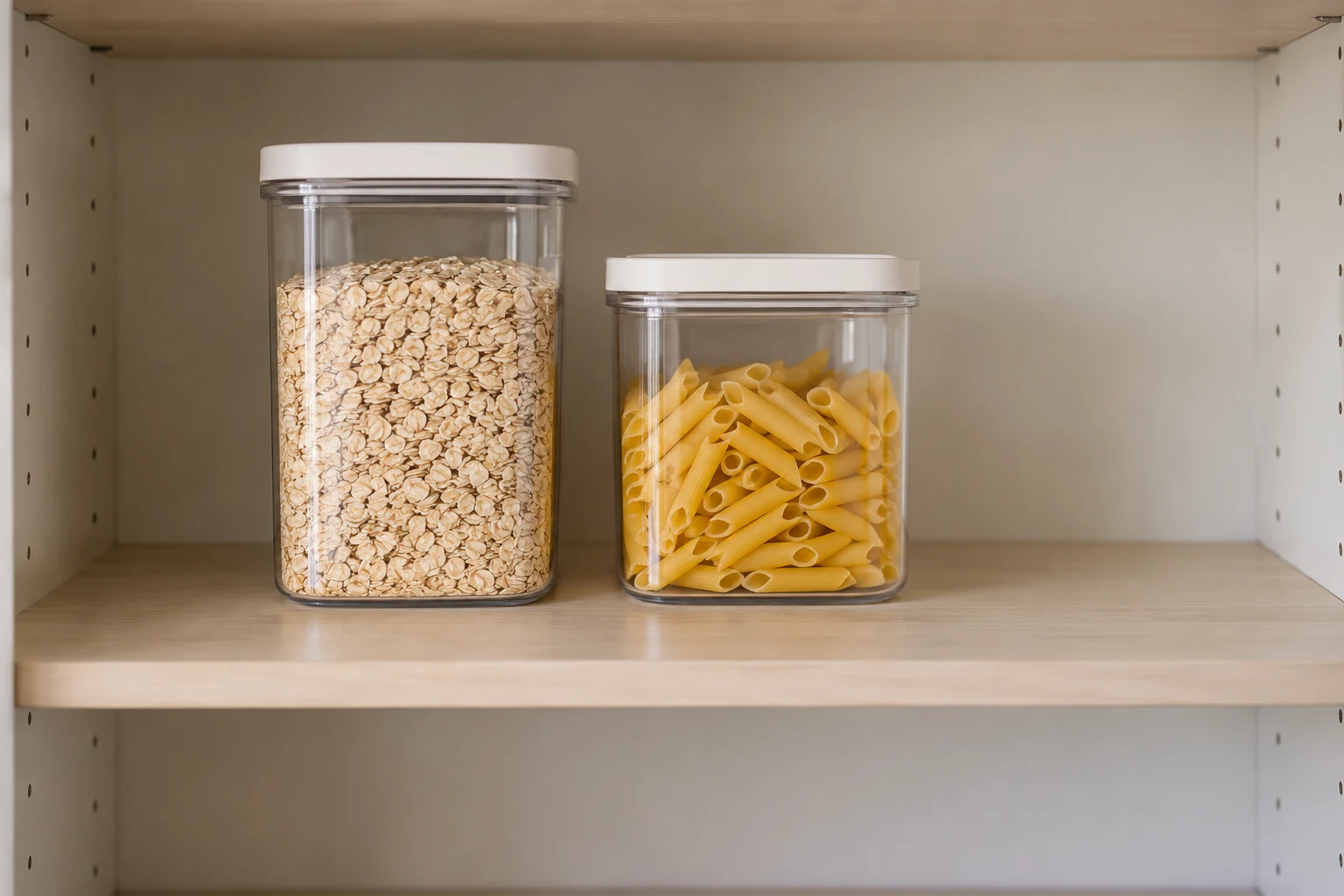
Mindful Design School suggests that someone overwhelmed by a larger fridge or pantry clear-out could start with just one shelf. In its food example, it recommends letting go of expired food or food that will not be eaten, and wiping surfaces after old items are cleared. A single shelf can therefore be an optional exercise in restoring a specific use—not a requirement to empty the entire pantry.
Imagine a breakfast item used most mornings. It is hard to reach because it sits behind a mix of food currently used, food no one has been choosing, and items that are clearly expired. The task is this shelf only. Its finish line is simple: the breakfast item can be retrieved without moving a cluster of other things. Before taking anything out, identify which food is yours to decide about and whether other residents have agreed to changes involving theirs.
Clear enough of the chosen shelf to see and wipe its surface, keeping the removed items together rather than spreading them into another route. Then make three distinct decisions.
First, keep what will be used. Current food need not leave simply because it was in front of the breakfast item. The question is where it can return so that the shelf works for the people who use it. An item chosen often needs a genuinely reachable position, not a new place behind the same barrier.
Second, deal with items you are authorized to decide about. If your own food is clearly expired or is something you know you will not eat, it need not go back onto this shelf. Mindful Design School’s pantry advice supports letting go of expired or uneaten food; it does not require making that decision for somebody else. If an item is still usable but unwanted by you, decide what to do with it within your household’s arrangements rather than silently returning it to the obstructing spot.
Third, hold uncertain items for review. A packet that belongs to another resident, or one whose status you cannot confidently decide, is not yours to discard on the strength of this exercise. Keep such items in a contained, temporary review place that does not block the entry, bed route or another needed use. Ask the owner what they want done. “Awaiting review” is a real decision for now; it is not a reason to make an unauthorized one.
Once the shelf area is clear, wipe it, then return the retained food to places where it can actually be reached. Try retrieving the breakfast item as you normally would. If you can get it without shifting the former barrier, the bounded task is done: some food is kept in workable places, some authorized unwanted food has been dealt with, and uncertain belongings await their owner’s decision elsewhere.
An unresolved item need not hold the whole shelf hostage. If you lack permission to move it, or cannot yet find a return place that works, pause that part and complete only what you are authorized to change. The honest finish line may be partial: you have restored access as far as the agreed decisions allow and identified what still needs a conversation. That is more useful than calling the shelf “finished” because it looks clear while its needed item remains hard to reach.
Judge the Change by What You Can Do
Test the use you named at the start. Walk the chosen route as you normally would. Retrieve the breakfast item. Sit at the desk and begin the work for which you cleared a patch. The result to look for is restored use and findability, not whether the room could pass as permanently tidy. A space can still contain belongings and work well.
If the same spot fills again, that is information about the arrangement. Did the items have a return place people could readily use? Did clearing the desk remove papers still needed for active work? Would the people sharing the space agree to a small recurring reset instead of expecting one large clear-out to last? The adjustment can be as modest as keeping current papers within a defined area while leaving the working patch available, or changing where a frequently used pantry item returns.
A reset may also reveal a constraint you cannot settle alone. If someone else owns the objects or a workable storage place has not been agreed, leave that decision open and preserve the access you can legitimately restore. Progress does not require every uncertain item to be resolved in one session.
Mindful Design School says that doing just one of its suggested cleaning steps can be supportive when that is all someone can manage. Let one completed, useful change count. Choose one spot, name the use it needs to support, and make only the change needed to test whether that use becomes easier.