The Short Answer: Which Approach Explains the Advice?
Look at what the advice depends on. Form School is the more useful label when the explanation begins with the visible arrangement of land, water and the building. Compass School is the more useful label when the explanation depends chiefly on a measured facing direction and its directional correspondences. The distinction is about the reasoning behind the advice, not two different properties.
Consider one hypothetical household property: a house facing south, with rising ground to its north, a stream along its east side and a road to the south. This is an editorial illustration, not a documented assessment.
| Form-led question | Compass-led question |
|---|---|
| How do the rising ground, stream, road and house sit in relation to one another? | What is the house’s measured facing direction, and how does that direction shape the reading? |
If two advisers reach different judgements about this house, ask which of those questions each judgement answers. That makes the difference intelligible without assuming either judgement is superior.
Why the Historical Labels Describe Emphases, Not Fixed Camps
The historical distinction behind Form School and Compass School is a difference in what the labels foreground. A historical synthesis describes the Jiangxi approach in terms of “forms and configurations,” and the Fujian approach in terms of “directions and positions.” Those phrases are useful for identifying the kind of reasoning behind apparently different advice. They are less useful as exhaustive descriptions of everything a practitioner might consider: each names a focus, not a complete account of a particular assessment.
The setting for that distinction was broader than arranging a household room. The historical account places geomancy in structures and spaces for both living and dead people. That matters when reading an older siting example alongside advice for the shared hypothetical property. A discussion of where to place a structure or burial site can illuminate the terms a household reader encounters, but it is not automatically an instruction about where to put furniture. The scale and purpose of the decision have changed, even if the historical vocabulary remains recognizable.
The Fujian-associated account also gives “directions and positions” a wider role than finding a building’s facing direction. It describes compass use in determining a proper site and time for construction and burial. Site and time are distinct questions: one concerns where an undertaking belongs; the other concerns when it should occur. If a reader encounters a directional recommendation about the hypothetical house, this historical context helps explain why direction could matter within that tradition. It does not, by itself, tell the reader which directional calculation produced the recommendation or whether the advice addresses location, timing, or both.
The Jiangxi description, by contrast, gives the reader a historical reason to attend to the arrangement of what is around a site: “forms and configurations” makes the relationship among features central to the label. For the same hypothetical property, that phrasing points toward a different starting question from one framed around directions and positions. This is a comparison of the questions the historical labels emphasize, not a claim that the two traditions addressed wholly separate places or purposes.
The distinction is therefore most helpful when advice sounds contradictory but may be answering different siting questions. “Forms and configurations” identifies one historical emphasis; “directions and positions” identifies another, with the Fujian-associated compass account extending to decisions about site and time for construction or burial. Keeping those purposes visible prevents a household reader from treating the labels as two competing verdicts before establishing what each piece of advice was meant to judge.
How a Form-led Reading Proceeds on the Property
Start outside the hypothetical household property: a building stands below a rise, with lower ground to either side and a stream beyond its front boundary. A Form-led reading begins by looking at the relationship among those features and the building’s position, rather than treating any one feature in isolation. This is an illustration of the method, not a documented assessment of a real home. A historical account of the Jiangxi approach describes landforms enclosing a grave site in relation to water and the site’s position.
The first pass would be visual. From the building and from points around the plot, an observer could ask whether the rise feels like shelter or whether the site instead feels exposed; whether the side ground appears to frame the building; and how the stream relates to the space in front. The historical synthesis describes visual, intuitive appreciation as a possible initial step in the school of forms. That matters because an initial impression is not yet a complete judgement: “there is a hill behind the house” records an observation, while “the hill protects this position” interprets its shape and relationship to the rest of the site.
Traditional vocabulary then gives those relationships meaning. The Jiangxi account interpreted landforms and waterways through metaphors, including the ideal of a “lair” protected on three sides. On the illustrated property, a reader using that vocabulary might see the rear rise and side ground as enclosing the building, with the stream helping define the space ahead. The resulting traditional siting judgement might favor the building’s position if those features seem to form a coherent, sheltered setting. The same reader might judge a position farther out on open ground differently, even though the plot still has a rise and a stream: their arrangement relative to the building has changed.
That conditional “if” is important. A stream on the property does not by itself establish a favorable reading, nor does every slope count as protective enclosure. The interpretive step concerns configuration: where the building sits, what surrounds it, and how the visible features work together. A sketch marking the building, rises, lower ground and water would make that reasoning easier to follow than an unexplained label of “good” or “bad” feng shui.
The historical description concerns grave-site siting; applying its sequence of observation, metaphor and judgement to this household property is an editorial illustration, not evidence that the historical example assessed a house like this one. It shows what a Form-led explanation would need to make clear: which physical features were noticed, how they were read in relation to the building, and why that reading led to a particular traditional siting judgement.
How a Compass-led Reading Proceeds on the Same Property
Take the same hypothetical building, with its surrounding landforms and water. A Compass-led reading first needs a directional input: the building’s facing direction. The Feng Shui Society describes this approach as using numerical calculations based on that direction, which a practitioner may establish with a western compass or a Chinese luopan. The visible site has not changed; the question now is how its measured orientation enters the interpretation.
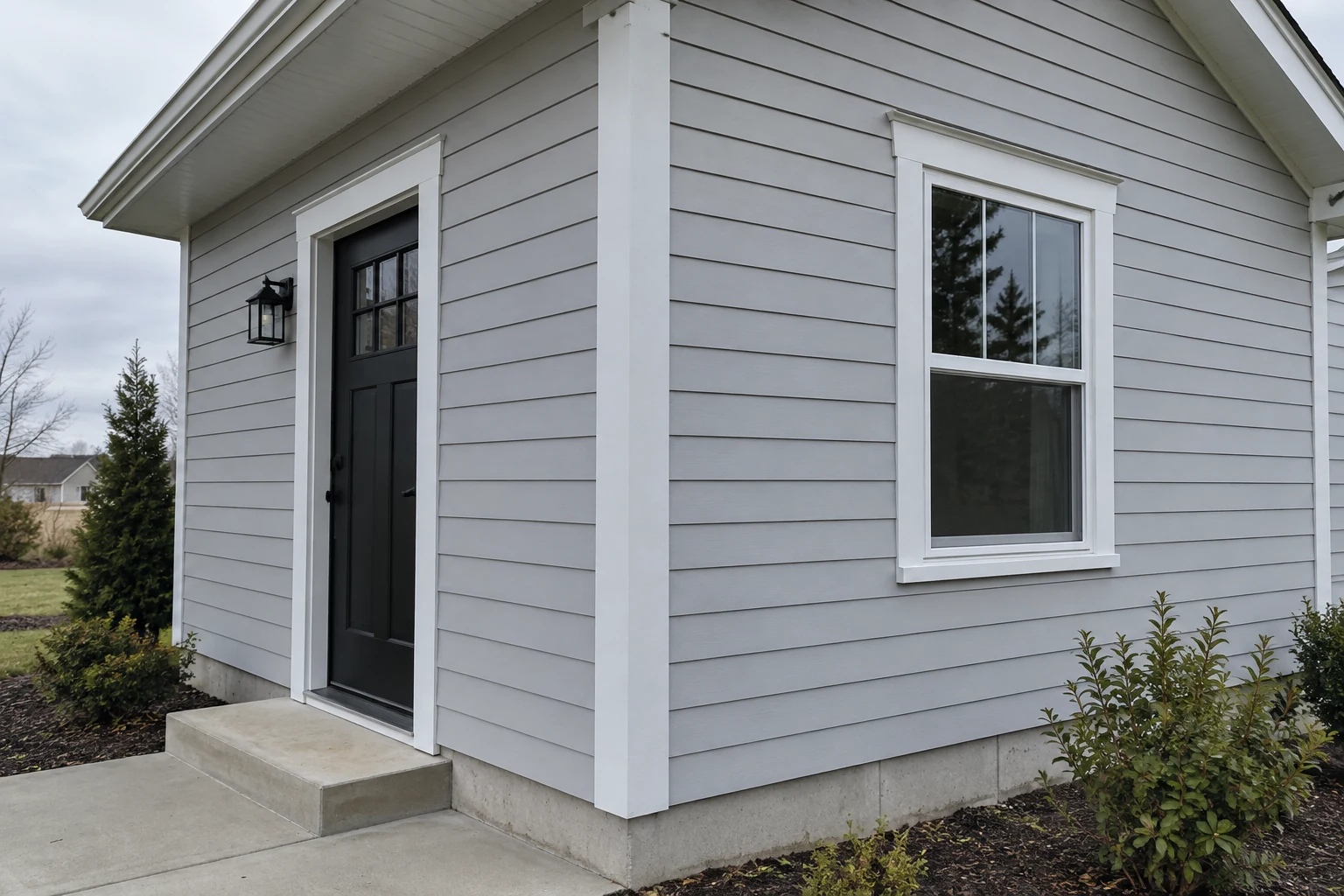
That distinction matters when two pieces of advice sound different. “Consider the water beside the building” points to a feature a reader can see. “Consider the direction the building faces” calls for a measurement before the advice can be followed. In this illustration, recording a direction would not, by itself, produce a judgement. It would supply the input for the directional calculations that distinguish the Compass-led account.
The practitioner description says Compass analysis uses eight compass sectors and Bagua trigrams, alongside calculations based on facing direction. Applied to this property, the interpretive sequence is therefore: establish the building’s facing direction, relate that orientation to the relevant sectors and trigrams, and use the resulting directional analysis to make a traditional siting judgement. A reader can separate those stages when examining advice. The direction is the measured input; the sector and trigram reading is an interpretive step; a claim that a position is auspicious is the traditional judgement drawn from it. Neither a direction nor a sector name alone explains why a practitioner reached that judgement.
The choice of instrument also needs separating from the reasoning applied after measurement. The Feng Shui Society names both a western compass and a luopan as direction instruments. A historical account describes the luopan more specifically as having a magnetized needle and rings of symbols concerning time and space. That description helps explain why a luopan is more than a plain direction pointer, but it does not mean that every present-day Compass-led reading must use one: the practitioner account expressly allows a western compass.
There is a historical distinction, too. The historical source links compass use in Fujian to decisions about site and time for construction or burial. That is broader than asking where something might go in this hypothetical household building. It shows the kinds of decisions for which a compass could be used historically; it does not provide a calculation for this property or an attested judgement about it.
If the property’s facing direction were measured differently, a Compass-led account would have a different input for its calculations; if the direction stayed the same, a change in how someone described the nearby water would not itself change that measured input. For this particular reading, the useful question to ask is not simply “Which direction is good?” but “What facing direction did you use, how did you relate it to sectors and trigrams, and which part of your advice follows from that interpretation?”
Where the Readings Overlap—and What Their Judgements Cannot Establish
On the shared hypothetical property, both readings concern the same building, surrounding landforms, water and facing direction. They differ in what they foreground. Form School starts its explanation with the shapes and configuration of the site; Compass School puts greater weight on direction-based calculations. That distinction reflects how a practitioner association describes the approaches, but it does not mean they inspect two different properties.
Suppose a reader is told that the building’s position relative to higher ground and water is favorable, then hears a second assessment that gives a different judgement based on its facing direction. The first explanation is Form-led; the second is Compass-led. They might also reach similar traditional judgements for this property, though agreement alone would not show that they used the same reasoning. The useful distinction is between what was noticed or measured and how it was interpreted, not simply whether the resulting advice sounds positive or negative. Form assessment emphasizes physical shapes, while Compass assessment emphasizes directional calculations.
Nor are the labels exclusive toolkits. A historian reports that practitioners drew on both schools despite sharp theoretical distinctions, and specifically records compass use among exponents of the Jiangxi school. A Form-led account of this property therefore need not be compass-free. Equally, describing a Compass-led account by its numerical, direction-based emphasis does not require its practitioner to overlook the ground, water or building in front of them. The difference is which inputs carry the explanation, not a rule forbidding either approach from considering the other’s inputs.
An assessment could include both kinds of observation without being internally inconsistent. If a practitioner praises the property’s landforms but qualifies that judgement because of the building’s bearing, the praise rests on visible configuration and the qualification on directional interpretation. Conversely, a favorable directional classification would not erase a separate concern about the surroundings. Neither school label, by itself, tells the reader how a practitioner weighs those considerations when they differ. A single verdict of “favorable” or “unfavorable” could conceal that distinction.
This matters when two statements appear to conflict. “The surroundings make this position favorable” and “the facing direction makes it unfavorable” need not be competing measurements of one thing: one may be a judgement about physical configuration, the other a judgement reached through directional correspondences. On the hypothetical property, a change in how the facing direction is interpreted could affect a Compass-led reading without changing the landforms; a different appraisal of the site’s enclosure could affect a Form-led reading without changing the building’s orientation. Those are illustrations of how the paths can diverge, not findings about an actual site.
In either path, calling the property auspicious expresses a traditional feng shui judgement. It does not establish that its occupants will become healthier or wealthier. The practitioner association says core feng shui concepts have not been tested by the scientific method. Readers can understand why an assessment was made—and where another approach might disagree—without treating either judgement as a verified prediction of household outcomes.
Choose the Explanation That Fits the Advice
For the hypothetical property, start with what the advice asks you to notice. If it points to the surrounding landforms, nearby water or how enclosed the building feels, ask for the Form School reading: which visible features matter, and how does the adviser move from those observations to a siting judgement? You would need a clear view of the building and its surroundings to follow that reasoning.
If the advice changes with the building’s facing direction or assigns different meanings to directional sectors, ask for the Compass School reading: what was measured, from where, and which directional interpretation produced the recommendation? You would need the building’s orientation and the sector layout being used.
Advice about the same entrance could draw on both. Rather than force a choice between the schools, ask each adviser to separate what they observed or measured from what they inferred. That makes a disagreement easier to locate: it may concern the property details, the interpretive steps, or which consideration receives more weight.