A feng shui wardrobe layout starts with doors that open freely and a clear route to the clothes—not with a prescribed color or a bagua prediction. Check the room first, then sort the clothes you own and give the ones you keep reachable homes in a dry wardrobe. The practical test is whether you can choose an outfit, retrieve it and put it away without fighting the doors or leaving things on the floor. Feng shui can offer a way to reflect on an overlooked space, but it cannot establish that a wardrobe arrangement will change your health, finances or relationships.
Check the Doors, Approach and Space You Already Have
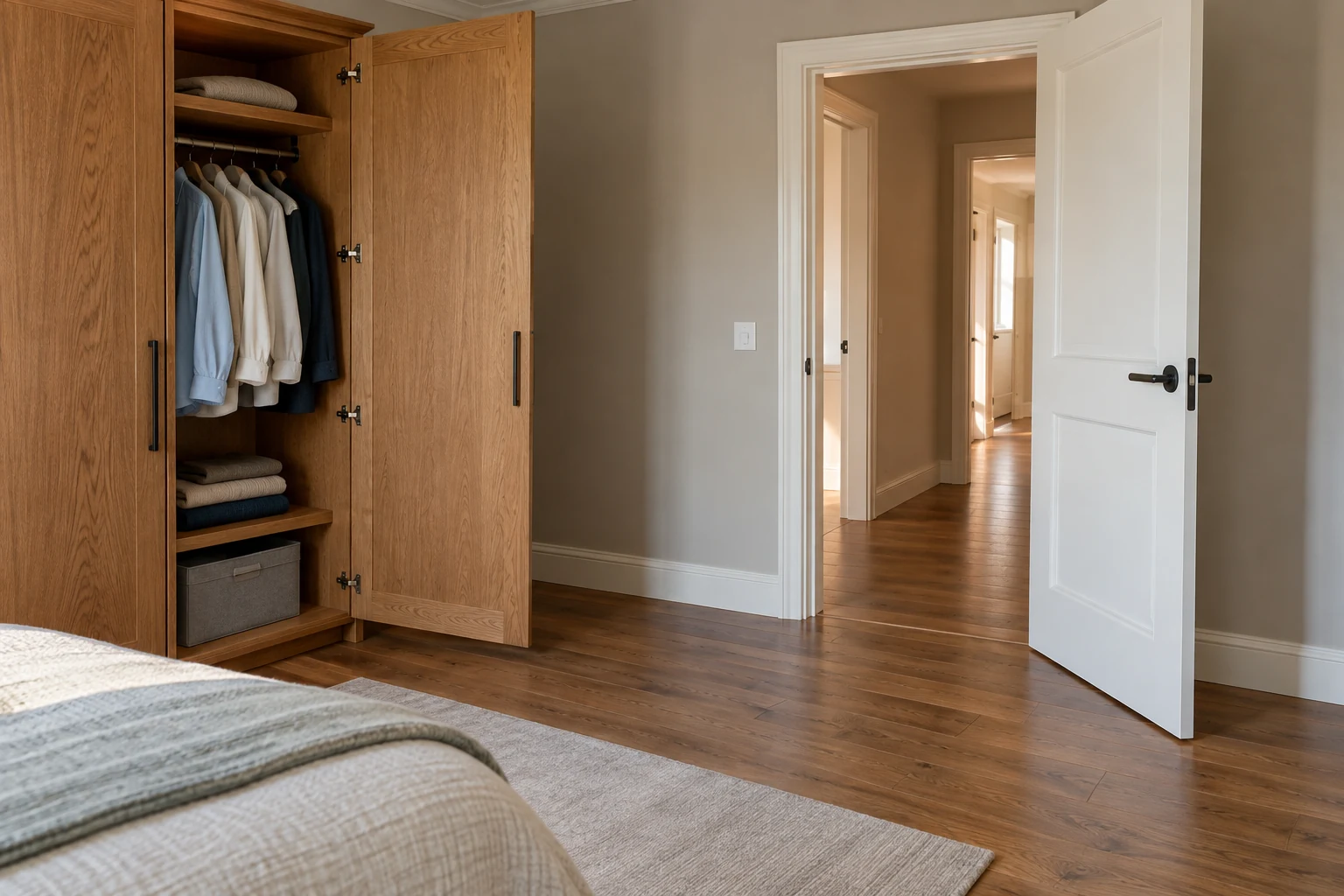
Before deciding which garment goes where, stand in the bedroom and watch how you use it. Where is the bedroom door? Which way do the wardrobe doors open? What path do you take from the bed to the wardrobe, and where do you stand to choose an outfit? Open the doors through their full travel while someone is using the room as they normally would. An arrangement that looks clear with every door shut may not work once you are standing in front of an open wardrobe.
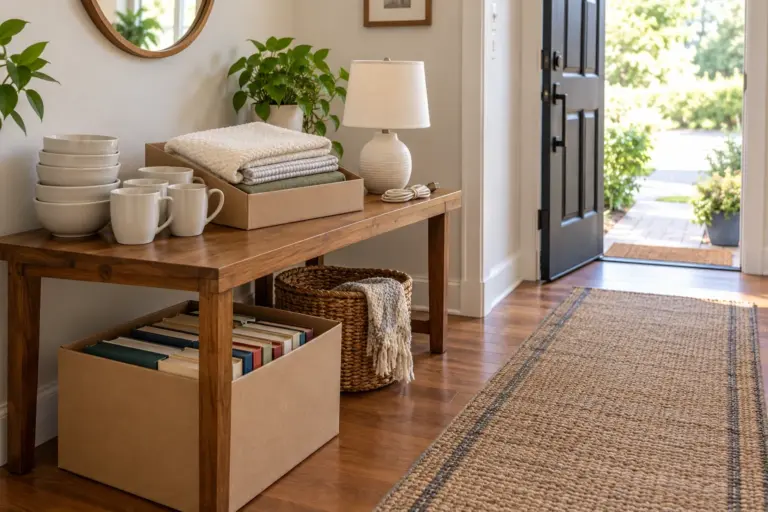
Consider one hypothetical, dry bedroom throughout this guide. Its existing wardrobe has a fixed rail, shelf, drawer and deep compartment. The bedroom door and wardrobe doors do not hit each other. A resident-owned storage box, however, sits on the floor where it interrupts the wardrobe’s door swing and the approach to the place the resident stands. Moving that box out of the route clears the immediate obstruction; the wardrobe itself stays where it is. The box will get a storage home later, after its destination has been checked and cleaned.
That distinction matters. A box on the floor is movable; two doors that collide because of their fixed positions are a different problem. The International Feng Shui Guild quotes a practitioner describing a closet door striking a bedroom or washroom door as both an irritation and a logistics problem. Sorting clothes may free a route, but it cannot alter how those fixed doors meet. If your doors still collide after belongings are out of the way, keep the routes you need usable and contact the responsible property party about the door fit. Do not treat wardrobe tidying as a cure for it or make unilateral structural changes.
Now look inside without assuming that a storage system must be added. Is there room on the rail for the garments that need to hang without crowding them? What can you reach on the shelf from your usual standing position? Can the drawer open and its contents be seen? Can you use the deep compartment without first removing everyday clothes? The Guild’s advice that a closet should permit clothes to hang is a useful prompt to check actual hanging room, rather than to assume every garment belongs on a rail. Your reach and the movement of your particular doors matter more than a generic clearance figure.
This guide keeps the hypothetical wardrobe fixed. If yours is freestanding, consider moving it only when that is authorized, stable and genuinely feasible in the room; there is no need to move heavy furniture to complete the clothing plan. First establish what the current space can do. You may find, as in the example, that a change to belongings rather than furniture resolves the access problem.
Use Feng Shui as a Lens, Not a Verdict on Your Clothes
A wardrobe holds things you do not always see. As an interpretive metaphor, its less-visible contents can invite you to notice a repair you have postponed, a garment you cannot find or a floor space that has gradually become storage. That is a way to ask useful questions, not a measurement of stagnant qi or proof that the contents are causing events elsewhere in your life.
Feng shui practitioner Anjie Cho suggests considering where closets fall in the feng shui bagua. A bagua is a practitioner’s home-map lens for looking at areas of a home; Cho’s suggestion offers a question about location, not enough information to assign this particular wardrobe a sector. No bagua method or home-map inputs have been established for the hypothetical bedroom, so there is no sound basis here for declaring what its closet location means. You can use the question for reflection without letting a presumed sector override a door that will not open or a garment you need to reach.
Cho also describes clutter as a modern problem that is not necessarily good or bad, and counsels taking changes step by step rather than being hard on yourself. That leaves room for a cardigan with sentimental value, useful clothes that are out of season and an undecided item awaiting a real decision. Keeping them in defined places is different from abandoning the layout. Conversely, releasing something you no longer want need not carry a moral judgment about having owned it.
Nor does a tidy appearance prove a beneficial feng shui outcome. The Feng Shui Society says feng shui cannot guarantee wealth, health or happiness. This wardrobe plan makes no promise about career or relationships either. Its observable aim is narrower and more useful: the resident can open the doors, stand where they need to, find their owned garments and return them. If an attractive arrangement fails any of those tests, revise the arrangement rather than insisting that it looks right.
Sort What You Own in Manageable Passes
Take inventory before assigning permanent homes. IKEA’s wardrobe-organizing guidance begins with clearing out and seeing what clothes and accessories you have. That is commercial organizing advice, not a requirement to purchase its products or adopt every storage suggestion. In an occupied bedroom, empty one manageable section at a time rather than piling the entire wardrobe across the bed and floor. Choose a work area that lets you finish that section and restore the bed, bedroom-door operation and walking route that day. Avoid creating a sorting project that blocks the room overnight.
Work with your own belongings, not another household member’s private clothes. As each section comes out, identify the garments rather than starting with an idealized wardrobe diagram. In the hypothetical case, the resident finds frequently worn shirts and one easily creased occasion dress; T-shirts, jumpers and jeans; a belt and scarf; a dry seasonal coat; and a sentimental cardigan. There is also one shirt with a loose button and one garment the resident is unsure about. Those are the actual groups the existing rail, shelf, drawer and deep compartment will need to accommodate. The example assumes the wardrobe has enough space for them; it is not a claim about the capacity of yours.
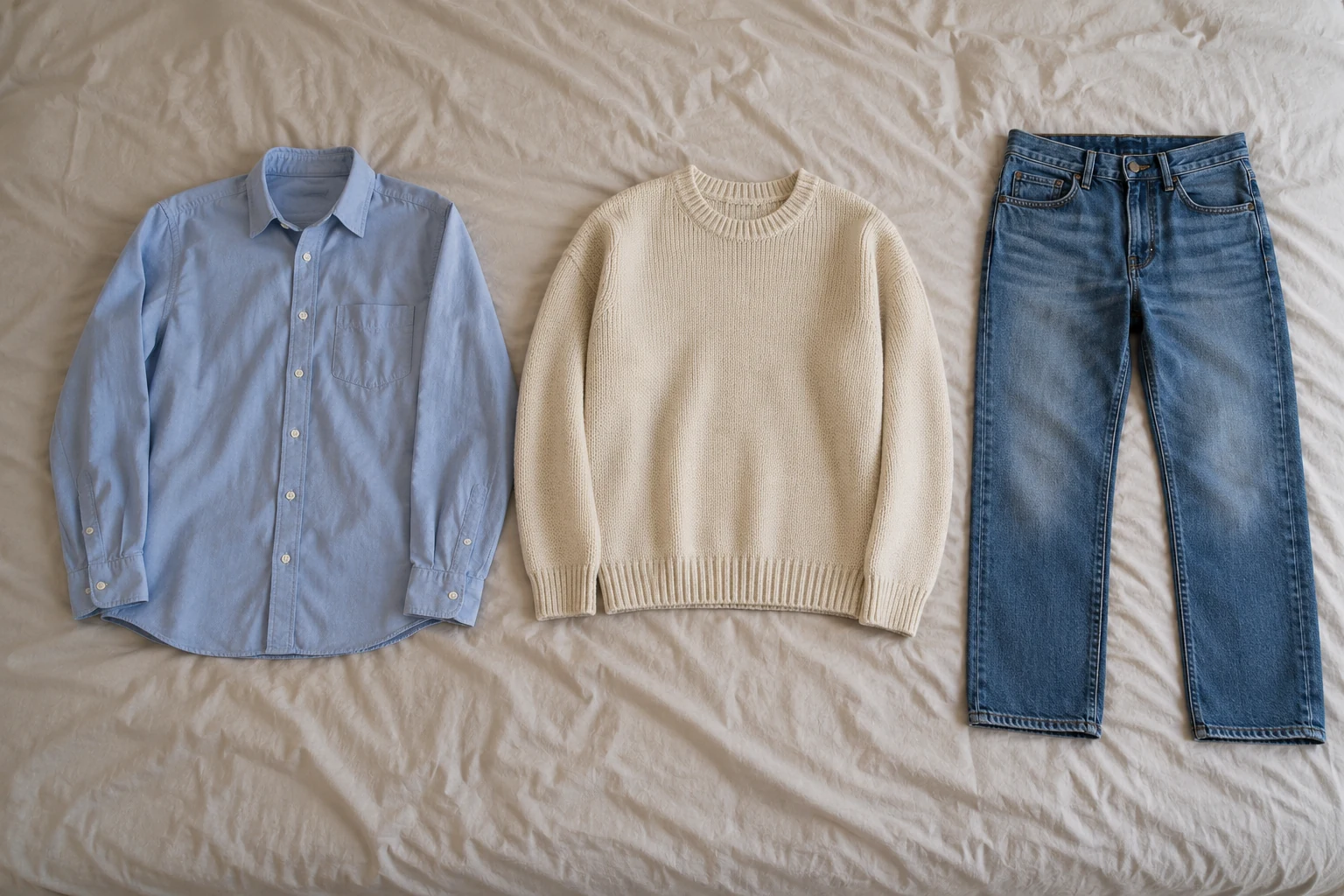
Use four decisions, with a defined place for each while you work:
- Keep: Clothes the resident uses, needs or wants to retain. Frequent wear is one reason to keep an item, but not the only one: the occasion dress has a purpose even if it is worn less often, and the sentimental cardigan stays because its owner wants it.
- Unsure: An item that needs more thought. Put the hypothetical uncertain garment in a labeled unsure place, not back in the main daily stack or on the floor. A label preserves the decision instead of requiring an answer today.
- Repair: An item the resident wants to keep but cannot yet use as intended. IKEA notes that minor defects can often be mended and kept. The shirt with the loose button goes to a defined repair place outside the floor route; it is neither treated as a ready-to-wear shirt nor discarded for having a fixable defect.
- Optional release: An item the owner decides they no longer need or want. This is an available decision, not a required quota. Cho mentions donating used textiles and shoes as an option; that does not mean useful, needed or sentimental clothing must be donated.
IKEA presents keep, unsure and discard as sorting categories. Adding a distinct repair decision here makes the loose-button shirt easier to track, while calling release optional keeps the choice with the owner. There is no universal age at which a garment must go, and an unsure decision can wait in its allotted space. The point of sorting is to learn what must fit and how it is used, not to manufacture empty space through pressure.
Keep an eye on the storage environment as sections come out. The worked bedroom is dry. If your wardrobe instead has visible mold, persistent moisture, a leak, or a wet or musty space, stop ordinary sorting and repacking of affected contents. Do not move them into boxes simply to continue the layout. The dry-space check in the next section comes before clothes go back.
Clean and Dry the Space Before Anything Goes Back
Once one manageable section is empty, clean its surfaces, wipe them dry and allow time for them to dry before returning clothes. That order follows IKEA’s advice to wipe a wardrobe dry and wait before putting things back. Check the items going into the section as well: clothes and any box intended for storage should be dry. In the hypothetical wardrobe, the seasonal coat and the resident’s existing box are dry; moving the box into deep storage later is a layout choice, not a successful mold-cleanup story.
Ordinary cleaning of a dry section is separate from a moisture problem. The CDC says mold can grow on fabric as well as other household materials, and that mold growing in a home calls for cleaning up the mold and fixing the moisture problem. That means a scent, a closed box or a newly tidy surface is not a substitute for addressing the source. Do not repack an affected space or cover an odor to make it appear ready for clothing.
If there is visible mold, a continuing leak, persistent dampness or mustiness, pause use of the affected storage space and contact the responsible property party or appropriate qualified help as needed to address the moisture source and cleanup. This guide does not assume a cleaning product, prescribe a remediation method or diagnose what an odor means for your health. Its layout steps resume only when the space intended for clothing is usable and dry.
This condition is practical as well as protective of the work you have done. Assigning a coat to a deep compartment is useful only if that compartment is suitable for it; putting a damp garment in a container merely relocates the problem. In the dry worked case, the resident can finish cleaning and drying the section, then return its assigned groups before emptying another. That section-by-section pace preserves the working bedroom route while preparing real storage homes.
Give Each Garment Group a Reachable Home
With the space dry and its contents identified, match each group to the fixtures already there. Do not begin with a perfectly symmetrical picture of the wardrobe. Begin with what the garments need, what the resident can reach and whether the doors and drawer still work when the wardrobe is filled.
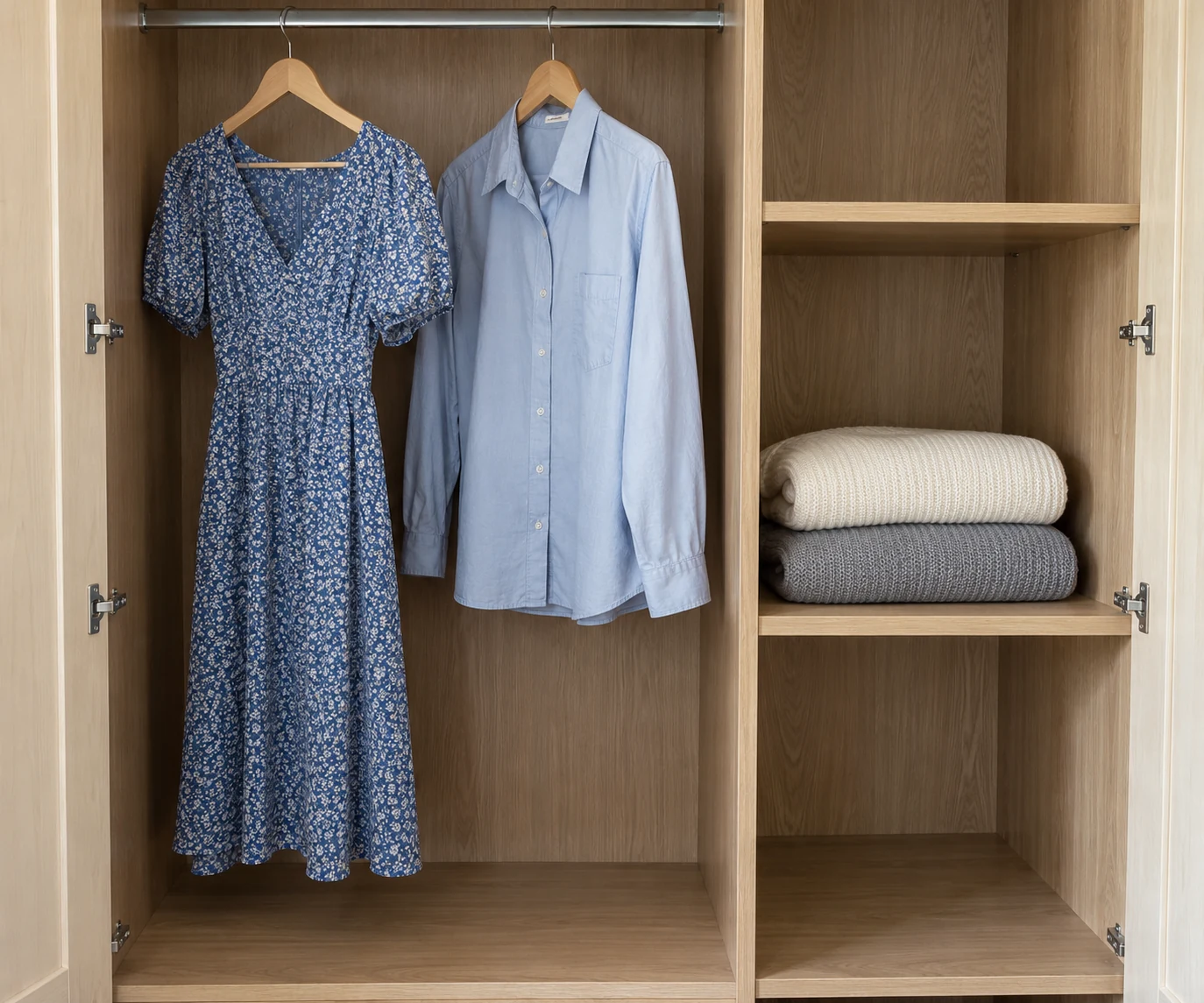
In the hypothetical case, the frequently worn shirts and the easily creased occasion dress go on the existing rail, where inspection showed enough hanging room for them. IKEA recommends hanging delicate or easily creased items such as dresses and shirts. Its advice is a general organizing guide; the resident still follows the care requirements of the actual garments and the space actually available. The frequently used shirts occupy a part of the rail the resident can reach readily. The dress needs a hanging home too, but it need not displace a daily shirt just to create a visually balanced row.
The T-shirts, jumpers and jeans go on the existing shelf as folded groups. IKEA describes folding those kinds of garments for drawers or shelves. The resident chooses shelf positions from which a T-shirt can be taken and put back without dismantling every stack. Less-used folded items include the retained sentimental cardigan. Its quieter shelf position reflects how often it is reached for, not a judgment about its value. In this illustrative wardrobe, the shelf also has distinct, labeled places for the uncertain garment and the loose-button shirt awaiting repair. Neither ends up in the approach to the doors.
The belt and scarf go in the existing drawer. IKEA gives hook rails or drawer inserts as examples for storing accessories; the workable choice here is simply the drawer the resident already owns. It must still open when someone is standing at the wardrobe, and the accessories must be easy to locate and return. No new insert or hook is necessary for this example.
Finally, the resident takes the existing floor box—the object that obstructed the wardrobe swing and standing approach—and places it in the suitable existing deep compartment with the dry seasonal coat. IKEA suggests deep or upper storage for less frequently used seasonal items; the box itself is the author’s choice for this room, not a required product. Check that the box can be reached when the coat is needed and does not prevent the drawer from opening. Deep storage should not require digging past daily shirts, folded T-shirts or accessories.
Reach is personal, not a fixed height on a diagram. IKEA suggests eye level for favorite items, but the useful position for this resident is the height and location they can access from their normal standing position. If sorting shirts by frequency, or folded items by color or occasion, helps recognition, do so within those groups; IKEA presents color, occasion and frequency as possible sorting aids. They are not conditions for feng shui success.
The reason for each home should remain easy to state: shirts and dress have observed hanging room; folded clothes have a usable shelf; small accessories have an accessible drawer; the dry seasonal coat can occupy deep storage without burying daily items. The illustrative wardrobe has capacity for all these assignments. If your shelf or rail is already full, do not force another stack or hanger into it to copy the example. Reassess which group needs the accessible space and what storage is genuinely available. Door travel, daily retrieval and room to return an item outrank cosmetic symmetry.
Test the Layout in Use and Keep It Working
A wardrobe is not finished when the last garment is put away. Test it filled, with a person using the bedroom. Open the bedroom and wardrobe doors through their full travel. Walk the bed-to-wardrobe route and stand where you would choose an outfit. Take out a hanging shirt, a folded T-shirt and an accessory, then return each to its home. Open and close the drawer; access the deep box without moving daily items into the route. A home that works only when the wardrobe is empty is not yet a working home.
In the hypothetical dry bedroom, that occupied trial passes. The former floor box no longer obstructs the wardrobe door or standing approach: it holds the dry seasonal coat in the deep compartment. The shirts and dress hang on the rail, the folded groups are reachable on the shelf, and the belt and scarf can be found in the drawer. The sentimental cardigan remains with less-used folded clothes; the loose-button shirt remains in its defined repair place and the uncertain garment in its labeled unsure place. Both doors operate fully, the bed-to-wardrobe route is usable, and retrieving and returning the tested items works. Keep the floor clear and those homes in place because this use test passes, not because a change in qi or life circumstances has been predicted.
If your own test fails, name the movement that fails. If a daily item is hard to reach, reconsider its position relative to less-used items. If a stack cannot accept a returned T-shirt, reconsider that group’s available shelf space instead of squeezing it in. If the deep box blocks the drawer, the box has not found a suitable home. Spending money, disposing of useful clothes or overfilling a section is not an automatic remedy. And if the failure is a genuine collision between fixed doors, changing the clothes will not change their fit.
For upkeep, return washed clothes to their assigned homes and decide where a new item belongs before it settles on the floor. IKEA also recommends small regular checks to maintain an arrangement. Revisit the layout when your routine or the season changes: the coat may become a frequent-use item, or a different shelf group may need easier access. Cho’s “one in, one out” suggestion is an option if it suits how you manage clothes, not a rule that overrides a repair, an unsure decision or something you need to keep.
The practical measure of a successful wardrobe is repeatable: you can find, maintain, retrieve and return your own garments while the doors, standing space and room route remain usable.