Place a Christmas tree where its full branches and stand fit without obstructing an exit, crowding the room's routes or approaching a heat source. Then choose among those workable positions using the seasonal meaning you enjoy. A tree visible on arrival, a suitable place within the gathering room or an explicitly chosen bagua area can all be considered.
This is a seasonal application of feng shui, not an ancient rule about a particular holiday tree. You do not need a new annual lucky direction to make the arrangement thoughtful. Start with the room and the actual tree, then add symbolism where it fits.
Measure the Whole Tree, Including What Surrounds It
Find the tree's expected widest branch spread and the stand's footprint, not just its height. Include access for watering a cut tree and any gifts you intend to place around it. A corner that accommodates an empty stand may not accommodate the finished arrangement.
Mark that outline on the floor temporarily and walk the usual routes. Open the room door, use the seats and reach nearby storage. Ask what happens when a guest arrives carrying something or a child moves through the room. Do not preserve a preferred corner by turning the entrance into a squeeze.
Check the tree's height against the actual room and the space needed for its decoration and installation. If it competes with a light fitting or another obstruction, choose a different size or location. A smaller tree can be a deliberate solution rather than a lesser version of the holiday.
Keep the floor around the stand understandable. Do not let an attractive arrangement of presents conceal the only route through the room or make routine watering difficult.
Exclude Heat Sources and Exits Before Choosing a Symbolic Area
The U.S. Fire Administration advises keeping a tree at least three feet from heat sources such as fireplaces, radiators, space heaters, candles and heat vents, and making sure it does not block exits. Treat those as placement conditions before considering a feng shui intention.
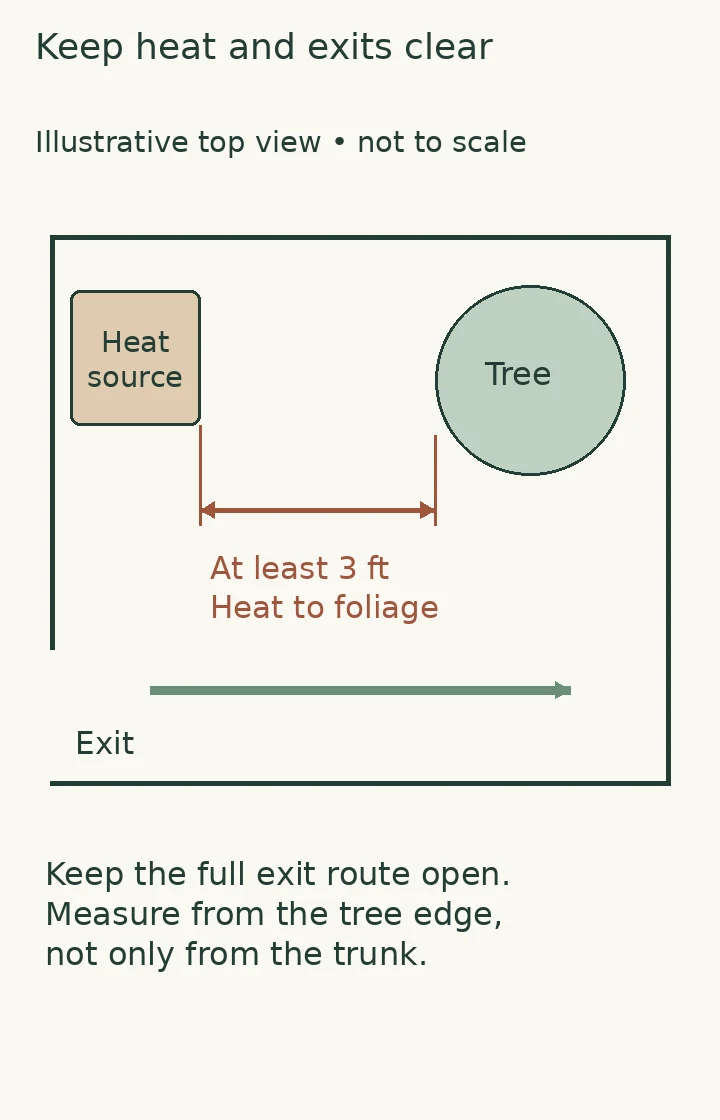
Measure from the actual tree's foliage and surrounding arrangement, not merely from its trunk. Check what will happen when a heater is used or a room changes from daytime to evening use. A fireplace that was unlit during decorating is still relevant to the plan.
The heat-clearance illustration identifies the tree edge, heat source and an open route. It is a reminder of what to measure, not a scale plan for every home. A spot that fails those conditions does not become suitable because it is a favored bagua area.
Keep light leads and other connections out of walking routes and use them according to their instructions. Do not run a doubtful electrical arrangement under a rug to make the tree's position look cleaner. If the suitable power arrangement cannot reach safely, reconsider the location or the lighting plan.
Consider Three Fit-first Feng Shui Options
Mindful Design School's holiday guidance starts with a practical answer: put the tree somewhere it fits without becoming a trip obstacle. It then suggests a suitable center of the home or living room, the family area, or a place visible when the front door opens. Those are practitioner seasonal choices, not guaranteed outcomes.
A position visible on arrival can make the holiday display part of the welcome. Stand at the entrance and look in after the outline is marked. The tree can be visible to one side; it does not need to stand directly in the doorway or interrupt the path beyond it.
A place nearer the center of a sufficiently large gathering room can make the tree part of shared activity. Try the surrounding seats and routes before choosing it. In a small room, the literal center may be the least workable position, so do not treat the word as an instruction to fill it.
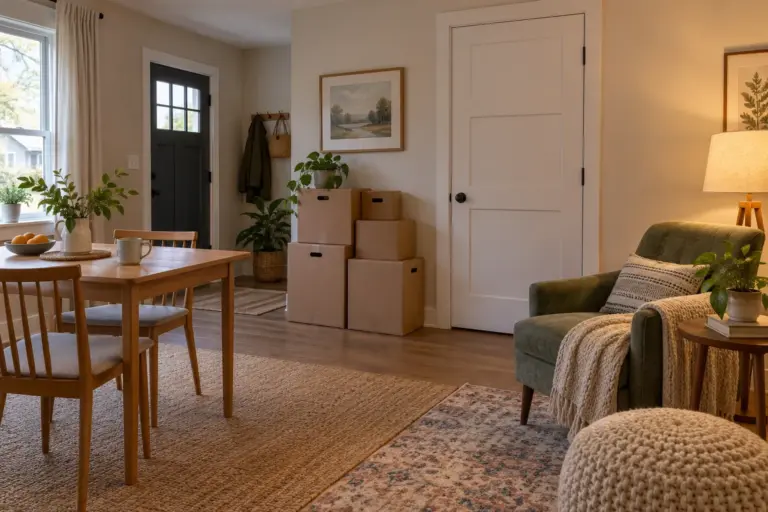
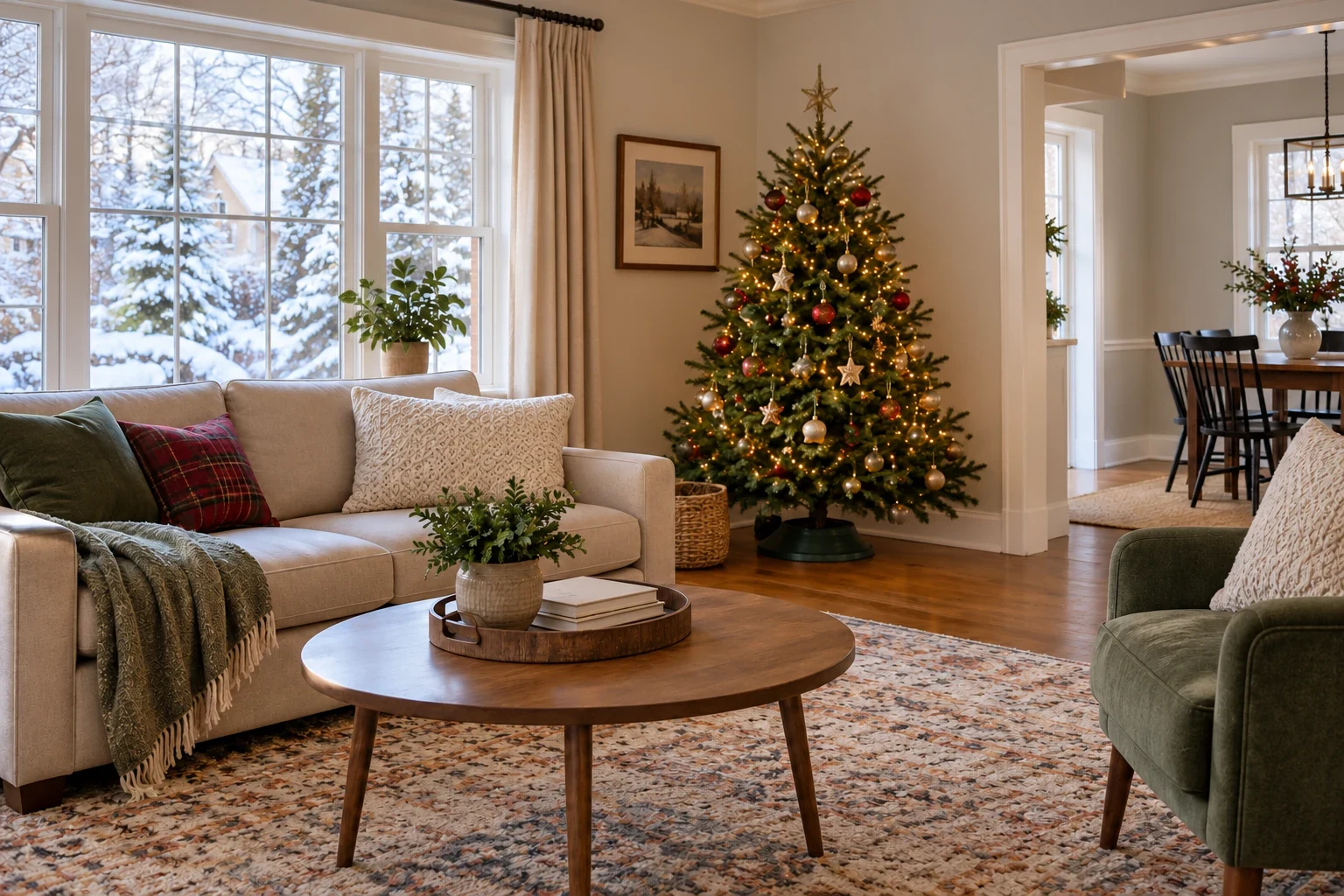
The main scene uses a side position that leaves the sitting area and passage available. Notice that relationship rather than assuming every room needs the same corner. A tree can be visually important without occupying the geometric center.
If You Choose the Family Area, Use One Clear Mapping Method
Mindful Design identifies its approach as BTB feng shui, aligning the bottom of the bagua with the formal entrance rather than cardinal directions. It can also be applied to an individual room using that room's main entrance. Do not rotate this entry-aligned map to match a compass recommendation from another method.
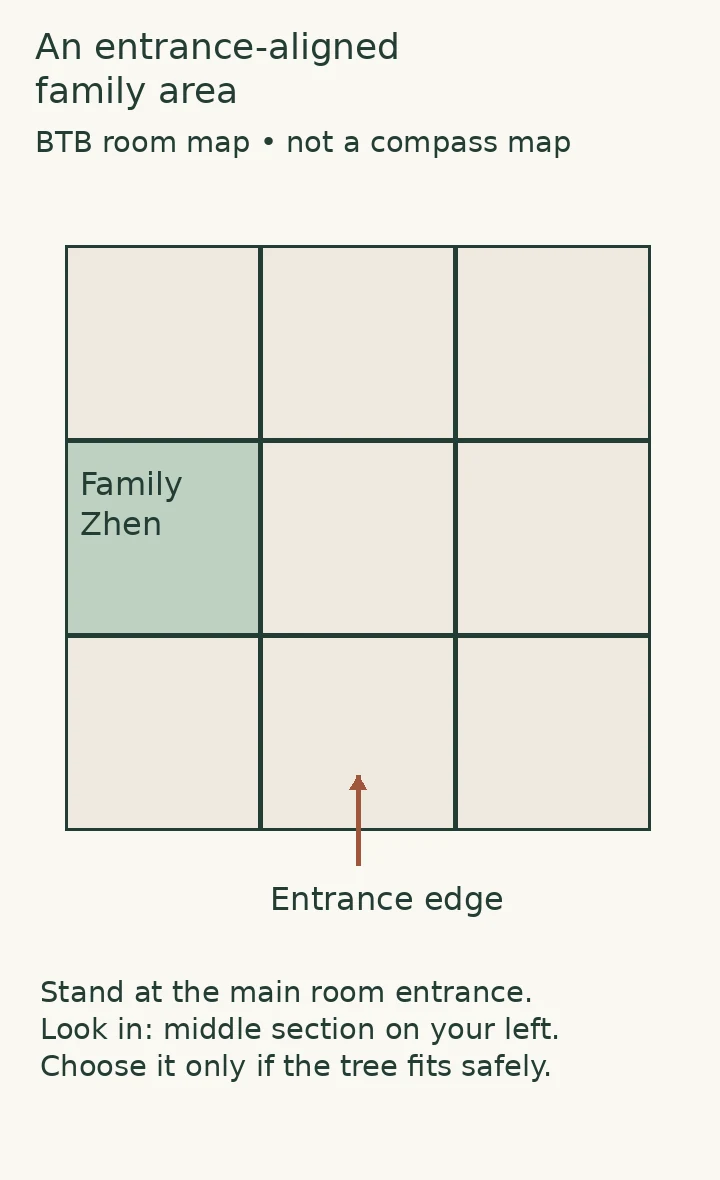
For a simple rectangular living room, stand at its main entrance looking in. Imagine the room divided into three equal bands across and three equal bands from the entrance wall to the far wall. The middle section on your left is Zhen, the family area in this approach. The small map shows that location and the entrance edge.
Use that section only as a candidate for the tree after the practical checks. If it contains the room's heat source or essential route, choose another fit-first position and let the family intention appear through a different suitable seasonal detail. The tree does not have to carry every symbolic purpose.
For an irregular room, a very open plan or an ambiguous entrance, do not redraw the boundaries simply to put a favorite corner in the desired section. You can use the straightforward room-fit options without claiming a complete bagua assessment. If you want a formal interpretation, keep its method and inputs explicit.
Keep the Tree Connected to the Room’s Use
Try the room with the tree outline in place and all intended seats occupied. Can people see one another? Can someone join or leave without moving presents? A large tree that eliminates a needed seat may undermine the gathering you wanted it to support.
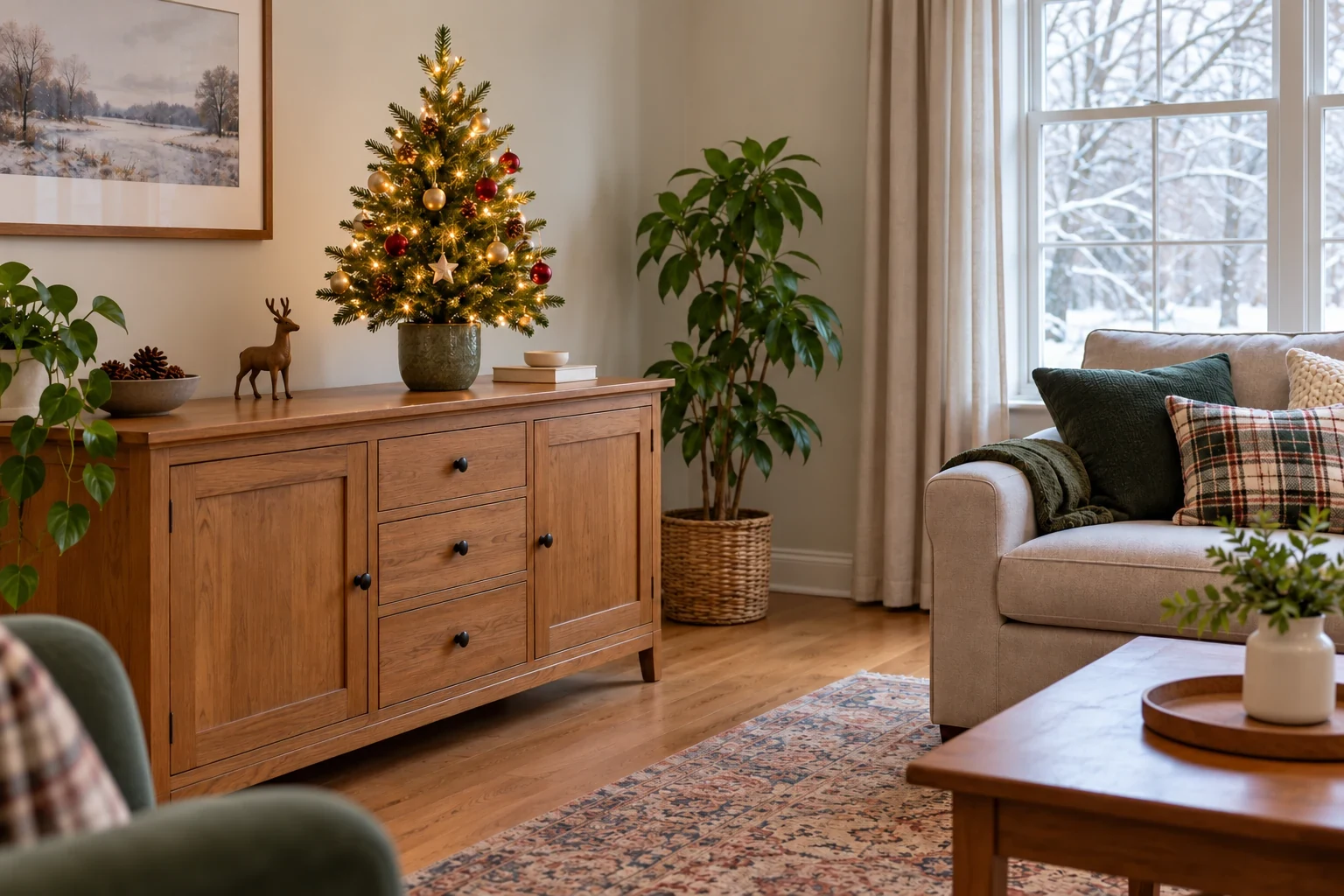
Consider the view from the usual chair as well as the entrance. A position that looks impressive from outside the room may put branches against someone's shoulder or dominate a small work area. Shift the tree or choose a smaller one rather than treating that discomfort as an unavoidable holiday tradition.
The smaller-tree scene offers another scale of display. A stable tabletop arrangement can leave more floor area available, but its base and surrounding objects still need appropriate placement. Do not put a tree where a table edge, heat source or reachable lead creates a new problem.
Keep ornaments and other details suited to the people and animals who use the home. Placement decisions should include ordinary reach and movement, not only how the finished tree photographs.
Distinguish Living Greenery, Cut Trees and Artificial Trees
Mindful Design associates fresh greenery with the wood element and themes of growth. That is symbolic meaning you may enjoy, rather than evidence that one type of tree produces a better household outcome. Choose the type you can appropriately obtain, place and care for.
For a cut tree, keep its stand accessible and follow appropriate watering and care guidance. USFA advises watering daily and removing a tree when it is dry. Do not maintain a dried tree indoors solely to keep the display in a symbolic location for a longer period.
For an artificial tree, follow its assembly, lighting and care instructions. Do not assume that it removes the need for heat separation, clear exits or suitable electrical use. Product-specific requirements still apply.
Keep any environmental comparison separate from feng shui symbolism. A room-placement decision does not establish the carbon impact of a particular purchase, reuse history or disposal route.
Check the Display Through the Whole Season
Inspect lights and leads and follow their use limits. NIST’s holiday guidance recommends turning tree lights off before leaving home or going to bed. Keep the stand and access visible enough for ordinary care rather than burying everything under fabric and gifts.
Repeat the route check as presents, visitors and furniture changes accumulate. A clear passage on decorating day can become obstructed later. Remove or relocate the specific item that creates the problem instead of accepting a progressively narrower path.
When the tree comes down, return furniture and stored items deliberately. The best position was the one that allowed the home to keep working while the display was present. Feng shui can give the arrangement a chosen seasonal meaning, while practical fit, safety and the way people gather determine where the tree belongs.