
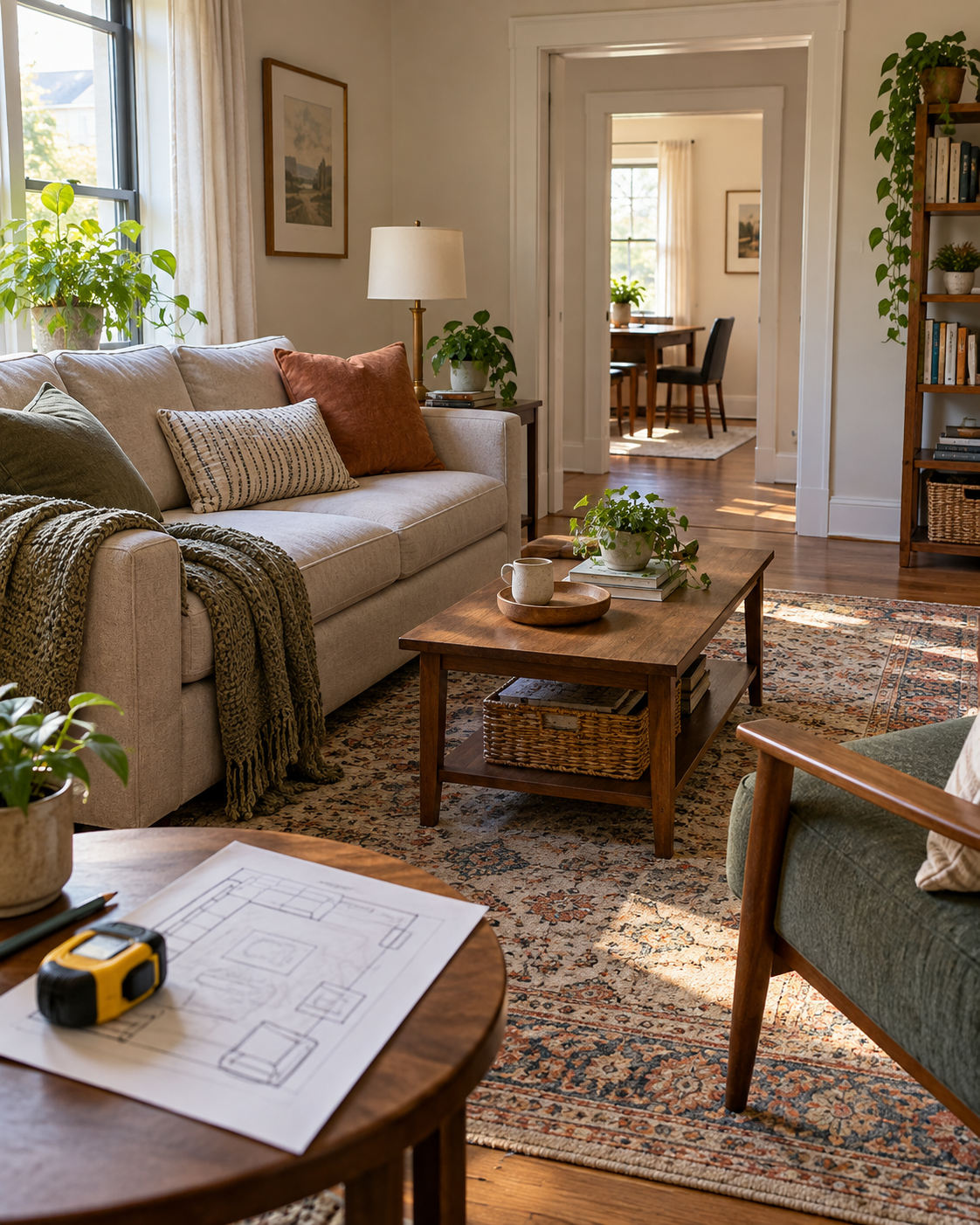
I write Roomwise Feng Shui for people deciding what can actually change in a room they use every day.
The starting point is the space itself: openings, fixed fixtures, furniture, movement, and household needs. I then explain the traditional rule behind an option and distinguish it from ordinary comfort or convenience. These guides do not promise health, wealth, luck, or other outcomes.
Editorial approach
How a layout guide takes shape
A useful plan begins with what cannot move. Door swings, exits, built-in features, and the people using the room set the limits before a traditional principle enters the discussion.
Where feng shui schools differ, I name the interpretation instead of presenting a single prediction. An adjustment should be safe to try and easy to reverse if it does not improve the room's everyday use.
How the guides are written
Three working principles
Start with the room
Describe the dimensions, openings, circulation, and practical needs before proposing placement.
Explain the tradition
Name the source or school behind a feng shui idea and identify interpretations or limits.
Keep changes reversible
Prefer moves a household can test safely, without blocking exits or changing a building's structure.
Corrections and questions
If a source, instruction, or safety boundary needs attention, email [email protected] with the page URL and the detail to review.