Paper clutter often persists because a pile is doing several jobs at once. It holds things to read, tasks to complete, records to protect and decisions nobody has made. Clearing the surface without separating those jobs merely relocates the pile. A useful feng shui approach asks what the papers mean in this room, then gives each necessary function a workable place.
Start with one active pile, not every document you own. Preserve anything with an uncertain legal, financial or personal purpose until you establish what must happen to it. You can reclaim a table without turning an afternoon of decluttering into irreversible document disposal.
Understand What the Pile Is Asking You to Remember
A stack beside the front door may be an intake point. Papers on the dining table may mean that it is the only place with enough room to open mail. A pile beside the computer may hold tasks that cannot be completed until someone replies.
These are different problems. A prettier tray will not create a place to work, supply a missing reply or tell you which records to retain. Identify the actual job before buying storage.
In her discussion of clutter, Anjie Cho describes how visible belongings can become reminders of unfinished tasks, while also distinguishing feng shui from a simple demand to throw things away. You can use that interpretation to ask whether a room supports the activities it hosts. It does not establish that every paper pile has a hidden emotional cause or that an untidy desk predicts financial trouble.
Keep useful papers without treating them as a failure. The aim is to recognize their purpose and reduce the repeated effort of finding, remembering and moving them.
Set up a Sorting Place That Can Close Again
Choose a surface you can use for a short session and then return to its ordinary function. Keep a container for papers that still need identification, and suitable destinations for ordinary recycling and confidential disposal. Do not put sensitive documents into an open communal discard pile.
Begin with loose papers from one location. Leave bound records and someone else's files alone unless you have agreed to sort them. Open envelopes and inspect their contents; an envelope's appearance is not enough to determine what is inside.
If the session must end, group unfinished sorting together and mark what remains to be done. Avoid scattering several half-processed piles across the room. A temporary container is useful when it preserves the next step, but it needs another appointment rather than a permanent home under the table.
Separate the Jobs Before Choosing the Folders
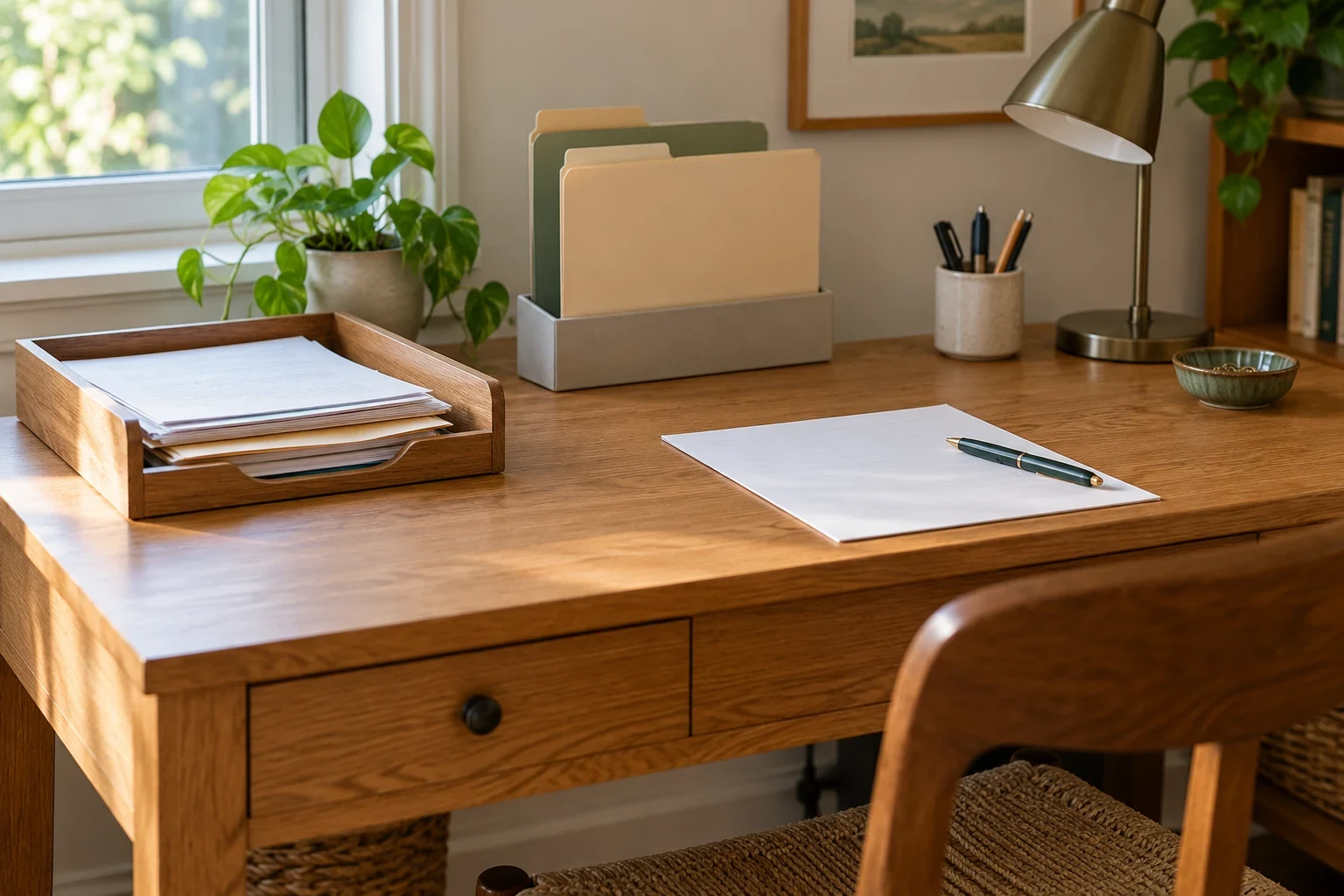
Use a small number of functional destinations. Their names can change to suit your household, but their meanings should stay distinct.
| Destination | What belongs here | What makes it workable |
|---|---|---|
| Incoming | New papers not yet checked | One intake point and a regular time to review it |
| Action | Something you must do | A named next step and its actual deadline |
| Waiting | Something another person or organization must do first | Who you are waiting for and when you will follow up |
| Reference | Information you expect to consult | A descriptive label and a location near its use |
| Protected records | Documents needing deliberate retention and secure storage | Appropriate access, protection and record-specific retention decisions |
These destinations need not become five bulky boxes. A modest active station might contain an inbox and two thin folders, while reference and protected records live elsewhere. Separating the purposes matters more than displaying a complete matching set.
Keep the visible station proportionate to the room. If it occupies the entire eating surface, move the processing task to an appropriate desk or a portable file that can be put away. A clear table should not depend on hiding active obligations where nobody will remember them.
Work Through One Ordinary Packet
Imagine a pile containing a bill, a school permission form, an account statement, an appliance manual and a neighborhood flyer.
The bill needs checking before you decide whether any payment remains due. If it does, record the actual deadline and next action. If it has already been handled, decide whether its record must be retained and where. Do not pay it again merely because it was in the pile.
The permission form may need a signature, a conversation and return by a stated date. Assign the adult responsible rather than leaving it in a general family folder. After it is returned, remove the reminder when that action is confirmed.
The account statement calls for a record-specific decision. It may need checking or retention; it is not automatically rubbish because it looks routine. The manual belongs with information for the appliance you actually own. If you prefer a digital version, confirm that it is the correct model and accessible before deciding what to do with the paper copy.
The flyer may contain an event you want to attend. Transfer the relevant details to the place you use for plans, then decide whether the original has any remaining purpose. If the event is irrelevant, it need not join the reference archive.
Notice that one pile produced several outcomes. Processing it means making those distinctions, not finding one larger container that will hold all five papers.
Turn Reminders Into Specific Actions
“Deal with insurance” is difficult to begin. “Call the insurer about the missing attachment” identifies a next step. Put the date, contact details and relevant document together in a system you will actually check.
Use the document's genuine deadline. Do not invent a comfortable weekly review date that falls after a payment, response or renewal is due. For less urgent tasks, choose a realistic processing session and group similar actions if that helps.
Waiting papers need a follow-up point. Note what you sent, to whom, and when you will check if no response arrives. Once the matter is resolved, move any necessary record to its proper storage rather than leaving the completed task in the active folder.
For shared tasks, name an owner. Two people assuming the other will answer a letter is a different problem from one person lacking a file. A brief agreement about responsibility can remove more friction than reorganizing the whole cabinet.
Protect Records Before Disposing of Paper
Do not apply a feng shui rule such as “keep only current energy” to original documents. Required retention depends on the record, jurisdiction and circumstances. For example, IRS guidance explains that US tax-record retention depends on the underlying action, expense or event, and also notes that other organizations may require longer retention.
That is why a single keep-for-a-few-years rule is inadequate. Check the relevant official guidance or obtain appropriate professional advice for records whose obligations you cannot establish. Keep uncertain documents identified and protected while resolving the question; do not silently class them as unneeded.
Scanning is a separate decision from destroying an original. Verify what form of record is acceptable, whether every necessary page is legible, where the digital copy is stored and how it can be recovered. Some originals may still be needed. A file saved under an unrecognizable name in one device is not necessarily easier to retrieve than paper.
Choose storage and access appropriate to sensitive information. When disposal is appropriate, use a suitable confidential method rather than putting personal records into ordinary visible recycling. Clearing a surface is not worth losing information or exposing it to people who should not have it.
Give Meaningful Papers a Deliberate Place
Not all papers are administrative. Letters, children's work, photographs and notes may be worth keeping for their personal meaning. Separate that choice from the pressure to file a bill or answer a form.
Choose an appropriate bounded home for the collection and make selections at a manageable pace. A small displayed group can make particular pieces visible; the rest can be stored in a form that protects them and allows you to find them. You do not need to display everything to acknowledge its importance.
If a paper belongs to someone else, ask before discarding it. For children's work, involve them in a way that suits their age and the household. A clear room created through secret disposal can damage trust even if the surface looks orderly.
Place the Station Where the Work Actually Happens
A paper station works best when it fits the route from arrival to action. If mail enters through the kitchen, a modest intake point there may be useful, while processing happens at a desk. Do not make the kitchen hold the entire archive simply because envelopes first land there.
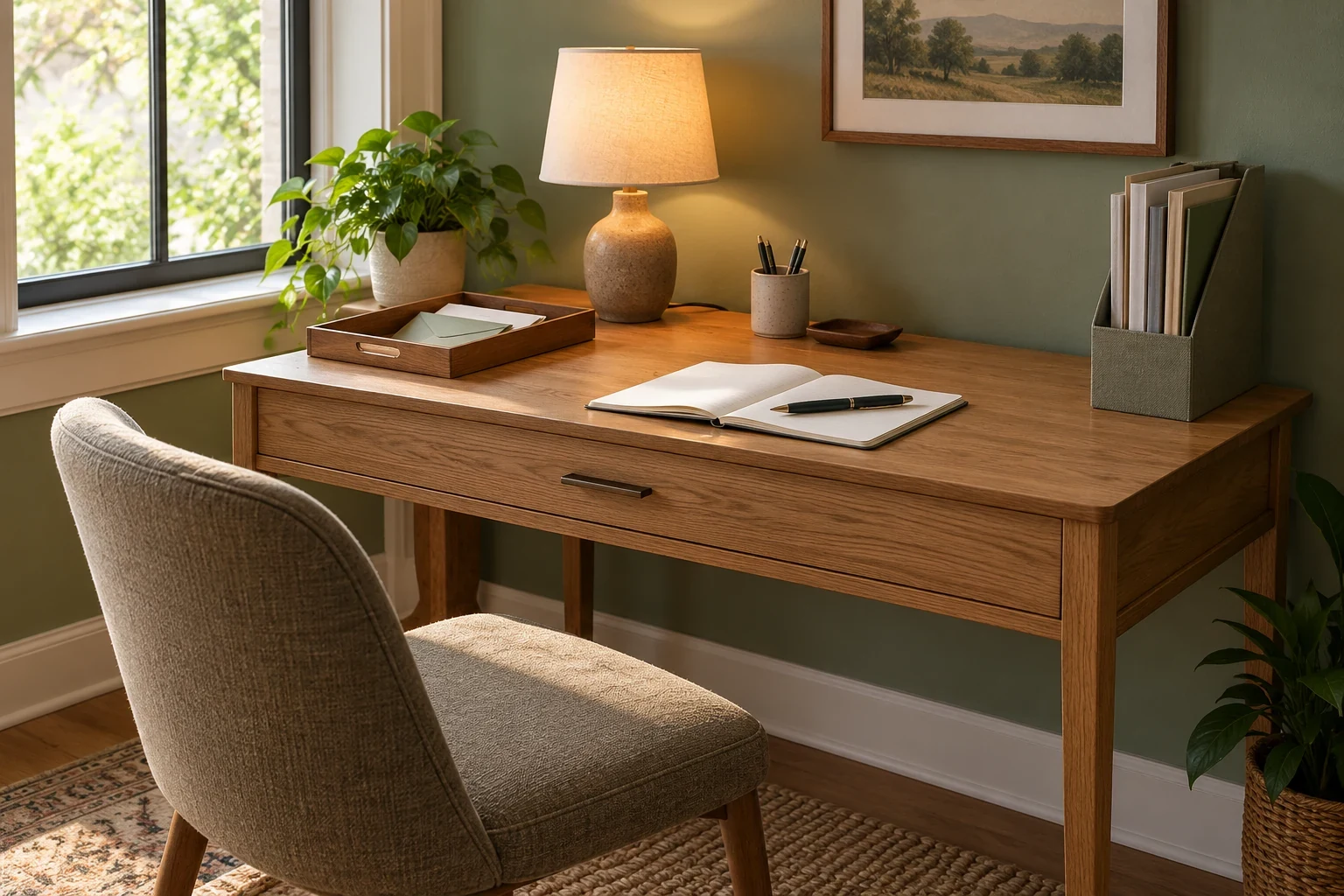
Keep lighting, a usable writing surface and necessary supplies available at the processing location. Return the folder and supplies after the session so that the room can resume its other uses. This transition can make the difference between a temporary task and a permanent visual obligation.
You do not have to put papers in a particular bagua sector to make them manageable. If you already use a consistent feng shui map, let it prompt reflection on the room's role, rather than moving confidential records to an inconvenient or unsuitable place for a symbolic reason.
Check Why a New Pile Forms
Review the active papers at a cadence that matches their deadlines. Empty incoming papers into decisions, check waiting items and remove completed reminders. Adjust the system when a folder becomes hard to use.
If papers repeatedly collect beside the station, ask what makes returning them difficult. The folder may be overfilled, a label unclear, or the filing place inaccessible to its user. Repair that small point before starting another whole-house purge.
An open surface and a reliable place for unfinished work can coexist. The change is complete when the paper has a known purpose, the necessary action is visible and the room can serve its ordinary life again.