Arrange a small balcony around what you will actually do there: keep the door and route usable, fit only the seating the space can support, and place a few plants where their light, wind exposure and care needs make sense. Then, if you wish, use feng shui guidance to interpret the entrance, planters and other features already present. You can test the arrangement by moving objects rather than making permanent changes.
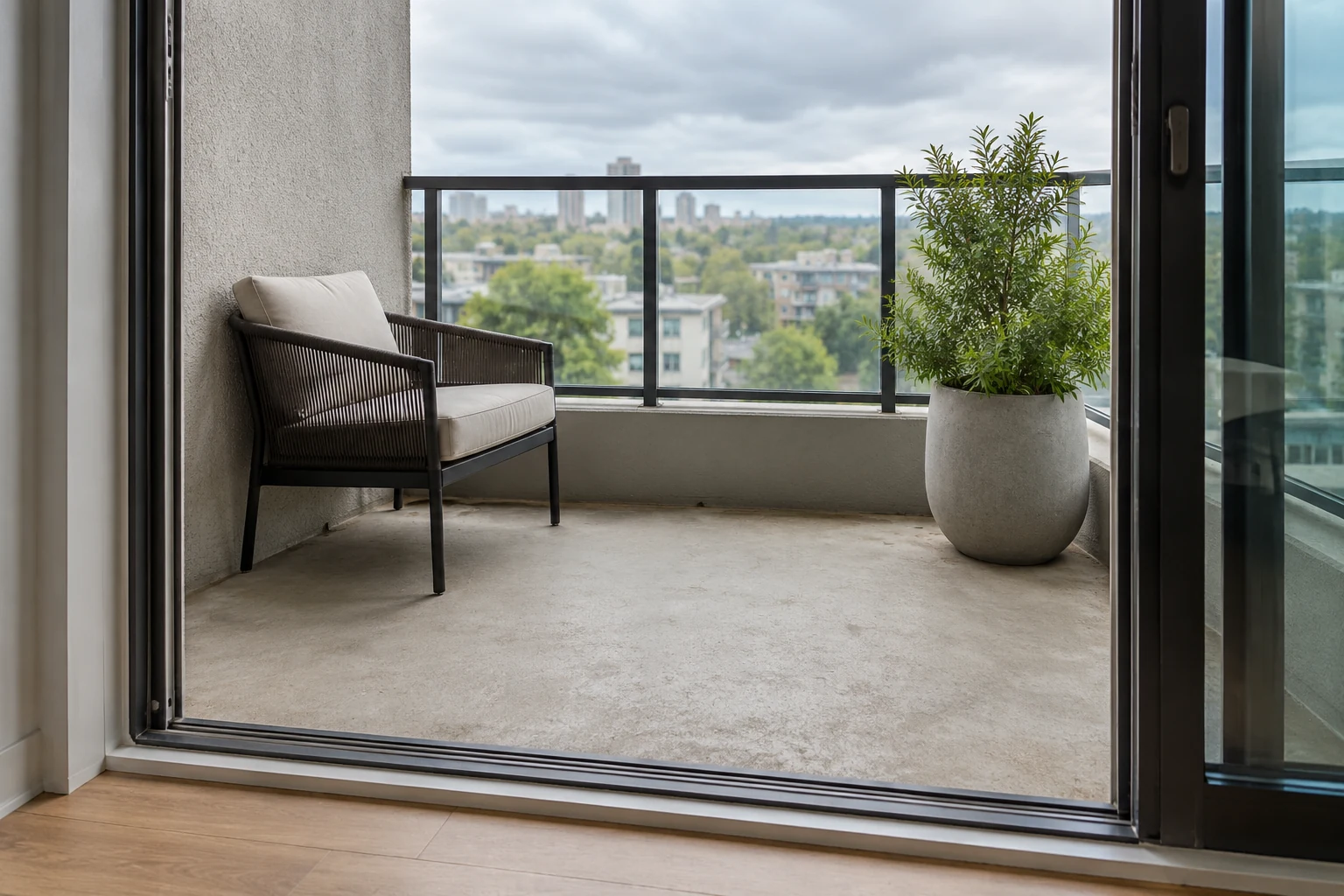
The example throughout is hypothetical: a rectangular apartment balcony has a door at its left end that swings inward across the balcony floor, a floor drain at its right end, one existing chair and two modest floor pots. Its resident wants one place to read in the morning. The question is not how to fill the balcony, but whether that chair and those pots can serve the reader without getting in the way.
Choose a Purpose and Map What the Balcony Can Accommodate
Start by naming the balcony’s primary job and its likely users. Is it a place for one person to read, a place to tend plants, or chiefly something to enjoy looking at from indoors? Ask who in the household will use it and how often. Mindful Design School suggests considering how many people you want to seat outdoors, but that question need not turn one reader’s balcony into a space for imagined guests. The school also describes outdoor seating as a possible extension of the home; for this resident, a single usable reading chair could do that work.
Make a quick sketch before moving or buying anything. Draw the usable floor, not just the balcony’s outer rectangle. Mark the door’s full sweep onto the floor, the route from the doorway toward the far end, the railing, the drain, the chair and both pots. Add notes about where morning light falls and which areas feel exposed to wind. If you are unsure about light, observe it at different times before deciding where plants belong. The sketch is a way to ask whether each object has a place and whether you can still use what lies beyond it.
On the hypothetical balcony, the door is at the left end and the drain is at the right. That makes the space between them more than leftover floor: it is the route for entering, reaching the plants and checking the drain. The resident’s wish to read in the morning gives the chair a purpose, but it does not give the chair priority over door operation or access. Draw its current position and at least one possible position farther from the entrance so the comparison is visible.
Set the feasibility limit before considering additions. Check applicable building or lease rules and structural capacity before pursuing heavy objects or anything attached to a railing. If permission or capacity is unknown, pause that idea and ask the building manager or an appropriate qualified adviser. Do not rely on a guessed load allowance or an improvised attachment. For this plan, keep changes movable and preserve existing exits, door operation, appropriate railing use and drainage. A compact layout that meets those conditions is a better starting point than a more elaborate one whose feasibility is uncertain.
Clear the Entrance and Make the Route Usable
Mindful Design School advises identifying the entry to an outdoor space, checking that its door or gate opens properly, and tidying the entry area. On a balcony, that advice has a direct practical test: can you open the door and step outside without first rearranging furniture? A welcoming-looking entrance is of little use if the chair catches the door.
In the hypothetical layout, the existing chair sits near the left-end door and obstructs its inward swing. Mark that position as unsuitable, even if the chair looks convenient from indoors. On the sketch, move the same chair out of the door sweep toward the far end. Then draw the route a person would take from the open doorway past the chair to the right-end drain. Include a way to approach both pots for watering or inspection. This does not mean every part of the floor must stay empty; it means the space left for movement must work when the chair and plants are in their proposed positions.
Mindful Design School offers planters in a soft arc as an option for a small outdoor space, describing it as a way to guide the eye more gently than a straight line. If the two existing pots can sit slightly offset from each other outside the working route, they may suggest such an arc. There is no need to make the person walk along a curve, add more pots to complete a shape, or trade access for a visual effect. If an arc puts one pot in front of the drain or underfoot, use a simpler placement instead.
Test the proposed route rather than assuming it works on paper. Open the door completely. Walk from the doorway toward the far end and check whether you can reach each pot and the drain without moving the chair. Notice where you turn, whether a pot makes you step awkwardly, and whether the open door occupies floor you thought was free. There is no single clearance measurement that can answer those questions for every balcony. What matters here is whether this resident can enter and carry out the intended tasks with the actual objects in place. The occupied-chair test comes after choosing the seating position; an empty chair can make a route look easier than it will be during use.
Compare Seating Layouts and Choose One Focal Point
Compare the arrangements by the morning-reading task, not by how much furniture each can hold. The near-door chair fails first: it obstructs the door’s inward swing. It may offer a pleasant outlook, but the resident cannot use it there without compromising entry. Moving that existing chair toward the far end is the more promising option only if it stays clear of the right-end drain and leaves a usable route to both pots when someone is sitting in it. The exact spot should follow those checks, rather than an assumed ideal distance from the door or railing.
Try the chair in that farther-end position without adding anything else. Sit in it as you would to read. Is the outlook one you enjoy? Does the morning light make reading comfortable, or would you prefer to turn the chair? Can another person enter and tend the plants without asking you to stand up? Those are preferences and observable tests, not effects a particular orientation can guarantee. A chair that works beautifully for a solitary reading session but prevents anyone from reaching the drain while occupied is not yet a workable layout.
The school’s suggestion to think about the number of people to seat helps keep the decision proportional to household use. Here, the stated need is one reading place, and one chair already exists. Adding a second chair simply to make a seating group would take floor from entry, plant care and drain access without meeting that primary need. If the resident later regularly reads with someone else, that is a reason to reassess capacity—not a reason to assume two seats fit now.
A focal point can be equally modest. Mindful Design School suggests a single statement planter or an outdoor rug for a compact space. Treat either as an option, not a shopping list. One of the two existing pots might already draw the eye from the room or reading chair. A rug is worth considering only if it fits the usable floor without hiding the drain or complicating access and care. If neither improves the space, the reading chair and healthy plants are enough; several competing focal objects would not solve a layout problem.
There are two useful fallback decisions. If the far-end position nearly works but the chair’s occupied footprint still pinches the route, try a less space-consuming single-seat arrangement, if one is feasible, and test it just as carefully. If no seat leaves the door, plants and drain usable, choose a plant-first balcony or an indoor-view-only arrangement instead of forcing a chair outside. The resident can still make deliberate choices about what is visible from inside and keep the balcony simple enough to tend. These are alternatives for a layout that fails, not extra stages every balcony must pass through.
Place Containers for the Exposure and Read the Five Elements
Before choosing plants or settling the two pots, observe the balcony’s conditions. Where does light reach in the morning, and does that change later in the day? Which position is more exposed to wind? How often can the resident realistically check and water the pots? Mindful Design School recommends choosing plants that match a space’s light conditions. That principle is more useful than a universal balcony plant list: choose or keep plants suited to the conditions you have established, rather than assuming every balcony gets the same sun.
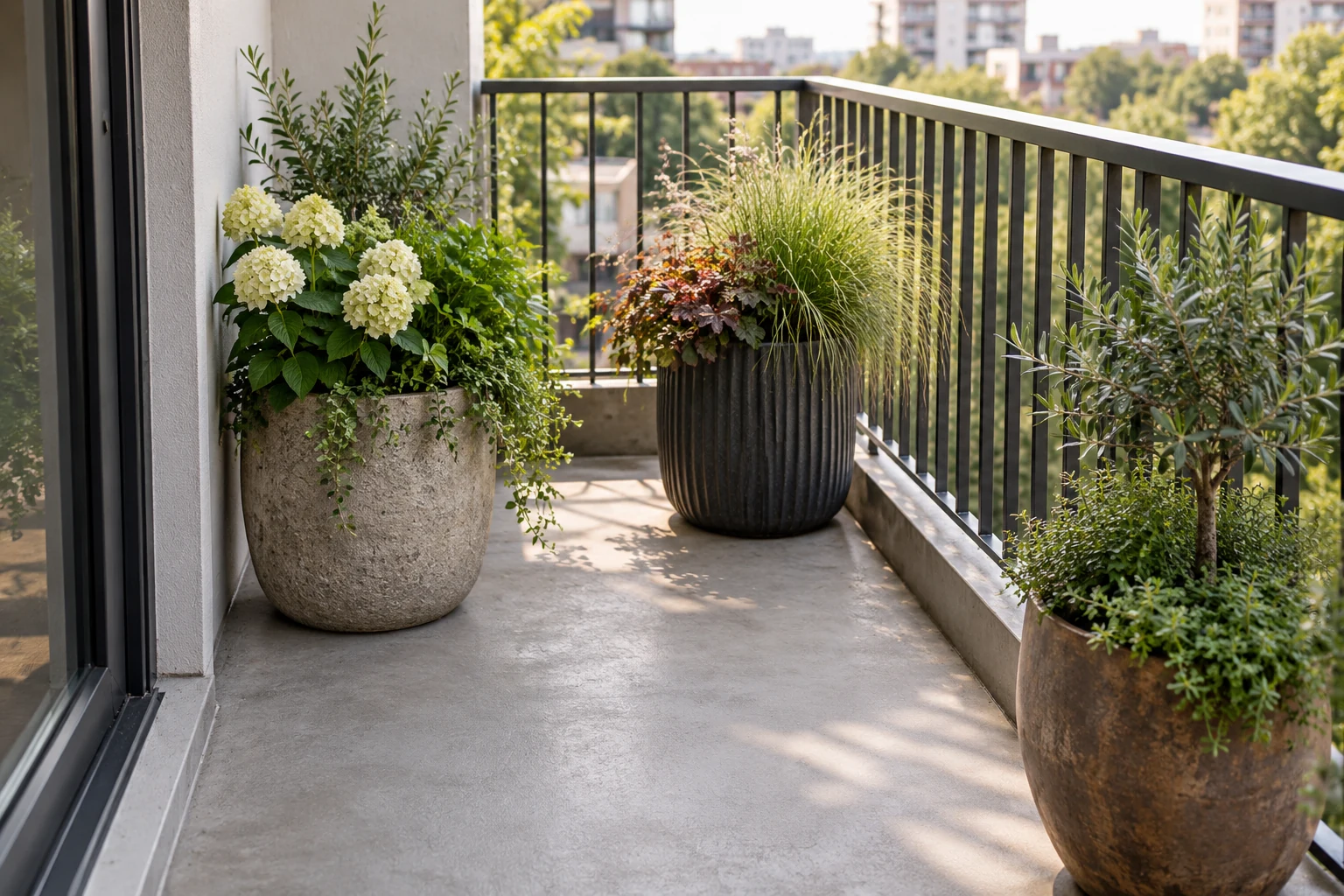
In the hypothetical arrangement, both modest floor pots remain movable. Put them outside the door sweep and walking route, while keeping each within reach for watering. A pot that looks attractive in the far corner but cannot be reached past an occupied chair has not found a usable home. Check stability in the actual positions, particularly if a spot is windy. In its guidance on container-grown vegetables and herbs, University of Maryland Extension warns that tall plants in relatively small, lightweight containers can become top-heavy or topple in wind. For this balcony, favor a stable pot-and-plant arrangement over a taller one that would call for an unverified attachment.
Container care also affects placement. Maryland Extension says containers in full sun dry faster than those in shade, and breezes dry the growing medium faster than sheltered conditions. Its ordinary-container guidance calls for adequate holes or slits so excess water can drain and excess fertilizer salts can flush out. The Extension separately describes self-watering containers that lack drain holes and instead hold water in a reservoir below the potting mix. Do not assume every container has, or needs, the same construction. Check the pots you actually use and where their water will go.
Once the light, stability and access questions are answered, the resident can optionally read the space through Mindful Design School’s five-element approach. The school gives these simple cues: a living green plant for wood, the sun for fire, soil for earth, an object made of metal for metal, and the water used to water plants for water. It says the elements need not appear in exactly equal quantities, but its approach is to represent each intentionally.
That is an interpretation of the balcony, not an instruction to add a flame or water feature. In the example, the plants, their soil, available sunlight and ordinary watering may already supply several of the school’s cues. The chair’s material has not been specified, so it should not automatically count as metal. A resident interested in representing each element can first notice what is genuinely there, then consider whether a modest metal object can fit without taking working space. If it cannot, do not compromise the layout to complete a display. The school describes the five elements as a way to cultivate harmony; the separate, observable questions are whether the plants suit the exposure, the pots stay stable and people can still move through the space.
Test the Occupied Layout and Keep It Working
Now run a reversible trial with the hypothetical balcony’s actual inventory: one chair and two pots. The order matters because a clear sketch alone cannot show how the balcony works while someone is using it.
- Move the existing chair from the left-end door sweep toward the far end. Leave the right-end drain uncovered.
- Set the two pots outside the walking route, where they remain reachable.
- Open the door fully, then enter while someone occupies the chair in a normal reading position.
- From that occupied arrangement, reach both plants and the drain without moving furniture.
- Check that the chair and pots stand steadily in their chosen positions.
In this illustrative trial, every check passes. The door opens fully, the resident can enter while the chair is occupied, the plants and drain remain reachable, and the chair and pots are stable. The resident keeps the adjusted, modest morning-reading arrangement. That conclusion belongs to this hypothetical layout; the value of the trial on a real balcony is that it can produce a different decision. If a chair still obstructs access or proves unstable, try the feasible smaller one-seat option. If seating cannot pass the checks, keep the balcony plant-first or enjoy its view from indoors instead.
Upkeep is part of keeping the arrangement usable. Maryland Extension advises checking container moisture rather than watering automatically on a fixed schedule: needs change with the plant’s growth, weather and growing medium. While learning how quickly the pots dry, check them daily to see whether they need water, particularly in summer. Keep the pots reachable so that this remains a manageable habit, not a task that requires shifting the reading chair each time.
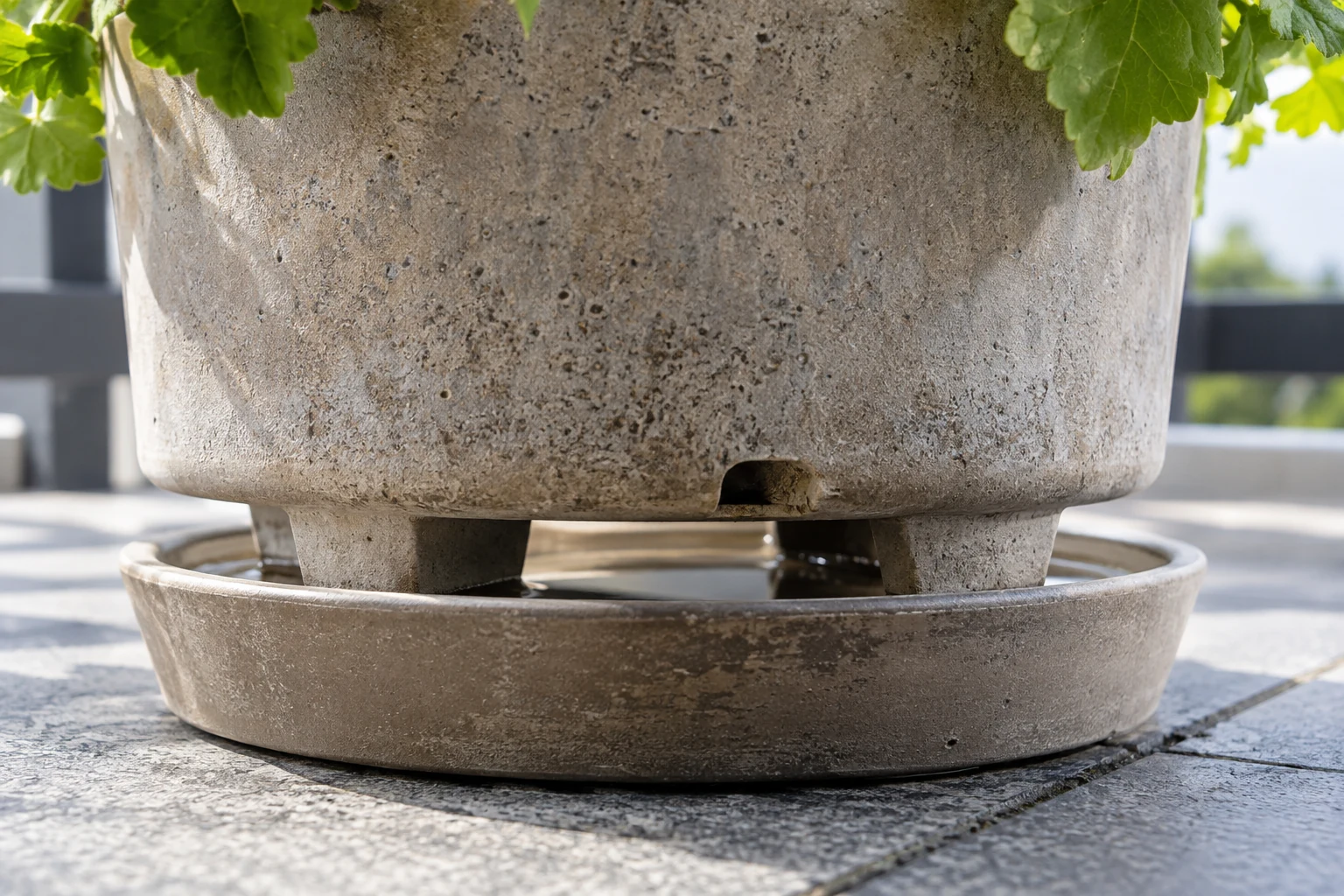
If saucers are useful for collecting water above a neighbor’s balcony, empty them regularly. Maryland Extension cautions that standing water in saucers can encourage root rot or provide a mosquito breeding site. After use or windy weather, check the pots’ stability again, then confirm that the door still opens fully and the route to the plants and drain remains clear. A small shift in a chair or pot is worth correcting before it becomes the arrangement’s new normal.
If the layout remains comfortable and usable, it can be left alone. The entry and elemental cues are Mindful Design School’s practitioner interpretation; the resident can directly judge whether reading, entry and plant care work. Feng shui need not carry a promise beyond that choice: the Feng Shui Society states that it cannot guarantee wealth, health or happiness.