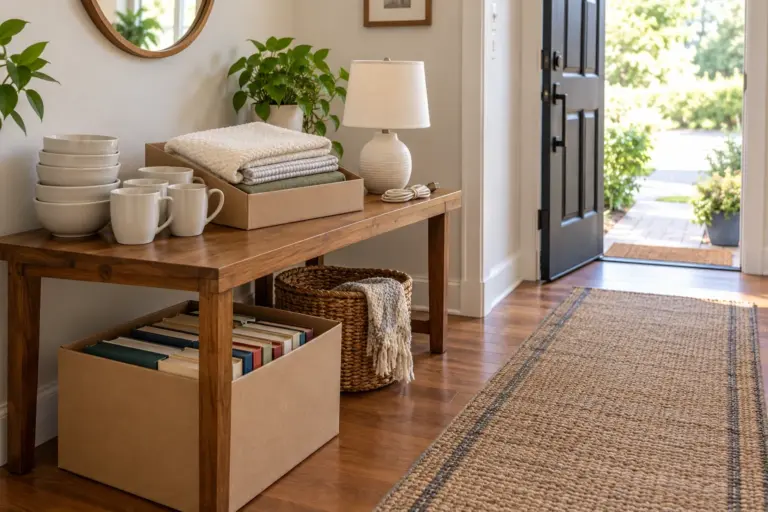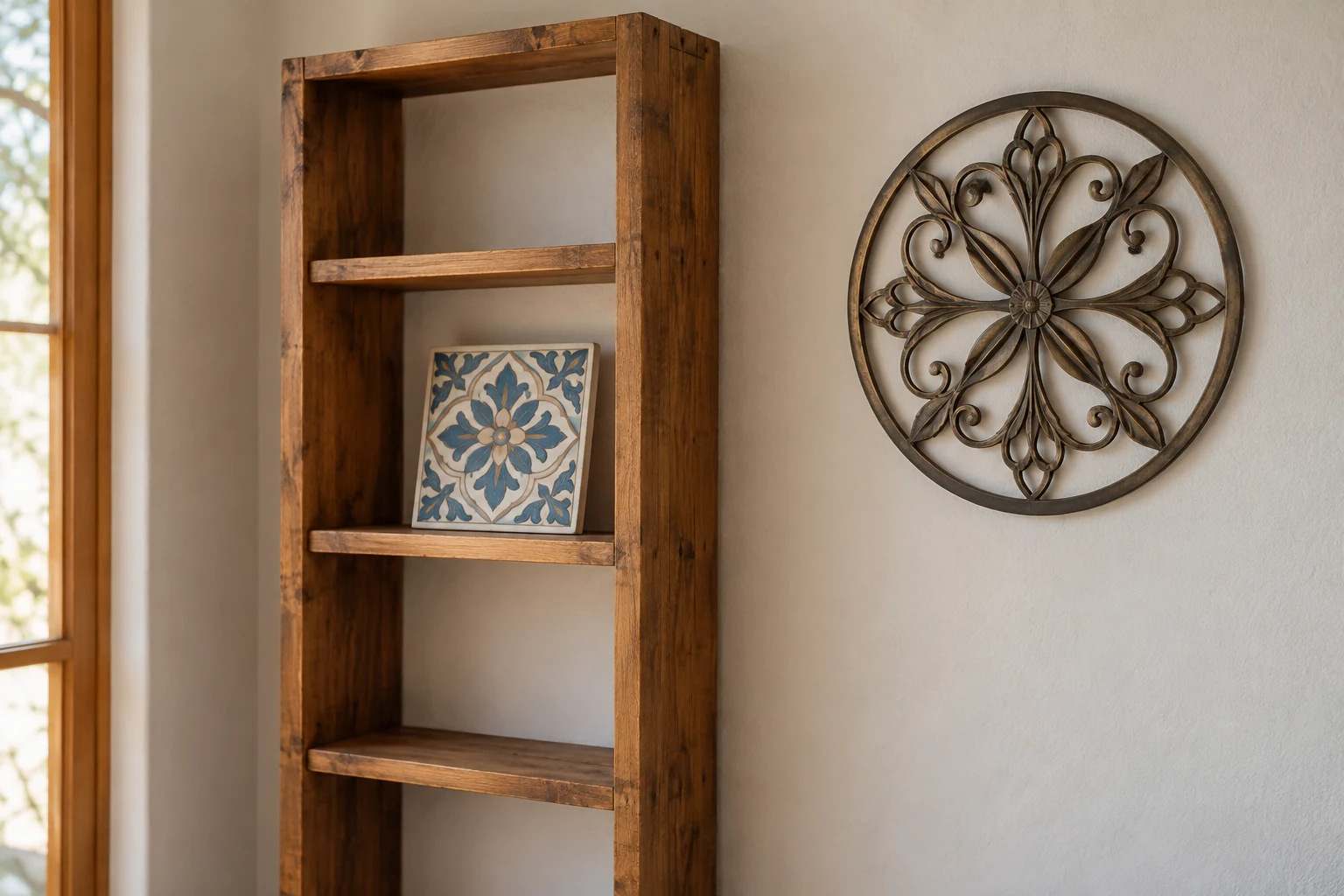
In the International Feng Shui Guild’s practitioner reference, the five elements are Wood, Fire, Earth, Metal and Water. A wood-made object can represent Wood, for example, while a circular outline can represent Metal. Those are different kinds of association: one concerns what an object is made of, the other its form. The names do not turn décor into five chemically defined categories, and an object need not have just one element label. This reference pairs the Guild’s material or literal-object cues with its characteristic shapes, then shows how to describe ordinary household examples. It is a way to recognize traditional associations, not a test of a room or a promise that an object will produce a particular result.
What an Element Association Describes
The Guild names Wood, Fire, Earth, Metal and Water as the five elements. A UC San Diego page on the concept notes that many writers prefer terms such as phases or transformations: despite their names, the categories are understood as dynamically interacting rather than as five isolated substances. For a home reader, that is a reason to read “Wood” or “Water” as the name of an interpretive category, not as a claim about every object’s physical ingredients.
The Guild describes four ways an element can be represented: shape, color, a literal object, or art depicting the element. This article concentrates on objects and materials on one hand, and visible forms on the other. Color and depiction can also be cues, but neither requires an object to be made of the substance named by an element. A picture of a water feature, for instance, can depict water without being a physical water feature.
Read each pairing below as alternatives, not a specification an object must satisfy in full. A known material may supply one cue even if the outline supplies another; a recognizable shape may supply a cue when the material is unknown. A shiny finish alone does not establish that something is metal, and a wood-colored surface does not establish wooden construction. The observable description comes first—“circular,” “ceramic,” or “made of wood,” where that is known. The element name is the Guild-convention interpretation attached to that observation.
The Five Materials-and-shapes Reference
These pairings are International Feng Shui Guild conventions, not claims of unanimous agreement across feng shui schools or tests of chemical composition. Each row offers object or material cues separately from form cues.
| Element | Material or literal-object cues | Characteristic forms |
|---|---|---|
| Wood | Items made of wood | Columns or stripes |
| Fire | Candles or fire | Triangles, pyramids or cones |
| Earth | Brick, tile or ceramics | Squares or rectangles |
| Metal | Items made of metal | Circles, ovals or arches |
| Water | Fountains or water features; glass or mirrors | Flowing or asymmetrical shapes |
The entries are a lookup for describing cues, not a request to find every item in every row. The examples that follow are explanatory household illustrations of the Guild’s pairings; they are not objects the Guild specifically requires anyone to use.
Wood: Wood-made Objects and Upright Forms
For Wood, the material example is direct: the Guild lists items made of wood. Imagine a wooden box whose construction is known. Its Wood cue comes from its material, whether it sits upright, lies flat or has a patterned surface. Calling that a material cue says what is being recognized; it does not make a claim about what the box will do in a room.
The Guild separately lists stripes and column shapes. Picture a tall, column-form object with a painted surface, or a striped pattern on a cushion. In those author-designed examples, the relevant observation is the upright form or repeated stripe, not verified wooden construction. The column could be made of something other than wood; the stripes could appear on a material that has no Wood material cue at all.
That distinction is useful when describing an unfamiliar object. “It has a column-like silhouette” is supportable from its appearance. “It is wooden” needs knowledge of its construction. Both statements might happen to be true, but the form cannot establish the material. Equally, a plain wooden box does not need stripes or a column silhouette to be recognizable under the Guild’s wood-made-item convention.
Fire: a Literal Object and Pointed Geometry
The Guild associates candles and fire with Fire. An existing candle is an example of a literal-object cue: it is recognizable as a candle even when it is not lit. Literal fire is a different observation from the presence of a candle, and neither is necessary to recognize the row’s shape association. This is a reference distinction, not a reason to introduce a flame.
For form, the Guild lists triangular, pyramid and cone shapes. Imagine artwork that prominently contains a triangle. Its pointed geometry can be described as a Fire-associated shape without saying that the artwork contains fire or can produce it. A pyramid-form ornament or cone-form outline would provide the same kind of form observation, regardless of whether its material has any separate association in the table.
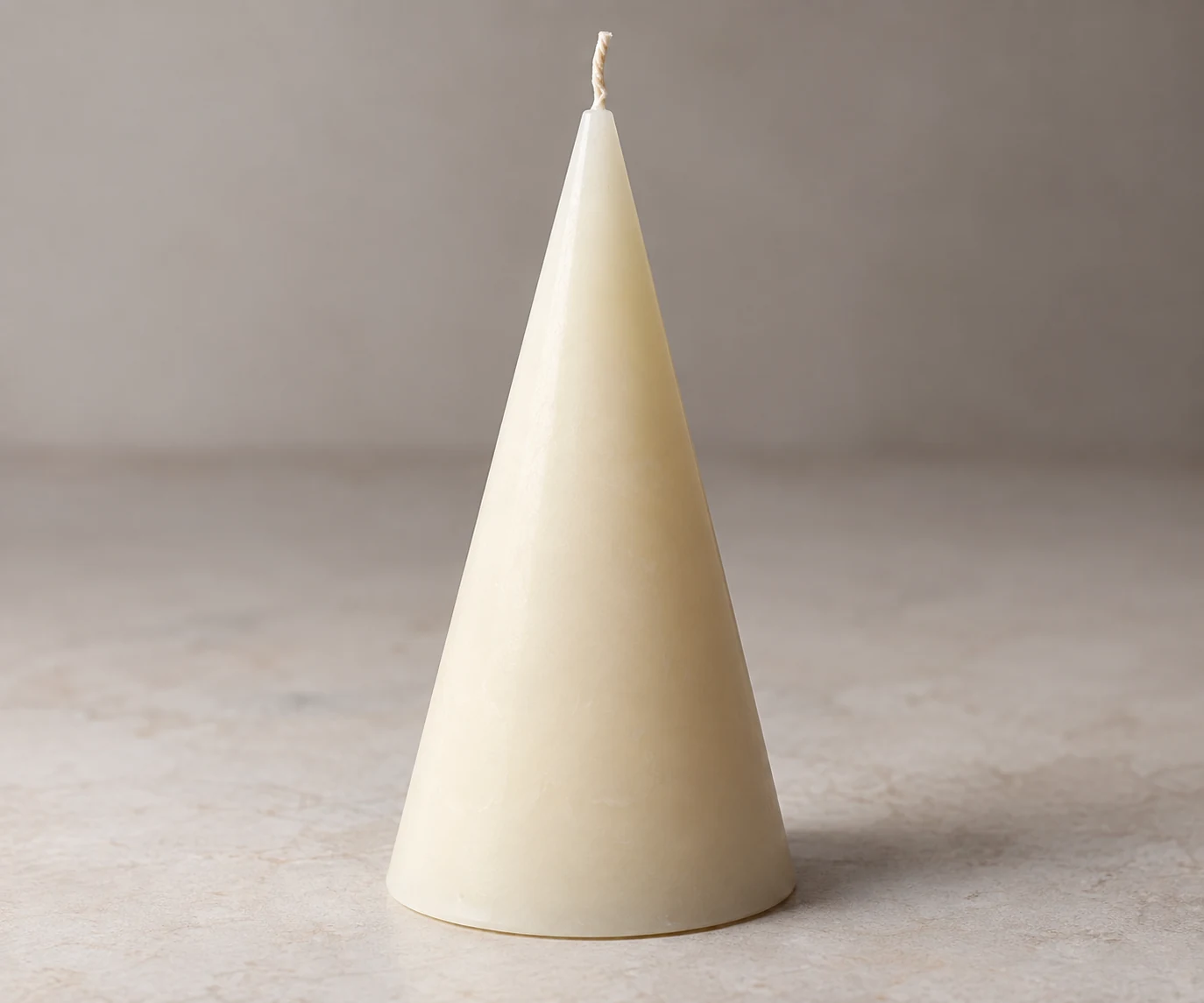
A depicted subject adds another possible route: the Guild allows art depicting an element to represent it. It still helps to say what you actually see. “This image depicts a candle,” “this image has triangular geometry,” and “there is a candle here” describe three different things. Treating them as interchangeable would erase the distinction between a depicted subject, a shape and a literal object.
Earth: Ceramics and Four-sided Forms
The Guild’s Earth material or object examples include brick, tile and ceramics. Take a ceramic dish already in a household: if its material is known, that material supplies an Earth cue. A tile is another recognizable example of the listed convention. Describing the dish as ceramic says nothing yet about whether its outline has an Earth-associated form.
The form side of this row is square or rectangular. A square mat is an author-designed example: its four-sided outline is the Earth form cue, whatever the mat happens to be made from. A rectangular outline works the same way under the Guild’s listing. There is no need to guess that the mat contains brick, tile or ceramic merely because its geometry fits the Earth row.
This separation also keeps a familiar-looking object from being overclassified. A tile may have both a listed Earth object cue and a square outline, but the two observations remain distinct: one concerns the tile as an object, the other its form. Conversely, a ceramic item can have an outline associated with another row. The table lets you name the material and the outline separately instead of assuming that everything about an item must point to Earth.
Metal: Metal Objects and Rounded Outlines
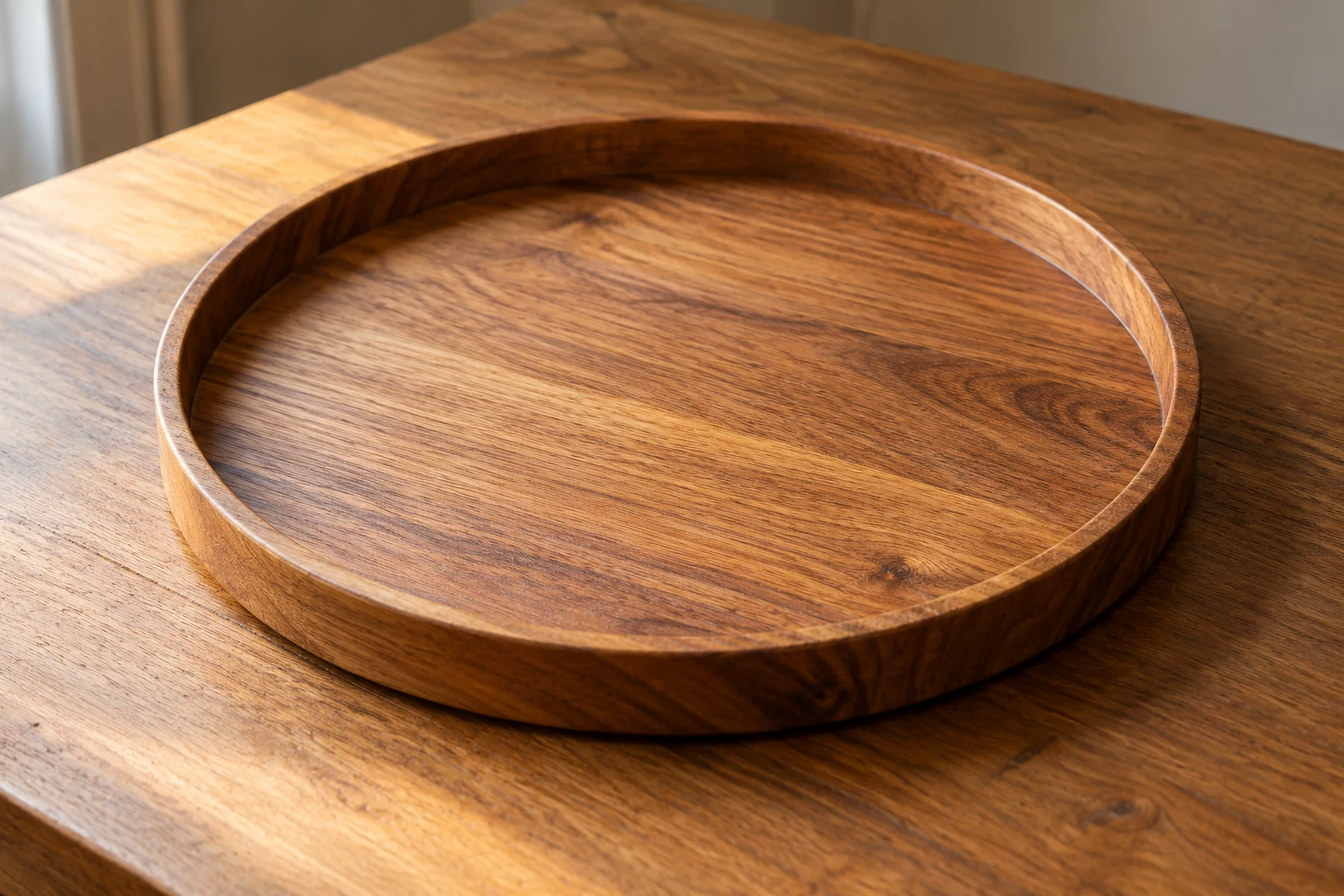
The Guild lists items made of metal as Metal representations. In an explanatory home example, a metal dish has a Metal material cue because its construction is known—not because it happens to reflect light or because of the outline of its rim. If the material is uncertain, “metallic-looking dish” is an appearance description, not confirmation that it is made of metal.
The Guild’s form list is broader than one kind of round object: it includes ovals, circles and arches. Consider an oval picture frame. You can identify the oval boundary without knowing whether the frame is metal, wood or another material. A circular outline or an arched top provides a related form cue; none is a test of what the object contains.
Thus “metal dish” and “oval frame” illustrate two routes into the same conventional category. One starts with known composition, the other with visible geometry. If an object happened to have both, the observations would reinforce that description; if it had only one, that would still be a usable cue. The reference does not ask you to treat every curved item as literally metal.
Water: Water-related Objects and Flowing Shapes
For Water, the Guild lists fountains or water features, and it also lists glass and mirrors. These are not identical sorts of things. A water feature is a literal water-related object; glass and mirrors are additional practitioner associations in the Water row. Glass is not chemically water. Its placement in this reference tells you how the Guild classifies a cue, not what glass is made of.
Suppose a household already has artwork depicting a water feature. The picture is not a fountain, but it can illustrate the Guild’s separate route of representing an element through art depicting it. Someone describing the room can say “the picture depicts a water feature” without proposing that the household build one. A mirror already in a room would be another listed Water cue, but identifying that convention is not an instruction to install one.
The Guild also gives asymmetrical or flowing shapes. Imagine the wavy edge of a decorative outline: its changing contour is the author-designed form example. It need not hold, show or contain water. “This edge has a flowing form” records a visual observation; “this is Water-associated in the Guild’s list” interprets that observation. Keeping those statements separate avoids mistaking a wave-like shape for a literal water object.
When One Object Points to Two Elements
Two author-designed examples show why the columns of the lookup should not be forced into a single label. First, imagine a round ceramic bowl. “Ceramic” describes its known material; under the Guild’s list, ceramics supply an Earth cue. “Round” describes its outline; a circular form supplies a Metal cue. The bowl does not need to contain metal to have a Metal-associated form. Both observations can be recorded without deciding that one cancels the other.
Now imagine a square wooden box. Its wooden construction supplies a Wood material cue, while its square outline supplies an Earth form cue. Calling the shape Earth-associated does not change what the box is made of; calling the material Wood-associated does not make the outline column-shaped or striped. These are applications of two separate Guild pairings, not examples the Guild itself identifies.
Neither object needs one mandatory element label. “Earth by material, Metal by form” and “Wood by material, Earth by form” are more precise than trying to declare each object exclusively one element. Nor does assigning two cues to one item establish an element percentage or show that the room has achieved balance. The examples demonstrate a descriptive use of the convention: compare what is physically observable with the interpretation attached to each observation, while leaving claims about outcomes aside.
From an Observation to a Shelf Decision
Consider a hypothetical household with the round ceramic bowl already on an existing shelf. A small observe-versus-decide record keeps the reference in its proper role:
| Question | Filled example |
|---|---|
| What can be observed? | The bowl is ceramic and has a circular outline. |
| What does the convention suggest? | Ceramic is an Earth cue; the circular form is a Metal cue under the Guild’s pairings. |
| What should decide whether it stays? | Whether the household likes it and whether it fits without crowding everyday shelf use or movement. |
The first line concerns the object itself; the second applies traditional associations. The last line is an ordinary household decision, not something the element labels can settle. Keep the bowl if it is liked and fits comfortably. If it gets in the way or is not wanted, leave it out of that arrangement for those practical reasons. Neither choice requires a new object or a move made solely to represent a supposedly missing category.
Someone might prefer a bowl with a different outline for visual reasons. That is an optional preference, not a cure or a verified route to health or wealth. The reference has done useful, limited work when it helps the household say exactly which features they noticed and which conventional meanings they attached to them. It has not diagnosed the shelf, much less the entire room.
What the Reference Cannot Decide
The International Feng Shui Guild says there is no single right way to apply the five elements. It also says the amounts of each element in a space will rarely be exactly equal—such as 20 percent each. “Rarely equal” does not mean equality is forbidden; it means an equal-20-percent formula is not a requirement supplied by this reference. Likewise, the table does not require five separate objects, one for each row, or provide a method for diagnosing a complete room.
The Feng Shui Society states that feng shui cannot guarantee wealth, health or happiness. A ceramic surface, pointed outline or flowing shape should therefore not be treated as a medical or financial prediction. The dependable use of this list is narrower: describe a known material or literal object, describe its form, and identify the Guild association for each without confusing the convention with the observation. Whether an object belongs in a household’s space remains a matter of preference and practical fit.