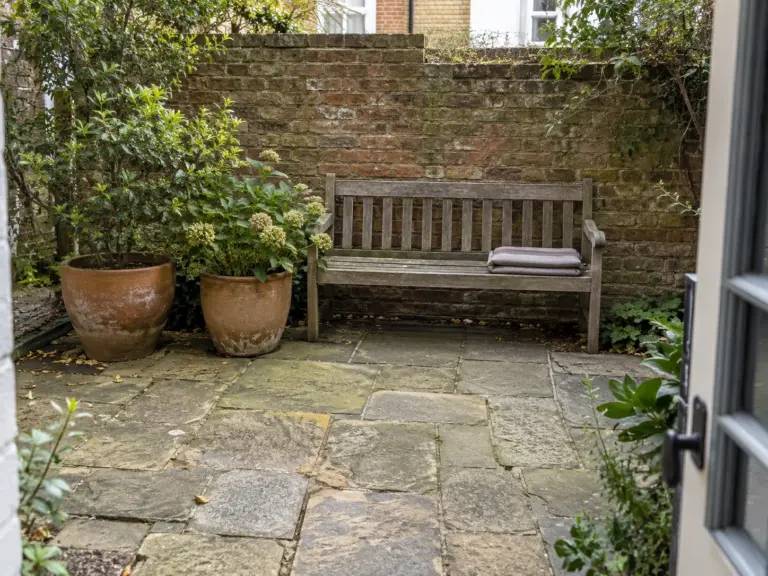
A house beside a busy road can often be made more usable without pretending the road has disappeared. Start with the room, yard position or entrance that is affected, and identify whether the problem is traffic sound, possible outdoor particles, privacy or the feeling of an overactive frontage. Then choose a change you have permission to make and judge it against that particular problem. Moving a quiet activity may help immediately; a curtain may address a sightline; work on windows, ventilation or an outdoor barrier calls for different authority and evidence.
Feng shui can inform how you want the home to feel. It cannot establish how loud a room is, how many particles enter it or what will happen to its occupants. The useful remedy is the one that fits the actual space and improves the concern it was chosen to address.
Find Out What the Road Affects
Picture an explicitly hypothetical rented home. A busy road runs along its frontage; it does not point at the front door. The front approach and living-room window face traffic. A rear room already has a chair, a light, book storage, a usable door and a route the household normally uses. During ordinary busy periods, traffic sound noticeably distracts someone reading in the front living room in the evening.
The household can decide where it reads. It cannot seal windows, build a barrier or change communal planting. Nobody has measured sound levels or particle concentrations, and there is no clinical diagnosis to explain. The rear room is an available alternative—not a room we can assume is quieter or cleaner simply because it is at the back.
Make a similarly concrete inventory of your own home before choosing a remedy:
- Place: Which window, seat, bedroom, entrance or part of the yard is affected? Stand or sit where you actually spend time, rather than judging the whole property from the pavement.
- Time and activity: Is the difficulty evening reading, conversation, work, sleep or using the front approach? Notice what happens during the traffic periods that matter to that activity.
- Concern: Can you hear intrusive sound? Is there a view from the street into a used position? Are you concerned about outdoor particles entering? Or does the busy frontage feel unsettling even when a particular physical problem has not been identified?
- Control: Can you rearrange an activity or use an existing curtain? Do windows, planting, building work or the frontage belong to a landlord, owner or shared property?
Those are different questions. A road can make one seat distracting for reading without making every room unusable. An inward view can be bothersome even if sound is tolerable. Conversely, the absence of an obvious smell, visible dust or distracting noise does not establish an absence of particle exposure.
The World Health Organization identifies road traffic as an important source of environmental noise. It also reports that excessive noise can cause annoyance and increase the risk of sleep disturbance, among other effects. That is a reason to take a persistent sound problem seriously, not a diagnosis or risk calculation for an individual address. In the hypothetical home, the established problem is narrower: ordinary evening traffic sound interferes with front-room reading. That gives the household a sensible first change to test without claiming to have assessed every road-related exposure.
Read the Frontage Through Feng Shui Without Confusing It with Exposure
Feng shui practitioner Maureen Calamia describes a fast-moving road as a situation in which a front yard can be too yang. She also describes a more yang front of the home as potentially inviting opportunities, using a roadway flowing past as part of her metaphor. These are practitioner interpretations, not measurements of physical energy and not predictions about an occupant’s health, wealth or future events. They leave room for a practical distinction: a lively frontage need not be bad for every use, while a quiet activity might call for a more settled-feeling place.
Calamia mentions both a fast-moving road and a T-intersection, but they are different layouts. Here the road passes beside the home. A road aimed at an entrance raises a different site question; there is no need to treat its geometry or proposed remedies as interchangeable with this frontage.
You can use the yin–yang language as a prompt for observation rather than a verdict on the house. Ask whether the arrival feels exposed, whether the front window draws attention away from a quiet task, and whether another existing space feels more comfortable for it. Then test the practical question separately. A calming arrangement is valuable if it suits the household, but a calmer feeling alone cannot show that traffic sound or particles have fallen.
For example, the renter might prefer reading away from the road-facing window. That preference makes the rear room worth trying. It does not settle the comparison in advance: the chair might be uncomfortable, the light insufficient, the route disruptive or the sound still intrusive. Equally, the front living room might remain a good place for an activity that does not require the same concentration. This is a choice about use, not a rule that the back of every home is preferable.
Feng Shui Society practitioner Sue Holmes has said that bedrooms are usually more relaxing at the back of a house, where they tend to feel more sheltered and still. Her qualified observation may help someone think about where they prefer to sleep. It is not a sound reading, and it does not establish anything about the hypothetical rear reading room. If sleep, rather than reading, is the affected activity in your home, examine the actual bedroom and the times it is used before deciding whether a change of room is possible or desirable.
Make the Front Approach More Private and Usable
Begin with the sightline, not with a plant-shopping list. From a road-facing seat or window, what can someone outside see? From the entrance, can you comfortably approach the door and see where you are going? Check the view from the places household members actually use and, where appropriate, look back toward those places from outside. A privacy remedy should interrupt an unwanted inward view without making everyday arrival or access awkward.
If a permitted curtain is already available, try it from the relevant seat at the time privacy matters. It may change how exposed the room feels and what is visible through the window. It does not alter the traffic source. In the hypothetical rental, a curtain is the relevant frontage option if privacy is also a problem; the tenant has no authority to alter the communal planting. There is no reason to add a privacy measure to solve a reading problem that is specifically about sound.
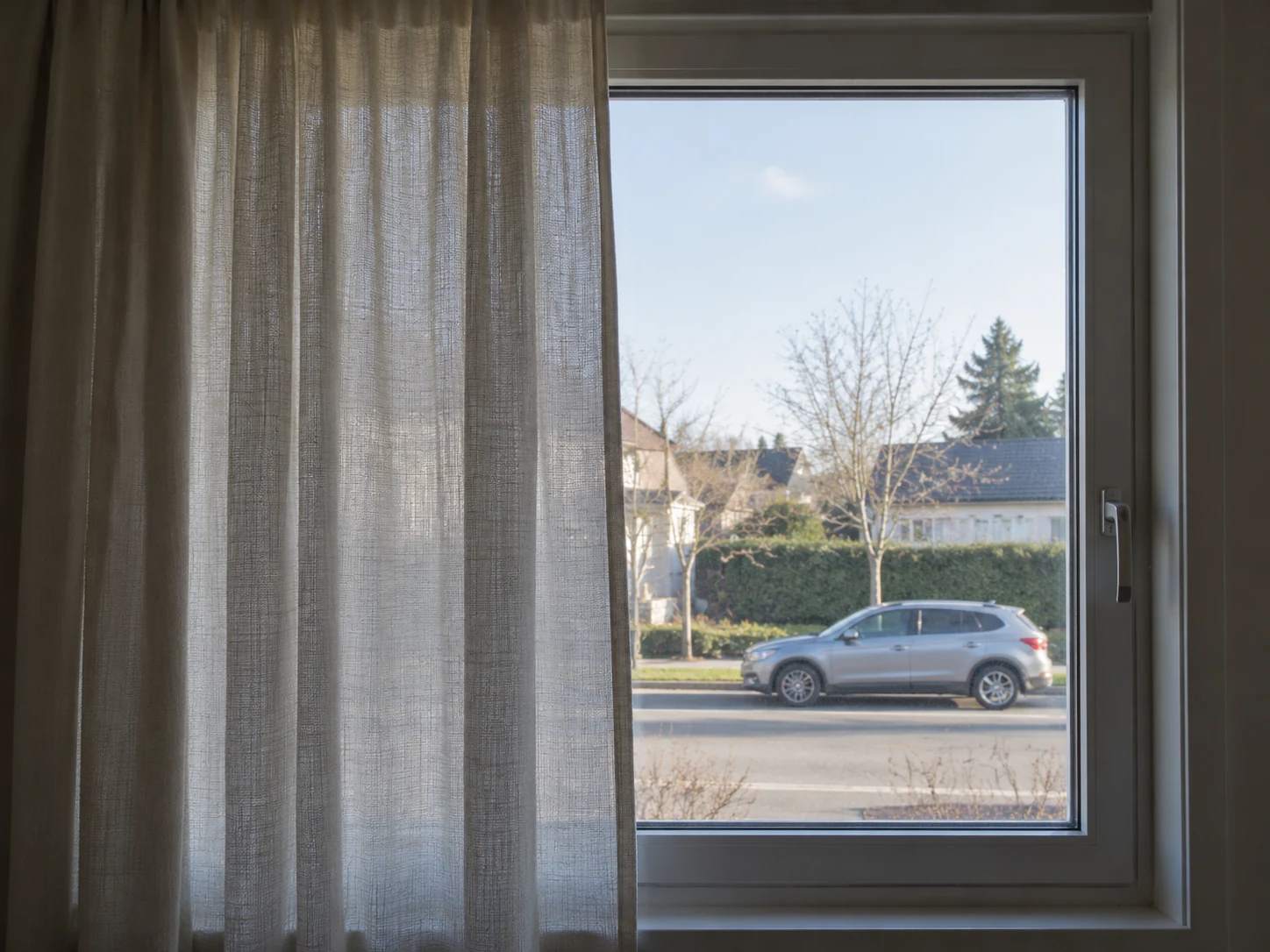
Where an owner controls the ground and the site suits planting, landscaping could instead shape the view into a window or make an entrance feel more sheltered. Feng shui practitioner Terah Kathryn Collins recommends protective landscaping at the front of a home on a busy street. That recommendation concerns how the frontage is arranged and experienced; it is not an engineered claim that planting protects occupants from traffic emissions. It is compatible with using Calamia’s yang-frontage interpretation to seek a better balance of activity and shelter, without attributing one practitioner’s specific recommendation to the other.
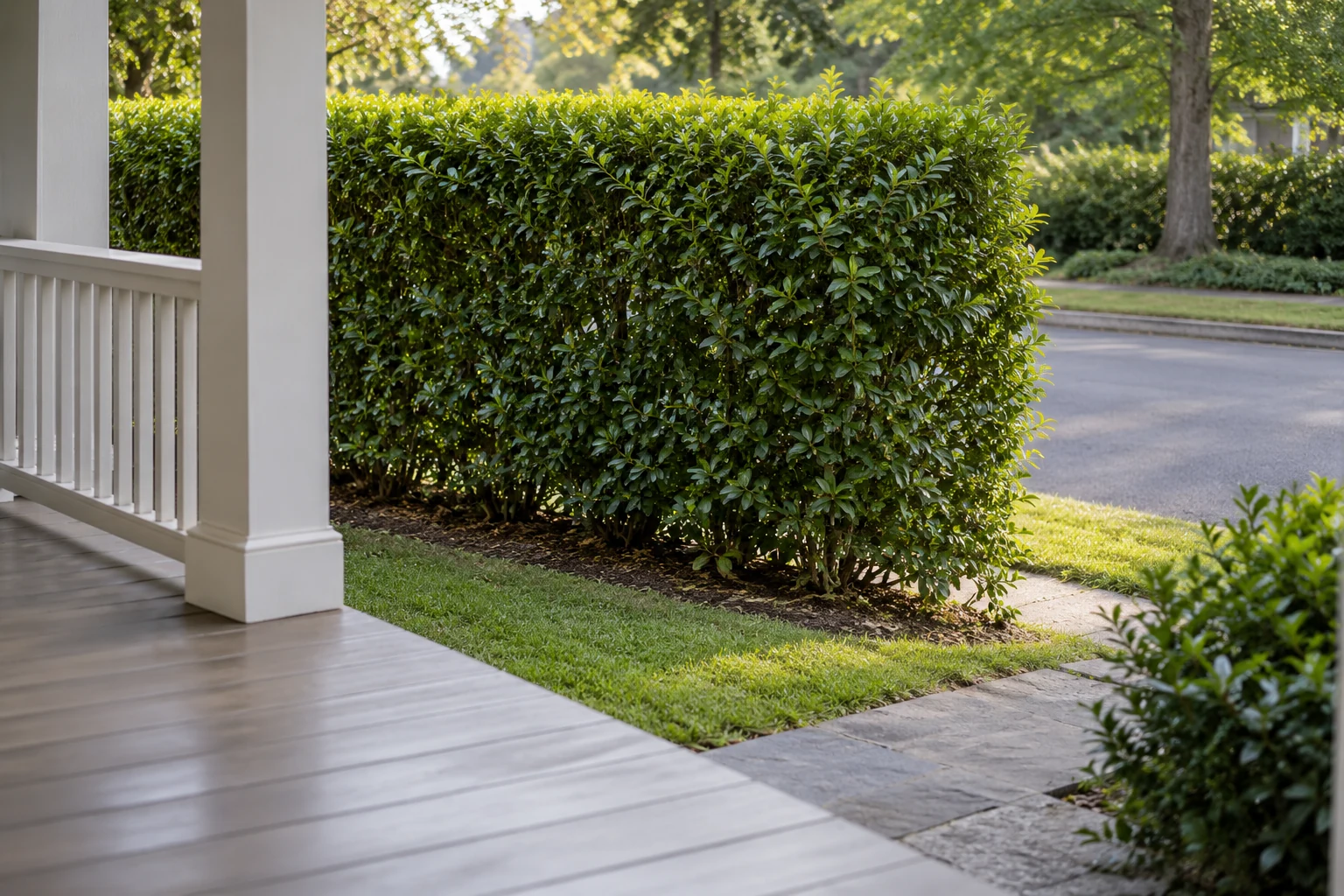
Test any proposed screen as a layout change. Look from the indoor seat or window it is meant to protect, then from the approach and entrance. Would it interrupt the unwanted view? Could residents and visitors still use the route? Would the household retain the visibility it needs at the door and along its paths? A screen that looks protective from the street but obstructs the way people enter is a poor fit. If it only blocks a view from a position nobody uses, it may not address the actual complaint.
Keep the promised benefit precise. A narrow hedge may screen a sightline, but it has not been established here as a way to absorb road noise or filter traffic particles. In its ordinary roadside guidance, the US Federal Highway Administration (FHWA) describes trees and vegetation as offering psychological relief rather than physically lessening traffic-noise levels. That does not make planting pointless: privacy and the feeling of arrival can matter. It means those benefits should not be sold as acoustic or air-quality results.
An owner considering planting or other frontage work also needs to check the actual space and the permissions that apply. The right arrangement depends on the used window, approach, available ground, access and local requirements. A resident of a shared site needs the appropriate authority before changing communal areas. If sound is the primary complaint, do not keep adding attractive screening in the hope that appearance alone will quiet the room; follow the sound path instead.
Treat Traffic Noise Along the Path It Takes Indoors
For sound, begin with the activity and the path between it and the road. Is the disruptive period when someone reads by the front window, talks in a road-facing room or sleeps? Are there road-facing openings, and might sound be reaching the used position by more than one route? A change in where an activity takes place is worth testing when there is a suitable existing room. It can improve that activity without changing the building or the outdoor sound.
If ordinary room-use choices are insufficient, the next question is about the property, not a decorative cure. The FHWA says insulating a building can reduce highway traffic noise, particularly when windows are sealed and cracks and other openings are filled. That supports seeking appropriate property, building or acoustic advice about the relevant openings and other possible paths. It does not promise a quiet room in every building, identify which alteration this home needs or justify attempting structural window work without the necessary authority and expertise.
Before considering permanent sealing, establish how the room would retain appropriate ventilation, conditioning, necessary openings and exit function with qualified property or building advice. Permanently sealing an opening is not the same as closing an operable window for a while. In its US guidance, the FHWA notes that insulation can become costly because air conditioning is usually necessary once windows are sealed. That is useful context about the trade-off, not a universal rule that every closed or sealed window requires air conditioning, nor a specification for this home. The proposed noise improvement must be considered alongside the way people will safely use and ventilate the space.
An outdoor barrier is a still larger and more site-dependent response. The FHWA’s principle is that a noise barrier must be high and long enough to block the view of the highway from the area it is intended to protect. In practical terms, first identify the actual protected position: a yard seat, for example, is not automatically protected by a structure that looks substantial from the front door. A break for a driveway or intersecting street can undermine barrier effectiveness; the FHWA also says barriers provide very little benefit to homes on a hillside overlooking a highway. Even an effective barrier reduces overall traffic noise rather than eliminating it.
Those constraints explain why a garden fence or hedge should not be treated as a scaled-down guaranteed barrier. The FHWA separately gives an example in which 30 metres of dense vegetation can reduce noise by five decibels. That is a wide, dense, highway-scale illustration—not evidence that an ordinary residential planting strip will achieve the same result or a recommended setback for every home.
Before pursuing a barrier, an owner needs site-specific professional assessment and local permission. The protected area, road-to-home sightline, ground levels and necessary openings for access all affect whether the idea is plausible. Do not propose closing a needed driveway or entrance simply to make a barrier continuous. For the hypothetical renter, this branch is not available under the tenancy conditions; trying the already usable rear room is both less burdensome and within the household’s control.
Respond Separately to Outdoor Particles
Sound is not a test for air quality. The US Environmental Protection Agency (EPA) says particulate matter can be higher near busy roads and that outdoor particles can enter through open doors and windows as well as small cracks and crevices. That makes outdoor particles a legitimate separate concern for a house beside a busy road. It does not tell us the concentrations in this particular home or how much any one occupant has encountered.
A rear room that sounds quieter may or may not have different particle conditions. Likewise, noticing dust or an odor can prompt a question, but ordinary looking, smelling and listening cannot measure all pollutants or diagnose personal exposure. Do not credit a room move, curtain or landscape screen with an air-quality improvement merely because it makes the road less noticeable. In the rented-home example, particle levels have not been measured at all.
When outdoor pollutants are high, the EPA advises keeping windows closed. Doing so can limit one entry path during those conditions, but the home still needs an appropriate clean-air ventilation path. The EPA also explains that opening windows and doors can increase outdoor ventilation when conditions permit. These statements address different circumstances: neither supports leaving every window open regardless of outdoor conditions, nor permanently sealing needed openings as a stand-alone air remedy. A household should consider how its existing ventilation works; changes to that system or to required openings call for suitable property or building guidance.
If the home has an HVAC system, its existing filter arrangement may be worth reviewing for proper maintenance and whether a higher-efficiency filter is suitable for that system. The EPA recommends higher-efficiency HVAC filtration, but a particular filter still has to fit the actual equipment and be used appropriately. A portable air cleaner is another option to assess for the space where it would be used. Neither choice follows automatically from the mere fact that the home faces traffic, and there is no basis here for a particular brand, rating or promise about removing every kind of gas.
The EPA’s limit is straightforward: portable air cleaners and HVAC filters can reduce indoor air pollution, but they cannot remove all pollutants. Filtration is a supplement to source control and ventilation, not a replacement for them. That is why an air-related next step needs its own question—what conditions and entry paths are relevant, and what equipment and ventilation does the home already have?—rather than borrowing a result from a successful noise or privacy change. A plant screen may be pleasant, and reading in another room may be easier, but neither demonstrates that particle exposure has fallen.
Choose the Next Change Your Household Can Actually Make
Match the action to the concern, the household’s authority and the burden of making the change. For the hypothetical renter, the known complaint is sound interrupting evening reading. The rear room is already furnished for it, and the household may choose where to read. That makes a reversible room-use comparison the proportionate first step, rather than a request for building work or a claim about a protective hedge.
Before judging the result, decide what would count as success. The question is not only whether traffic sounds less intrusive during reading, but whether the existing chair and light work, books are within practical reach, the door and shared route remain usable, household access is preserved and the reader prefers the arrangement. The front living room need not be abandoned; it can remain available for other uses. If the rear room fails these checks, a symbolic preference for a sheltered back room is not a reason to force the move.
Try the usual evening reading in the existing rear chair under its existing light during comparable ordinary traffic periods. Bring only books or other materials the household owns. Leave the openings, fixtures and ventilation function unchanged. Compare the experience with the usual front-room reading rather than assuming that the room’s position settles the matter. This trial answers a specific usability question; it does not measure decibels or particles.
Other remedies become appropriate under other conditions:
- If an inward view is the unresolved problem, test a permitted curtain or, where there is authority and a suitable site, a landscape screen against the actual sightline and approach.
- If room use does not adequately address a noise problem, an owner with the authority and budget can seek qualified assessment of openings, building paths and the ventilation implications of proposed work.
- If particles are the concern, review the appropriate window choices during high-pollution conditions and the home’s ventilation and filtration options. Do not infer an air result from the quieter reading room.
- If a specific outdoor area needs noise protection and the site is suitable, consider a substantial barrier only after professional assessment of the sightline, access and permissions.
These are not successive upgrades everyone must buy. A low-cost use change may be enough for one activity while leaving a separate concern to address; expensive site work is not automatically the better remedy.
For a prospective buyer, the same discipline applies before assuming a future fix is possible. Visit during normal traffic at the times you expect to use the actual rooms, entrance and yard. Check the existing spaces and services, what access must remain, and whether a proposed screen, building change or barrier is feasible and permitted. A plan that depends on altering land you will not control—or on quieting a room without understanding its ventilation—should not be counted as an accomplished remedy.
Keep the Change That Works, and Record What Remains
In the stipulated renter comparison, the resident reads in the rear room during comparable ordinary evening traffic periods and finds road sound less intrusive for reading than in the front living room. The existing chair, light and access to books work. The door and shared household route remain usable, and personal preference and access both pass. The household therefore keeps evening reading in the rear room while those conditions hold. The front living room remains available for other uses.
Record the result just as carefully as the success: front-room traffic sound continues, and the road source has not changed. Outdoor-particle exposure was not measured and is not claimed to have fallen. Moving an activity does not erase the WHO’s broader concerns about excessive noise or guarantee a health outcome. It solves the narrower, observed reading difficulty under the conditions tested.
If traffic patterns, reading times, room needs or household access change, repeat the use check. If the rear room no longer suits the household, reconsider another feasible place to read or, where authority and budget allow, seek advice about the unresolved noise path. Address any separate privacy or air concern on its own evidence, rather than treating the successful reading move as proof that everything beside the road is fixed.
The working rule is simple: name the affected place and concern, choose the least burdensome permitted action that targets it, and test what changed. Keep a useful arrangement for the benefit it actually provides—and make the next decision about whatever exposure remains.