The Answer Depends on the Room and What You Want Greenery to Do
Picture the spot you have in mind. Does daylight reach it? Is it beside a door or window, or in the route people take through the room? Would anyone in the household need to work around a pot or arrangement there? Those details matter before deciding what the greenery is meant to accomplish.
Real plants and Artificial plants answer different intentions. If you want a living plant as an intentional feng shui adjustment, practitioner Anjie Cho prefers the living option . That points toward a real plant if you can keep it healthy in that spot. If you mainly want the look of greenery, Cho also accepts a high-quality, realistic artificial plant in a room without light or in a vacation home . Neither choice needs to be forced into a room that works better without greenery.
Consider two possible rooms. In one, the proposed spot gets light and someone is willing to tend a plant. A healthy real plant would fit the live-plant intention Cho describes . In the other, the spot has no light, or the home is occupied only intermittently. A realistic artificial plant could give that room a green accent without pretending it is the living adjustment Cho prefers . The same resident might reasonably make different choices for those two rooms.
It helps to name the purpose before shopping. “I want a living plant for this feng shui adjustment” is a different brief from “I want this corner to look greener.” The first makes the plant’s ability to remain healthy central to the decision; the second leaves more room for a convincing artificial option. Appearance still matters in either case: a choice that suits the room is more useful than one made solely because it is labeled “real” or “faux.”
For now, treat the answer as conditional, not a ranking. Choose the intention first, then see whether the proposed spot and your household can support it. A living plant is Cho’s preference for the intentional adjustment; realistic faux greenery is an option she allows where light or regular presence makes a living plant impractical .
First, Test the Proposed Spot Against the Room
Stand where you want the greenery and look at what already happens there. Is the spot beside a window, tucked into a dark corner, or between an opening and the furniture? Picture the plant at its full intended size, including its pot or stand. Would someone have to step around it to reach a door, open a cabinet, or use a chair? This first pass is about whether the placement works in the room, before giving it a feng shui role.
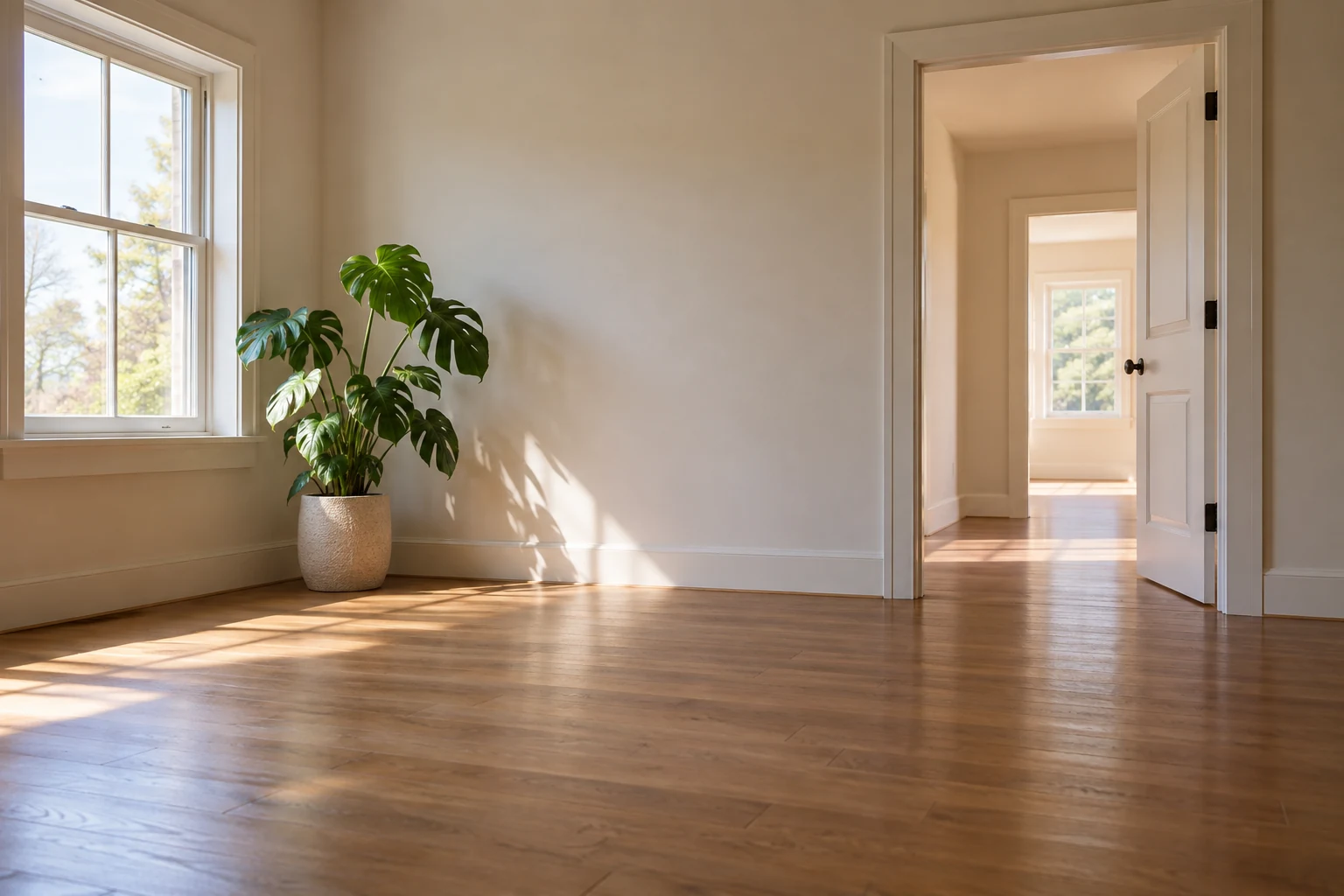
Next, consider how the room is used. A shelf in a frequently used living room presents a different decision from a shelf in a vacation home that may sit unattended. Feng shui practitioner Anjie Cho names a no-light room and a vacation home as situations where a realistic artificial plant can make sense. In either setting, the useful question is not whether faux greenery is identical to a living plant. It is whether the proposed spot and the household’s routine make a living plant a workable choice.
If you would like a living plant but are unsure about the upkeep, consider whether a smaller or easier-care choice would fit the same spot and your routine. Cho suggests trying an easier-care living plant for someone who wants one. That is an option to explore, not a reason to force a plant into a location you cannot readily tend. For example, a reachable side table may be more workable than a high shelf chosen solely because it looks empty.
Finally, trace the route through the room with the proposed greenery in place. If a pot would narrow the way to a doorway, or stems would interfere with opening a cupboard, leaving that spot empty is a valid choice. The same applies to an artificial plant: avoiding watering does not make a bulky arrangement fit beside a frequently used door. And if a living plant would not suit the spot while a faux one would not look right or would still get in the way, neither belongs there. You can keep the opening clear rather than treating every vacant corner as a place that needs filling.
What Each Option Means in a Feng Shui Reading
If you want greenery because you like how it looks, Real plants and Artificial plants can both serve that decorating purpose. If you want an intentional live-Wood adjustment in a feng shui reading, the distinction matters more. A practitioner FAQ identifies a live leafy plant as its preferred representation of the Wood element and says a fake plant does not serve as a substitute for that purpose. That is the practitioner’s interpretation of Wood, not a measured property of the room.
The difference is easiest to see when the two options would look similar from across the room. Imagine a leafy living plant and a realistic faux version in the same corner. Both might give you the green shape you wanted to see. Under the FAQ’s approach, though, only the living plant answers the specific intention to use live Wood. Choosing the faux version would change the nature of the adjustment, even if it preserved the appearance.
That does not mean every feng shui practitioner rejects artificial greenery. Practitioner Anjie Cho describes realistic faux plants as acceptable when natural light is lacking, and explicitly prefers a realistic faux plant to a dying real one. Her guidance addresses a different tradeoff: whether insisting on a living plant makes sense when the result would be a struggling plant. The FAQ sets a stricter boundary around what counts for its intended Wood-phase substitution. These views need not be collapsed into a single verdict. One allows faux greenery as a reasonable choice in a constrained setting; the other says it does not perform the same symbolic job as a live plant.
For example, suppose you have chosen a shelf because you want its greenery to represent live Wood. A healthy living plant would align with the FAQ’s stated preference; a faux plant could echo its leafy appearance but would not meet that FAQ’s intended substitution. Now suppose your aim is simply to soften the look of the shelf and a living plant there would decline. Cho’s preference for realistic faux over a dying plant gives you a practitioner basis for keeping the visual effect without treating the faux version as interchangeable with living Wood.
The useful question, then, is not whether a faux leaf can look like a real one. It is which claim you are making about the choice. “I want this room to look greener” is a decorating preference that either option might satisfy. “I want a live-Wood adjustment” invokes a particular practitioner reading, for which a live leafy plant has a role that the FAQ does not assign to a fake one. If you choose faux greenery under Cho’s guidance, you can describe it as a practical, visually realistic alternative in a room lacking natural light—not as proof that the two options have an identical feng shui function.
Compare Light, Upkeep and Appearance at the Same Spot
Once you have a proposed spot, compare Real plants and Artificial plants there—not an ideal specimen in a shop with an ideal photograph of faux greenery. Ask three separate questions: Will the available light support the choice? Can you keep up with what it needs? Will it still look the way you want in that particular position? The answers may differ even when the pot size and placement are identical.
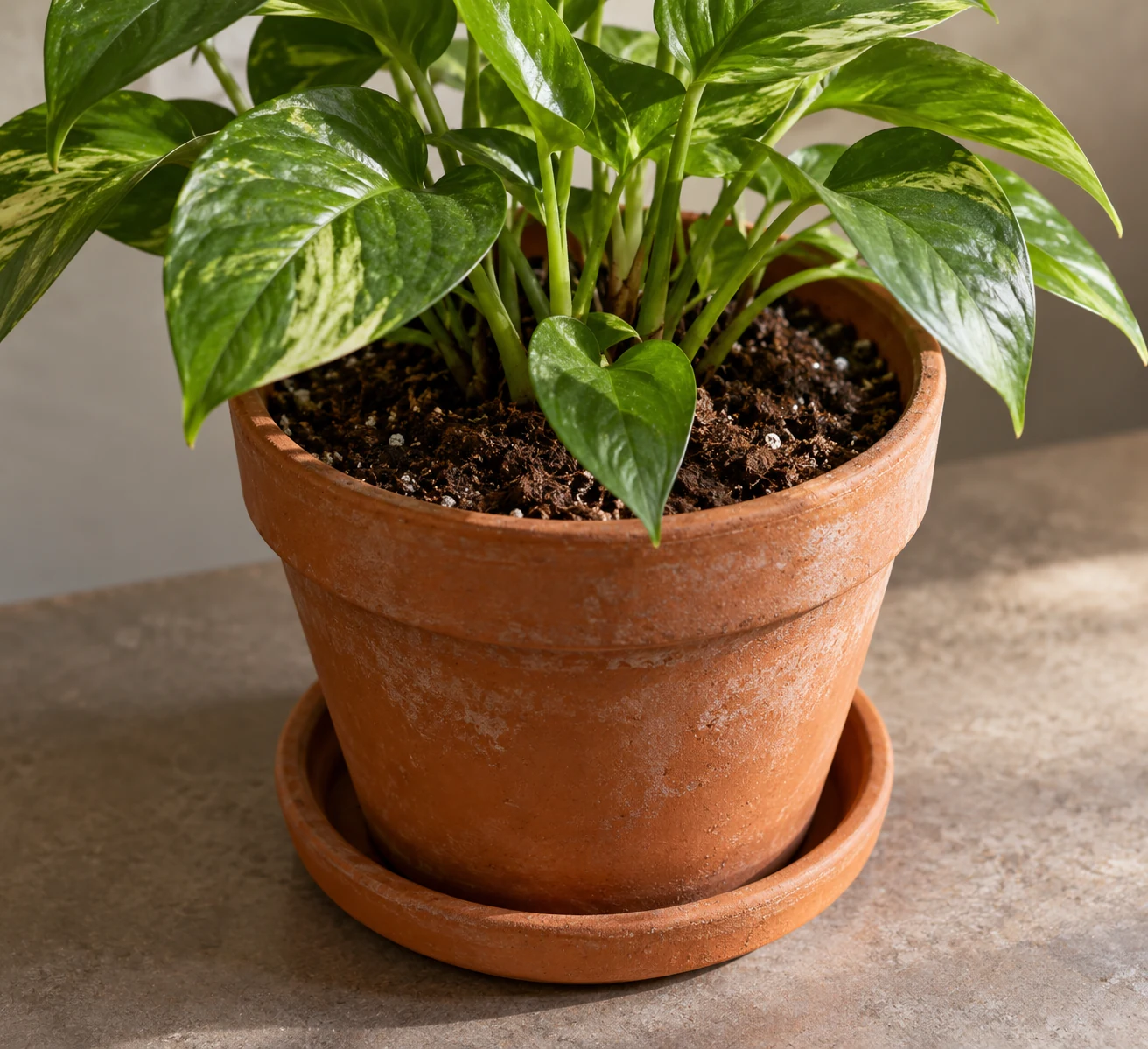
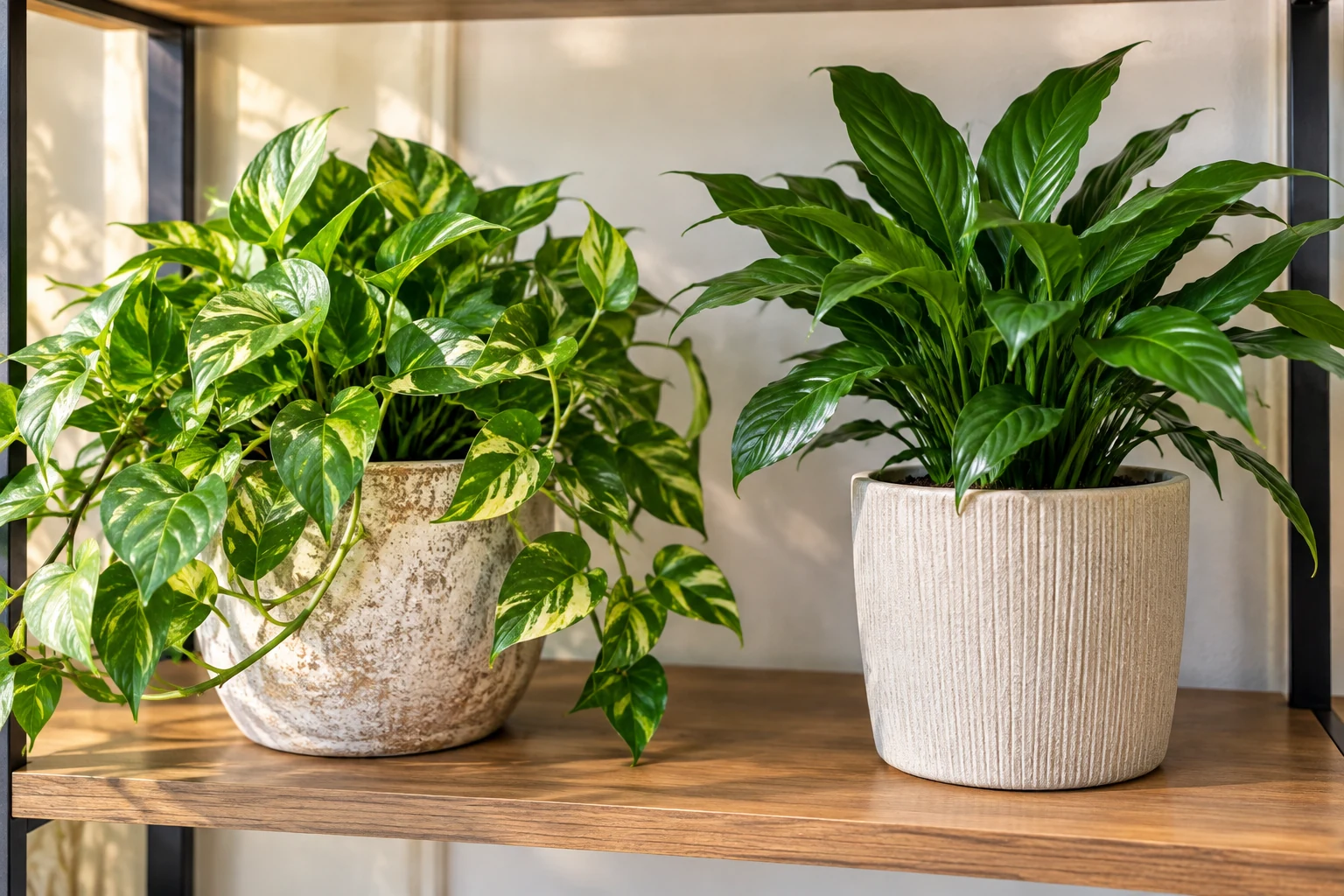
For Real plants, start with the light the spot actually receives. University of Minnesota Extension advises choosing a species that grows in the available indoor light. That makes “I want a plant here” a more useful starting point than “I want this particular plant here.” If you have a species in mind, compare its light needs with the proposed position before buying it. If you have the position in mind, look for a species suited to that light instead. Either approach is more concrete than assuming every living plant will suit the same shelf or corner.
Insufficient existing light does not necessarily end the living-plant option, but it changes the setup. Minnesota Extension suggests grow lights as a way to add plant-usable light when the existing light falls short. In practical terms, that is an additional fixture to accommodate and use, not light the room somehow provides on its own. A resident deciding between a living plant and a faux one can therefore compare two honest versions of the arrangement: the living plant with the supplemental lighting it would need, or the artificial plant without it. If you do not want a light in that location, assess the living option against the light that is already there.
Care is more than remembering to water. Minnesota Extension says that matching humidity, light and temperature to a plant can reduce pest trouble, and that its pot should drain rather than stand in water. Those are useful questions to ask about the whole arrangement: Is the species a fit for the conditions you can provide? Where will excess water go? Can you tend the pot without turning a simple decorative choice into a recurring task you dislike? A decorative outer container may look right in the room, but the care plan still has to account for drainage. The tradeoff is not simply “natural versus manufactured”; it is whether you want, and can sustain, the conditions a particular living species needs.
Artificial plants remove several of those demands. They need neither natural light nor watering, feeding or comparable plant care, according to IKEA’s guidance. That gives you more freedom if the proposed location has little light or your schedule makes regular plant care difficult. It does not mean a faux arrangement looks after itself: artificial foliage still needs occasional dust cleaning, for which IKEA recommends a damp cloth on its products. When comparing upkeep, put the tasks side by side. One option asks you to provide suitable growing conditions and maintain a pot; the other asks you to keep visible surfaces clean.
Appearance deserves its own decision rather than being treated as an automatic win for either option. Feng shui practitioner Anjie Cho asks that a faux plant be high quality and realistic. Before choosing one for a dim corner, picture it in that corner at the distance from which you usually see it. If its finish or shape draws attention for the wrong reason, freedom from watering may not be enough to make it the right decorative choice. Conversely, a living plant that suits the light but whose pot, lighting setup or ongoing care would bother you may not produce the appearance you were hoping for. Those judgments are about the proposed room and your preferences, not a claim that every real or artificial specimen looks a certain way.
A comparison at one spot can make the tradeoff clearer. Suppose a table has enough light for a species you are willing to maintain. The real option then means selecting for that actual light, providing a draining pot and attending to the conditions that help limit pest trouble. The artificial option would avoid growing and watering requirements, but you would still decide whether it looks convincing there and clean it occasionally. Neither set of tasks is especially complicated on paper; what matters is which set you will actually do and which result you prefer to see.
Now imagine the same table without adequate light for the living species you want. The comparison changes. You could investigate a species suited to the available light or consider supplemental grow lighting; those are two different ways to make a living arrangement feasible, and each affects what you would place there. Or you could use artificial greenery, which does not depend on natural light, while accepting the need to choose a realistic-looking piece and keep it free of dust. Framing the options this way prevents a common mismatch: judging a living plant as though it needs no supporting conditions, while judging a faux plant as though it needs no attention at all.
It can help to write down the comparison before purchasing anything: the spot’s available light; the exact living species being considered and whether that light suits it; whether supplemental lighting would be acceptable; how the pot would drain; and whether you are prepared to meet the plant’s light, humidity and temperature needs. For the artificial option, note whether its appearance works in place and whether occasional cleaning is a task you will take on. This keeps the practical decision tied to the arrangement you would actually live with, rather than to the easier-to-imagine best version of either option.
Account for Pets Before Choosing a Living Species
If a dog or cat can reach the proposed spot, choose a Real plants candidate by its exact botanical species, not just the name on a shop label. Look up that species in the ASPCA’s toxic and nontoxic plant database before bringing it home. Species identification matters, and the ASPCA cautions that its list is not all-inclusive. A broad common name or a missing database entry is therefore not enough to settle the question. An absent entry does not establish that a species is safe or unsafe; it means this check has not resolved the question.
Consider a shelf that seems out of reach today. If the cat uses a nearby chair to climb onto it, treat the plant as accessible when deciding what belongs there. Conversely, a resident whose animals cannot enter the room faces a different household-fit question. The useful distinction is access, not simply whether pets live in the home. If the seller cannot provide a botanical name, ask for it or choose a plant whose identity you can verify; otherwise, you cannot make a meaningful species-specific database check.
A “nontoxic” listing also has a limit: the ASPCA warns that any plant material can upset a dog’s or cat’s stomach if eaten. That does not make every living plant equally concerning, but it does mean the label should not be treated as permission for an animal to chew leaves. For a pet that repeatedly investigates greenery, consider whether you can keep a living plant inaccessible in ordinary daily use—not merely when you are watching. A species check and an access check answer different questions: one concerns the identified plant; the other concerns what this animal can actually get to.
Artificial plants avoid the need to identify a living botanical species for the ASPCA check, but that alone does not establish that a particular decoration is suitable for an animal that can reach and chew it. Compare the actual items and the pet’s behavior rather than treating either “real” or “artificial” as a blanket safety answer. If you cannot confirm a living plant’s identity, or cannot keep a plant out of reach of an animal that eats it, that uncertainty belongs in the decision before appearance or symbolic preference does. If the pet also chews artificial greenery, leaving that spot without a plant remains a valid choice.
Set Limits on What Either Choice Can Deliver
A real plant and an artificial plant can both change how a room looks. That visible change is different from a demonstrated change in health, wealth or indoor air quality. Feng shui practitioners may interpret a healthy living plant as a live-Wood adjustment, but that interpretation is not a measurement of what happens to the room or its occupants. The Feng Shui Society says feng shui cannot guarantee wealth, health or happiness. Enjoying greenery in a particular spot is a reason to choose it; expecting the purchase to produce prosperity is not a sound test of whether it worked.
Air cleaning needs its own limit. A National Academies indoor-chemistry report describes the air-cleaning effectiveness of passive plant use as limited. A resident whose main goal is cleaner room air should therefore not buy a houseplant on the assumption that placing it there will solve that problem. An artificial plant can be chosen for its appearance without making an air-cleaning claim, but it is not an air-quality solution either. The report’s finding concerns passive plant use; it does not establish a general health advantage for either decorating choice.
Consider a resident who finds a corner more welcoming with greenery. They can assess that result by looking at the room and deciding whether they like it. If they instead expect a living plant to improve their health or finances, the expectation exceeds what the Feng Shui Society says feng shui can guarantee. The same distinction applies to a convincing artificial arrangement: a pleasing appearance is a sufficient decorating reason without assigning the arrangement a measurable benefit. A resident can value the traditional meaning of a living plant without treating that meaning as evidence of a promised outcome. These are different reasons for a choice, and neither needs to stand in for the other.
There is also a difference between a condition a real plant needs and a benefit someone hopes it will provide. Minnesota Extension says lighting for indoor plants must fit their growth conditions. Suitable light is therefore an input to keeping a living plant in a proposed spot, not a reward the plant provides once placed there. In a dim spot, the question is whether its growth-light needs can be met; a hoped-for feng shui or health benefit cannot compensate for inadequate light. A faux plant avoids that growth requirement, but the absence of a light requirement is a practical advantage, not proof of a broader benefit. Even if a living plant looks attractive on the day it is placed, that first impression cannot establish that the spot will support its growth.
Keep the standards distinct when comparing the two options. Appearance can be judged in the room; the prospects for a living plant depend in part on its growth conditions; and Wood or qi claims remain practitioner interpretations rather than measured results. A real plant need not purify the room to be worth keeping, and a faux plant need not serve as a live-Wood adjustment to be worth displaying. Neither choice should be judged by a promised change in health, happiness or prosperity.
Make a Reversible Choice for This Room
Choose between Real plants, Artificial plants, and an empty spot by returning to what you want the greenery to do. If your aim is an intentional live-Wood adjustment, ask whether the light, upkeep you can sustain, and household conditions would let a living plant remain healthy. If you chiefly want the look of greenery but that care is impractical, consider whether a realistic artificial plant would look right in the same place. If neither option fits—or either would crowd the route through the room—leave the spot empty.
Apply the same questions before settling on either candidate: What is the intention? How much light reaches the spot? Who will maintain it? Can pets reach it? Does it look good from where the room is used, without interfering with circulation? A choice can satisfy the decorative aim without serving the same purpose in a feng shui reading.
Start with a placement you can change. That keeps the decision tied to how the room works, rather than requiring either kind of plant to stay where it does not fit.