A sofa does more than provide the largest seat. Its position helps decide which part of the floor belongs to sitting and which part people use to move through the room. In this living-room concept, those two jobs remain easy to distinguish.
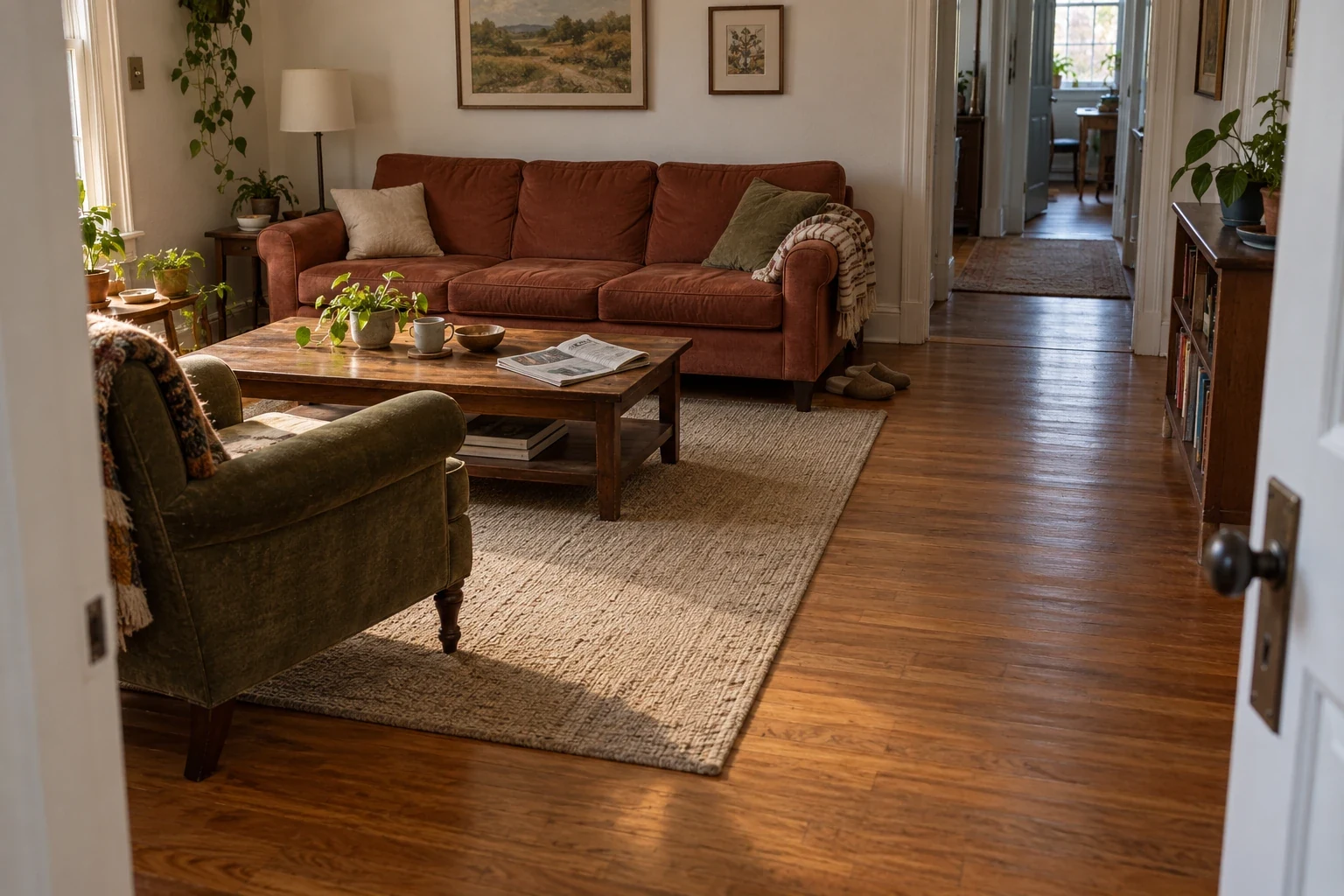
The rust-coloured sofa sits against the far wall. An olive armchair and a wooden coffee table make a seating group to its left, while the bare wooden floor on the right leads toward the opening beyond the sofa. The arrangement works as a whole: furniture, rug and route share the room without occupying the same strip.
Read the Route Before Choosing the Sofa Position
From this doorway, the open floor on the right is the clearest connection to the rooms beyond. The sofa ends before that route, and the coffee table remains inside the seating group. Someone passing through has a visible alternative to stepping between the table and the seats.
In another room, start with the openings people actually use. Trace the journey from each entrance to the next destination before choosing the sofa wall. A convenient blank wall is useful only if the sofa placed there also leaves a workable route. Walk it with the furniture in position; a photograph cannot supply the clearances for your home.
Let the Other Seat Respond to the Sofa
The olive chair turns inward toward the table and sofa, rather than lining up rigidly beside the wall. This gives the group a second direction: the sofa establishes its back edge, and the chair closes part of the near side without filling the entrance.
That is the relationship to borrow, rather than a fixed chair angle. When arranging your own seats, check where your knees, feet and the table meet, and whether you can enter the group without shuffling furniture. If the extra chair consumes the only useful route, the grouping needs to change.
Use the Rug to Connect the Group
The oatmeal rug runs beneath the chair and the front of the sofa, with the coffee table sitting within its outline. Its pale, textured surface gathers the mismatched upholstery into one area. To the right, exposed floor gives that area a visible edge.
The rust, olive and cream colours do different jobs without requiring a matching furniture set. The sofa remains the broadest block of colour; the chair adds another muted tone, and the rug gives both a quieter background. Changing a colour would change the mood, but the positions still have to support the same everyday movements.
Keep Useful Objects Inside the Arrangement
A newspaper and a few small things occupy the table, and a throw rests on the sofa arm. The room has room for ordinary use rather than depending on an empty tabletop. The slippers beside the sofa also show why loose items need a place outside the through route.
Before committing to a layout, sit down, stand up and cross the room as you normally would. Keep the sofa position if the seating group and the route both work. If one repeatedly interrupts the other, solve that relationship before adding more furniture or styling the surfaces.