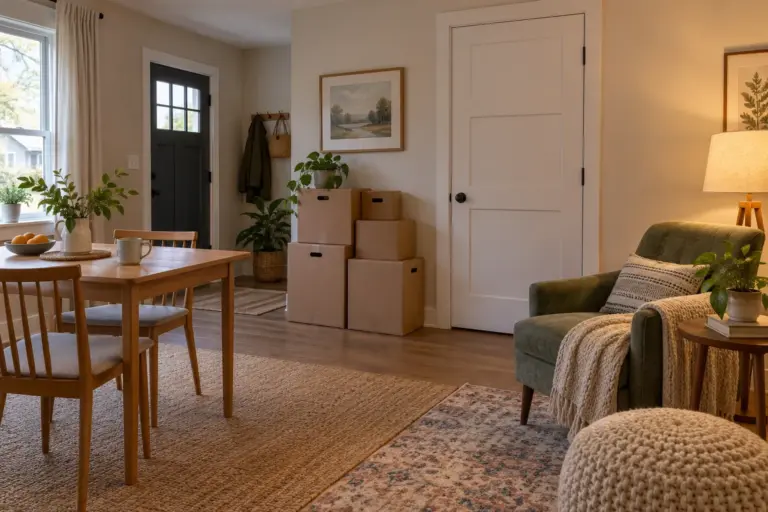
Practical feng shui lighting starts with the daylight and ordinary lights you can actually control. A room may need daylight for a daytime task, a lamp aimed at a page in the evening, or less incoming light when a window reflects on a screen. The goal is not to make every space brighter. It is to match the light to what happens there, check that you can see what you need to see, and choose a setting you like. Start with one room, identify one mismatch, and test a reversible change before rearranging anything else.
Read the Room Before Changing the Light
Walk through the room as it is, rather than imagining an ideal lighting plan. Note its windows and any blinds or curtains you can move. Find the fixed lights and the table, floor or desk lamps already available. Then look at the places where you work, read, watch TV or rest: perhaps a desk, reading chair, sofa or bed. Notice the routes people use to reach those places, too. A lamp that looks useful in a corner is less useful if it would sit in a walking route.
Add time to that inventory. Which seat is used during the day, and which after dark? Does daylight reach the work surface at the hour you use it? What does the same room need when someone reads or relaxes there in the evening? A window that helps one activity might produce an unwanted reflection during another. The point is to describe this room at that hour before choosing a control.
Mindful Design School uses dark and light, along with loud and quiet, as contrasts in its yin-yang design vocabulary. In that interpretation, a space that feels too dark and quiet for its purpose could use more yang qualities; a space with too much activity, bright light and noise could use more yin . This is a way to think about whether the setting fits its purpose, not a rule that daytime must be bright or evenings must be dark.
Make a separate, practical check: can you see the actual page, keyboard or other task comfortably? Does the setting feel right to the person using it? Those answers can differ. A softly lit sofa area might suit conversation but leave a book difficult to read.
Choose one observable mismatch to address first. If a page is hard to read, consider a lamp that already reaches the chair. If a window appears on a work screen, consider an existing blind or curtain. If the overhead light feels unsuitable for an evening activity, see whether an available table or floor lamp can serve it instead. Naming the problem and the reversible control gives you something specific to test.
Control the Daylight You Already Have
If the room has a usable window and blinds or curtains you can adjust, try admitting daylight when it helps the activity. Open the treatment at the time you use the room, and look from the seat or work surface that matters. If the incoming light instead interferes—for example, by producing a screen reflection—reduce or redirect it with that same treatment. Mindful Design School recommends window treatments that let residents control incoming light where there are windows and good natural light . How far to open or close yours depends on what the window actually does in your room.
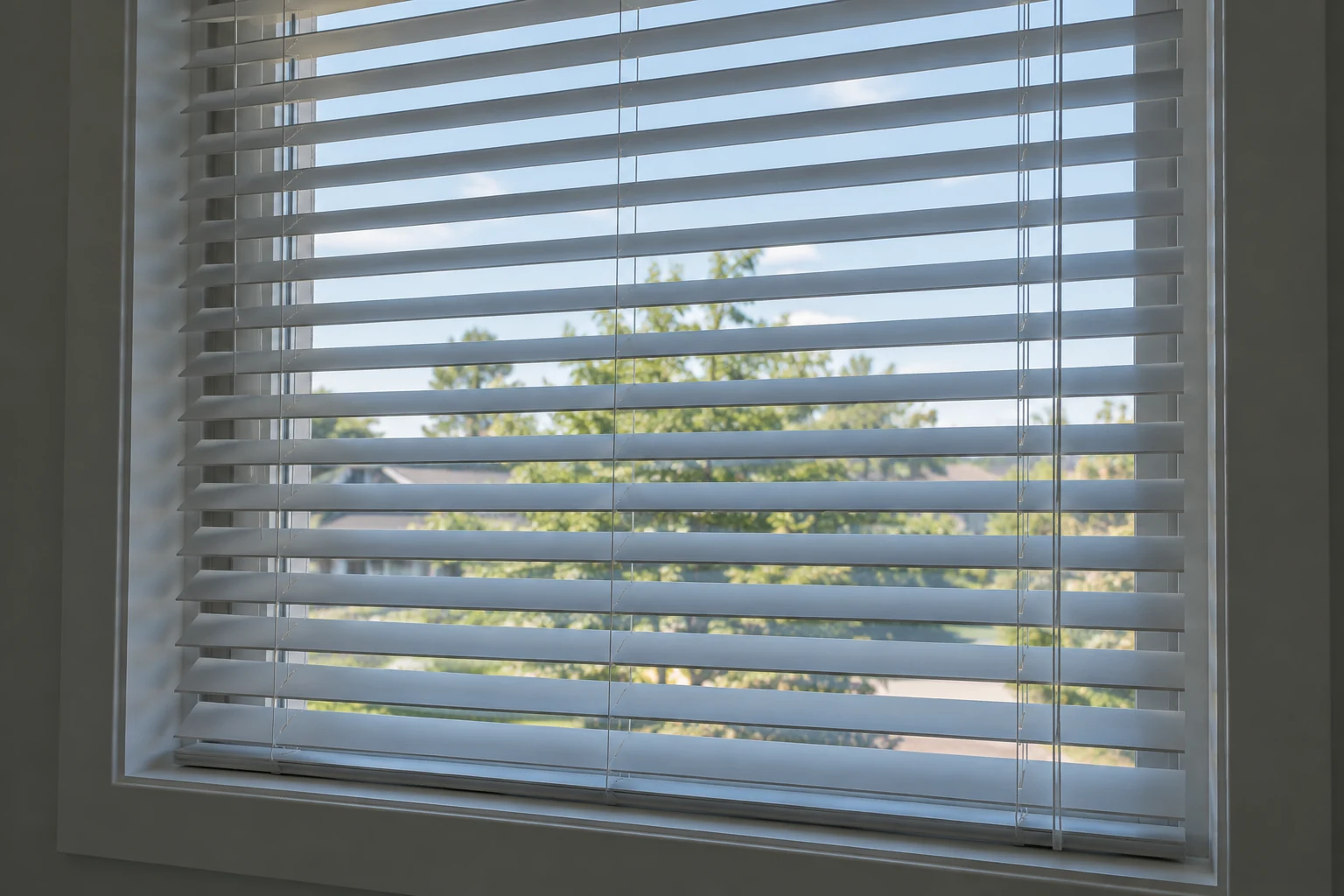
A bedroom gives that control a different job across the day. Mindful Design School suggests opening blinds to let light in during the day; it also describes being able to admit daytime light and make the room dark when it is time for sleep . If you want a dark bedroom at night and already have a treatment that closes sufficiently, open it for the daytime light you want and close it when you want darkness. If you prefer a different amount of light, use your needs to guide the choice. This is a room-use distinction, not a sleep treatment or a requirement that every bedroom have the same setting.
A mirror is sometimes offered as a way to brighten a room. Mindful Design School says a well-placed mirror can bounce natural light around a space . For that to be a useful option here, natural light must actually reach the mirror, and the reflection must help rather than distract from the activity. Check the proposed reflection from the seat you use, and use the mirror only if it can sit securely outside occupied walking routes. If adjusting an existing curtain already delivers useful daylight, there is no need to add a mirror. After dark, or in a room without usable daylight, a mirror cannot create sunlight; an existing lamp is the relevant option.
Keep the amount of light distinct from its color. A warmer-looking lamp does not necessarily provide less light or make a room darker. If you want less light for an evening activity, compare the switches or adjustable outputs you actually have; do not assume that changing the look of the light accomplishes the same thing. Likewise, reducing incoming daylight may solve a reflection but leave a page too dark. Check the activity again after moving a treatment, rather than judging the room only by its general appearance.
Give the Evening Activity Its Own Light
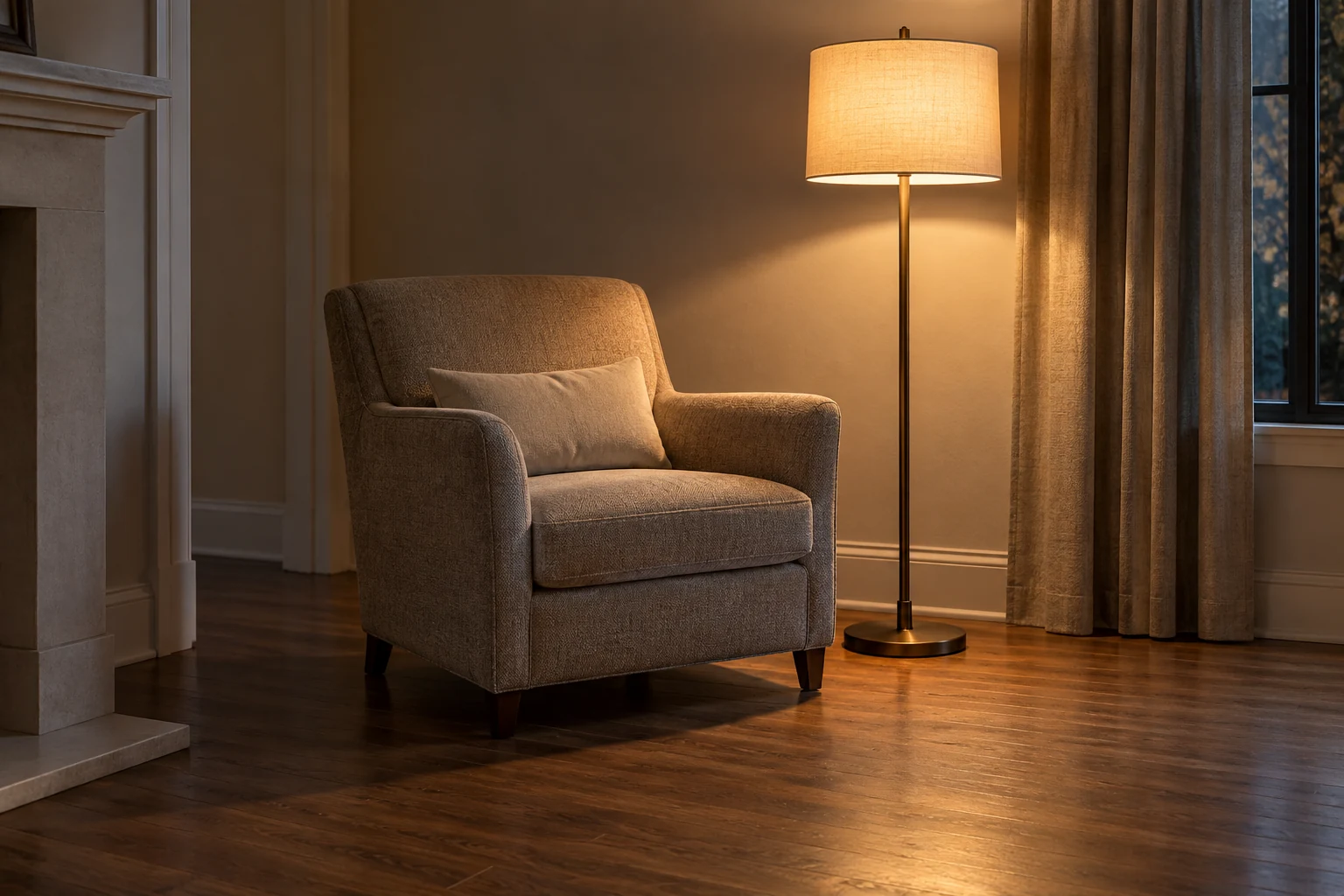
A room can serve several evening activities without needing one setting for all of them. Mindful Design School points to reading, watching TV and playing games in a living room, and suggests that table or floor accent lamps, rather than only an overhead light, may create a cozier feeling . That describes a possible atmosphere. It does not establish that any particular lamp will illuminate a book or game well enough.
Start with the activity. For a conversation or TV, you might prefer an existing lamp that lights part of the room without relying on the overhead fixture. For reading, sit where you normally read and check the page itself. Does the available lamp reach it from that position? Can you read comfortably without having to move the book into an awkward spot? If not, a cozier impression has not solved the reading problem. Where an existing movable lamp can safely reach the chair, its position may be more useful than changing the whole room’s light.
Compare the lights you already have by switching them on or off in different combinations. Mindful Design School suggests that varying light types can be switched to create different feelings in a space . You might find that a table lamp suits a quiet conversation, while reading calls for a floor lamp closer to the page or the overhead light as well. These are alternatives to test, not a prescription to use every light at once. Let the result on the page and your preference for the room decide.
If an existing light has adjustable output, try its available settings while doing the activity. An adjustment that makes the room feel calmer is only useful for reading if the page remains easy to see. If no light has adjustable output, use the available switches and safe lamp positions instead; there is no need to assume a fixture can be dimmed or altered.
Before settling on a movable lamp, consider how the room is occupied. Keep it stable and out of the routes people walk, and use an existing safe power connection. Do not stretch a connection across a busy route to achieve a preferred lighting effect. If the useful position would require an unsafe connection, raises an overload concern or calls for fixed electrical work, do not treat it as a simple lighting adjustment; seek appropriate qualified help instead. A workable evening choice is one you can use repeatedly without creating a new obstacle.
Make a Desk Page Visible Without Adding Screen Glare
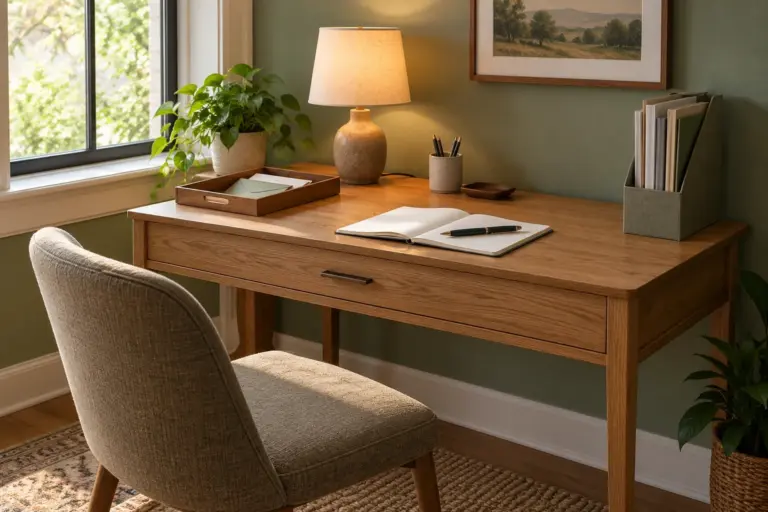
A bedroom may have one choice for daytime light and another for the darkness its occupant wants at night. A desk with paper and a monitor presents a different problem: both may need to work well at the same time. Making the desktop brighter is not automatically helpful if the change puts a bright reflection on the screen; reducing glare is not a success if the writing beside the monitor becomes hard to see.
OSHA recommends supplemental task or desk lighting that adequately illuminates reading and writing while limiting brightness around monitors. It also recommends arranging a workstation to minimize glare from overhead lights, desk lamps and windows . That guidance concerns the light around the work and the sources of glare; it is not a blanket instruction to turn down the screen’s brightness.
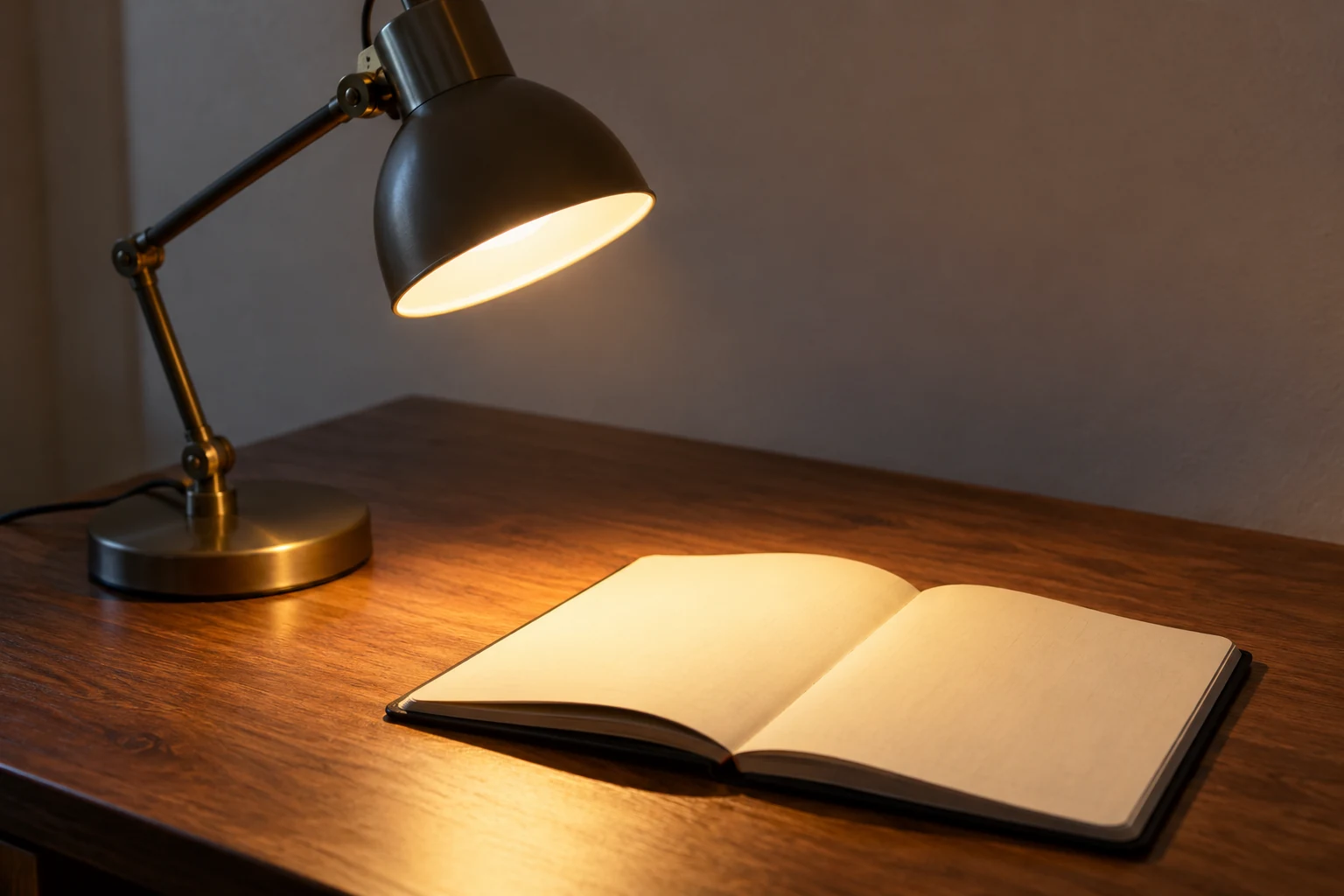
Sit in your normal work position at the hour the problem occurs. Put an actual page where you read or write, and view the screen as you normally use it. First check the paper: are words or marks easy to make out? Then check the screen: is a bright area or recognizable reflection getting in the way? Look for a likely source—a window, overhead light or desk lamp—rather than changing every light simply because glare is present.
Match the first adjustment to that source. If the window is reflected and you have an adjustable treatment, move it and recheck. If an overhead light appears to be responsible, compare the screen with that light off, provided the paper remains visible with the other available lighting. If the desk lamp creates the reflection, try a different safe position for that lamp while keeping it useful for the page. Change one existing control or placement at a time, then assess both paper and screen again from the same seat. That way, you can tell what the adjustment accomplished.
Suppose the screen reflection improves but the page becomes difficult to read. Do not accept the trade-off as the finished setting. Restore useful task light and try a different available lamp position or control, checking both surfaces again. Equally, a clear page does not settle the issue if the monitor is still uncomfortable to view. The practical target is a combination that serves the simultaneous tasks at the desk, within the controls that room actually offers.
Try One Change and Decide Whether to Keep It
Consider a hypothetical room with a window and blind, a desk used by day, and an existing lamp that also serves a reading chair in the evening. From the normal desk seat in the afternoon, the resident can read a paper page, but the window produces an unwanted reflection on the screen. At night, the resident wants to read in the chair without relying solely on the overhead light. Those are two needs in one room, but the screen reflection is the first mismatch to test.
At the usual afternoon work time, the resident adjusts only the blind. Back in the normal seat, they check the same kinds of paper and screen content. Imagine that the screen reflection is reduced and the page remains easy to read. That is an illustrative observation, not a research finding: for this resident, it supports keeping that blind position during desk work. If the page had instead become hard to see, they would revise the setting rather than keep it merely because the screen improved.
The evening need can then have its own targeted test. At the usual reading time, the resident moves the existing lamp to a safe position where its light reaches the page, without changing several other lights at once. They check the book from the reading chair. If the page is visible and the room feels right to them, that position is worth keeping; if not, they can compare another safe position or available light.
The maintainable choice is straightforward: use the tested blind position for afternoon desk work and the tested lamp position for evening reading, reviewing each during normal use. Feng shui lighting can help frame those choices, but it cannot promise a wider life result. As the Feng Shui Society cautions, feng shui cannot guarantee wealth, health or happiness .