The most useful feng shui remedy for a bed placement problem is usually to identify the specific problem, then see whether a usable position avoids it. A bed under a window, a bed directly in line with a door, and a bed without a solid wall behind its head are different conditions; one change may address several, but a decorative workaround does not necessarily address any of them. Feng shui practitioners favor positions with wall support, a view of the door, and access around the bed. Those preferences matter only if the door still opens, people can move through the room, and essential furniture remains usable.
Start with the room as it exists. Compare positions before shifting furniture, and treat any move as a reversible trial. If a preferred position does not fit, keep the room functional and name the preference you cannot meet rather than calling a constrained workaround a cure.
Map the Room Before Choosing a Remedy
Consider an explicitly hypothetical shared adult bedroom, viewed from above. “Top,” “bottom,” “left,” and “right” describe positions on a page, not compass directions. The room is rectangular. Its door is at the bottom left and opens inward; a window is in the left wall. An existing wardrobe occupies the lower-right area, and its doors need to open for normal use. The top wall is solid and unobstructed. There is no beam or sloping ceiling in this example.
Initially, the bed’s head sits under the left-wall window. From neither sleeper’s normal pillow position is there a clear view of the door. That gives the residents two identifiable concerns: the head is under a window, and the entry is unseen from bed. It does not establish that the bed lies directly in the door’s line, that it sits between the door and window, or that an overhead feature threatens this particular position. Whether it has a solid supporting wall or a suitable headboard also needs its own check. Diagnosing everything as one generic “bad bed position” would obscure which move could help.
For your own room, draw a rough overhead sketch. Mark the door and its full inward or outward swing, windows and their controls, fixed furniture, and the bed’s current footprint. Note the usual route from door to bed, the space needed to use storage, and how each sleeper gets in and out. Then sketch candidate bed footprints, including where the bed head would meet a wall. A candidate only stays on the list if people can still use the openings, furniture, ventilation, and needed routes. You need not invent a universal clearance measurement to notice that a wardrobe door cannot open or that someone has lost their way out of bed.
This sketch-and-filter method is layout reasoning for this guide, not a measured therapeutic intervention or a requirement to achieve perfect feng shui. It puts ordinary use first, then makes the placement guidance possible to evaluate. The Feng Shui Society describes a preferred bed position on an unobstructed wall, diagonally across from the door and away from the window. Another Society account calls for a solid wall behind the bed head and a view of doors and windows. Guild-hosted guidance describes a bed position that allows a door view without putting the bed directly in line with the door. These are practitioner placement preferences, not permission to obstruct a real route.
In the hypothetical room, the clear top wall is worth testing because it may address the window and door-view concerns together. That is a candidate, not yet a decision: it still has to leave the door, wardrobe, window control, and both sides of the shared bed usable.
Find a Door View Without Placing the Bed in the Doorway’s Line
Check door visibility and direct alignment separately. First, imagine lying in each normal pillow position: can that person see the door without shifting to the edge of the mattress or sitting up? Next, look at where the bed lies relative to the doorway. Seeing the door from an angle is different from placing the bed directly in its line. Guild-hosted guidance calls the preferred combination a “command position”: the sleeper can see the door without being directly in line with it. A visible door, by itself, is not the problem this guidance identifies.
Now compare a candidate in the hypothetical room. Place the bed’s head and its existing solid headboard against the solid top wall, with the bed extending straight out from that wall. Shift its position far enough toward the right of center that both sleepers can actually use their respective sides. In this stipulated room, that candidate fits without moving the window, door, or wardrobe and without preventing use of the window control. It sits outside the left-side door–window line. From both normal pillow positions, the bottom-left door is visible obliquely, while the bed is not directly in line with it.
The phrase “diagonally across from the door” describes the bed’s location and view relative to the door. It does not instruct residents to rotate the bed diagonally off its supporting wall. In fact, the Feng Shui Society advises wall support rather than an unsupported, angled bed. Keeping the head against the top wall is part of why this candidate merits a trial.
A second sketch might seem easier: push one side of the shared bed against a wall to free floor space. Reject that alternative for this example. The person on the wall side could not enter and leave from their own side; reaching the bed by climbing across the other sleeper is not equivalent access. The Society’s usual advice is for access from both sides, so a position that solves the door view at the expense of one sleeper’s exit is not the better shared-bed choice.
What if a real small bedroom has no solid-wall position with an off-line door view and workable access? LuAnn Cibik, writing in an International Feng Shui Guild-hosted guide to small spaces, suggests moving the bed so its head is farther from the door. That is an option only where the move retains the door’s swing, walking routes, ventilation, and needed access. Check the alignment again afterward: greater distance alone may leave the bed directly in the doorway’s line. It may be a feasible partial change without achieving the preferred position.
Cibik also suggests placing a nightstand or another object between the bed and door. Treat that as a limited practitioner interpretation for a constrained layout, not a physical correction to the room. It does not create a supporting wall, take the head out from under a window, or remove a beam above the bed. An existing nightstand is not helpful if putting it there crowds the only walking route, interferes with a door, or restricts ventilation or needed access. In that situation, reject the buffer. There is no need to buy an ornament, screen, or mirror to make the arrangement count as a remedy.
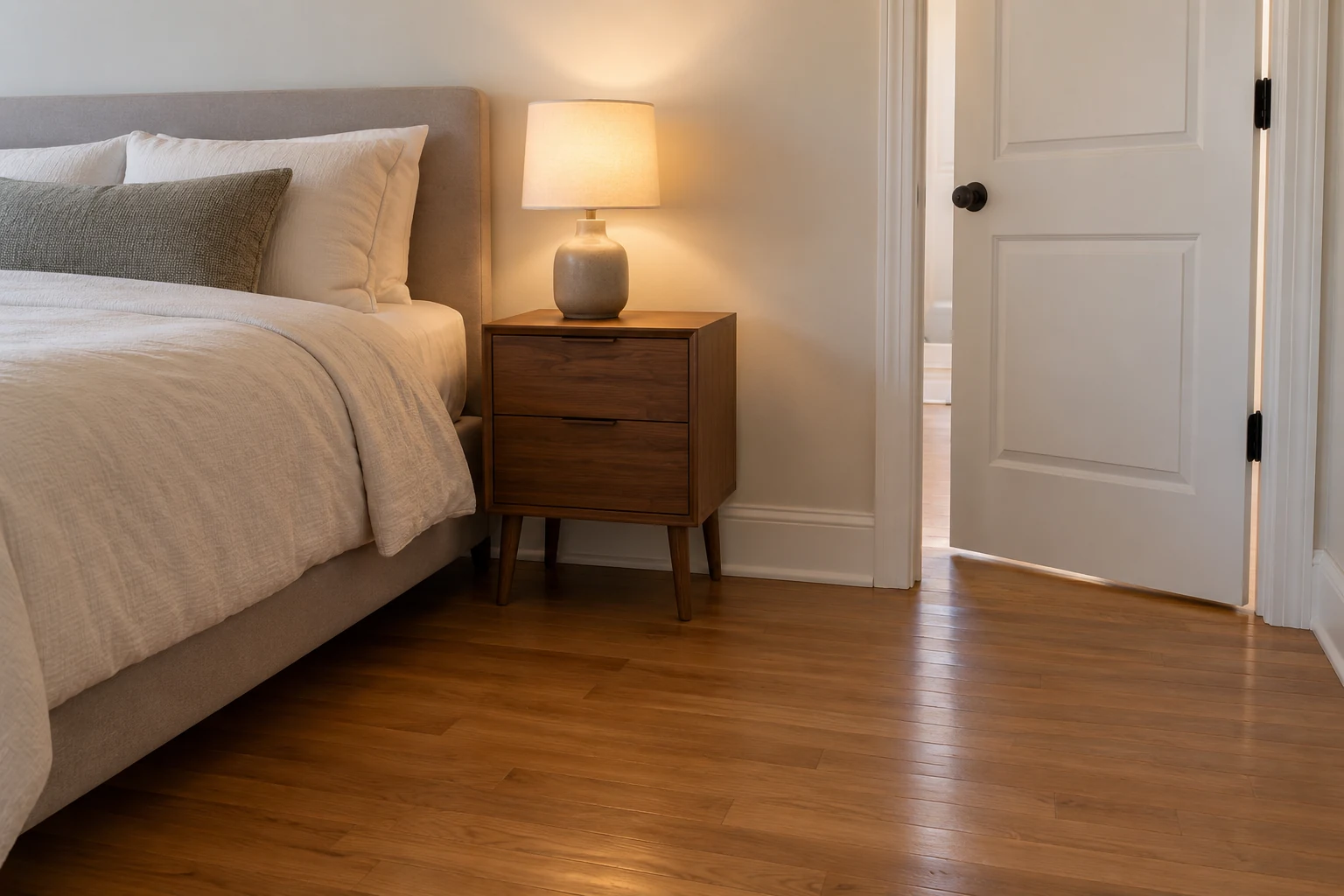
For the hypothetical room, the choice is more straightforward: trial the supported top-wall position rather than settle for distance or a buffer. For a room where that position genuinely cannot fit, identify precisely which preference remains unmet—an unseen door, direct alignment, or both. That distinction tells you what a later furniture change would need to accomplish.
Separate Window Exposure, Wall Support and Headboard Questions
A bed with its head under a window and a bed between a door and window may overlap, but they are not the same diagnosis. Check where the head actually rests; then check whether the bed occupies the path between the two openings. The Feng Shui Society advises against both placements. It explains them through qi flowing from door to window and describes the position as a “wind tunnel.” That is the Society’s practitioner account, not a measurement of airflow in your room or proof that a particular person’s sleep has been disturbed.
The first comparison for either concern is another usable wall position. In the hypothetical room, moving the head to the top wall takes it out from beneath the left-wall window. The stipulated top-wall candidate also keeps the bed outside the left-side door–window line. These are two checks on the same proposed move, not two claims that every bed under a window must also lie on that line. A different room could pass one check and fail the other. For example, a bed head may no longer be under a window while its new footprint still sits between the door and window; sketch the openings before calling the move complete.
Next, ask whether there is a solid wall behind the bed head. The Society advises against an unsupported bed in the middle of a room or angled without solid support; another of its bedroom accounts specifies a solid wall behind the head. If a usable position against a supporting wall exists, compare it with an unsupported position before considering a visual adjustment. A physical headboard can be present on a bed standing out in the room, but the headboard does not turn empty space behind it into a wall.
Only after checking the wall position should you assess the headboard itself. A missing headboard and a slatted headboard are separate questions, even when the bed already meets a solid wall. Guild-hosted senior-living guidance recommends a solid headboard. Practitioner Kim Julen, in another Guild-hosted article, suggests covering gaps in a slatted headboard with material. Where there is no headboard, she offers a painted headboard shape or a differently colored wall behind the bed as a temporary visual option. These are practitioner suggestions; a covering does not make a missing wall appear, and paint is not a physical headboard. Neither changes the position of an immovable window.
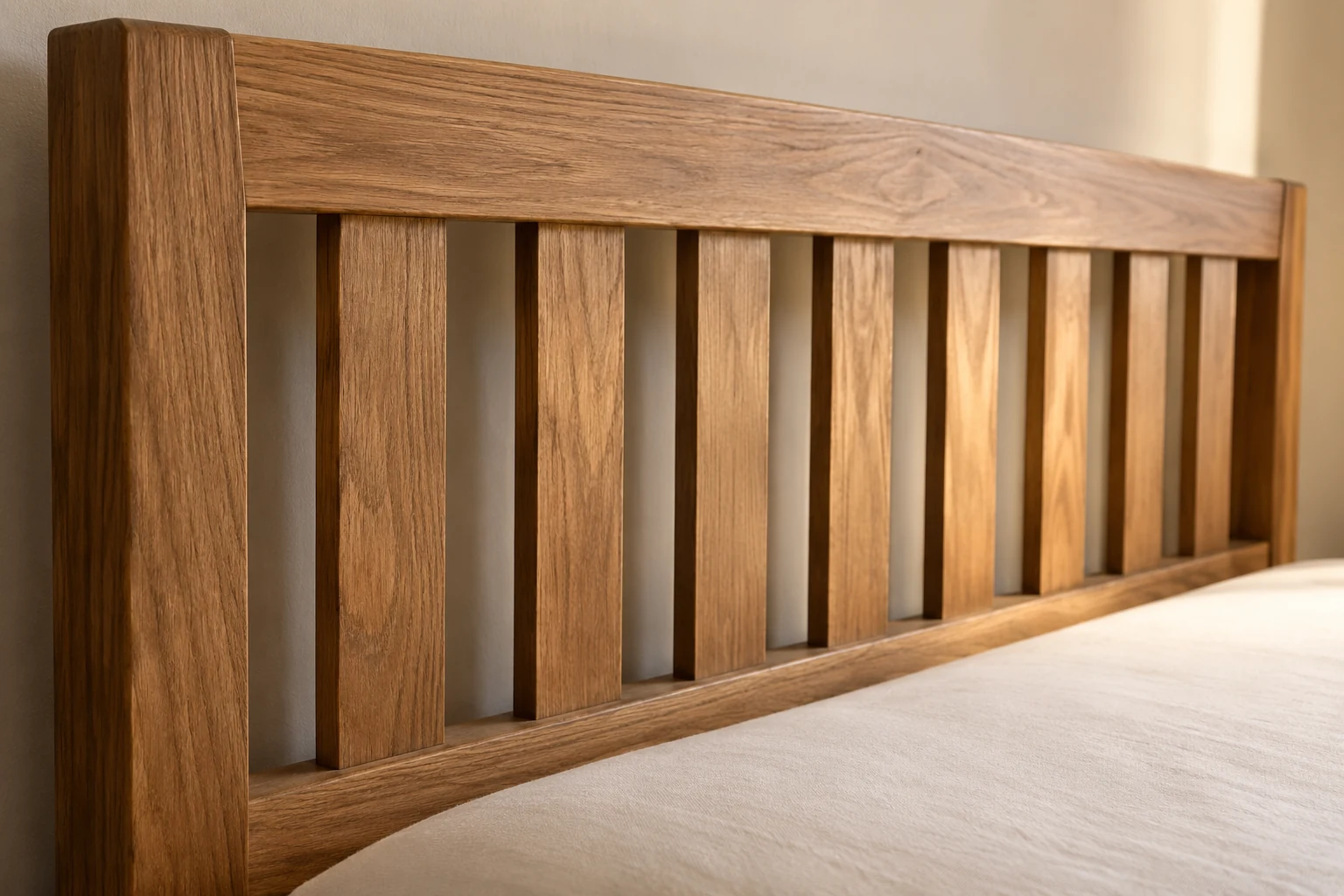
If a resident likes the visual option, painting is relevant only where they have permission to do it. There is no need to install fabric, use loose ties around a child’s bed, or buy a replacement to answer the placement question. In the hypothetical room, the bed already has a solid headboard. The meaningful change is placing that headboard and the bed head against the unobstructed top wall, not adding a decorative substitute.
Sometimes the window cannot be avoided: another wall might put the bed across the door’s swing, prevent the wardrobe from opening, or eliminate a sleeper’s route. In that case, keep window controls and needed access usable and state the result plainly: the window-placement preference remains unresolved in the available layout. A curtain, painted shape, or crystal should not be presented as a cure for the bed’s position under a fixed window. You can still distinguish what is workable—such as a clear route or a better door view—from what has not changed.
Decide What to Do About Overhead Features and Limited Side Access
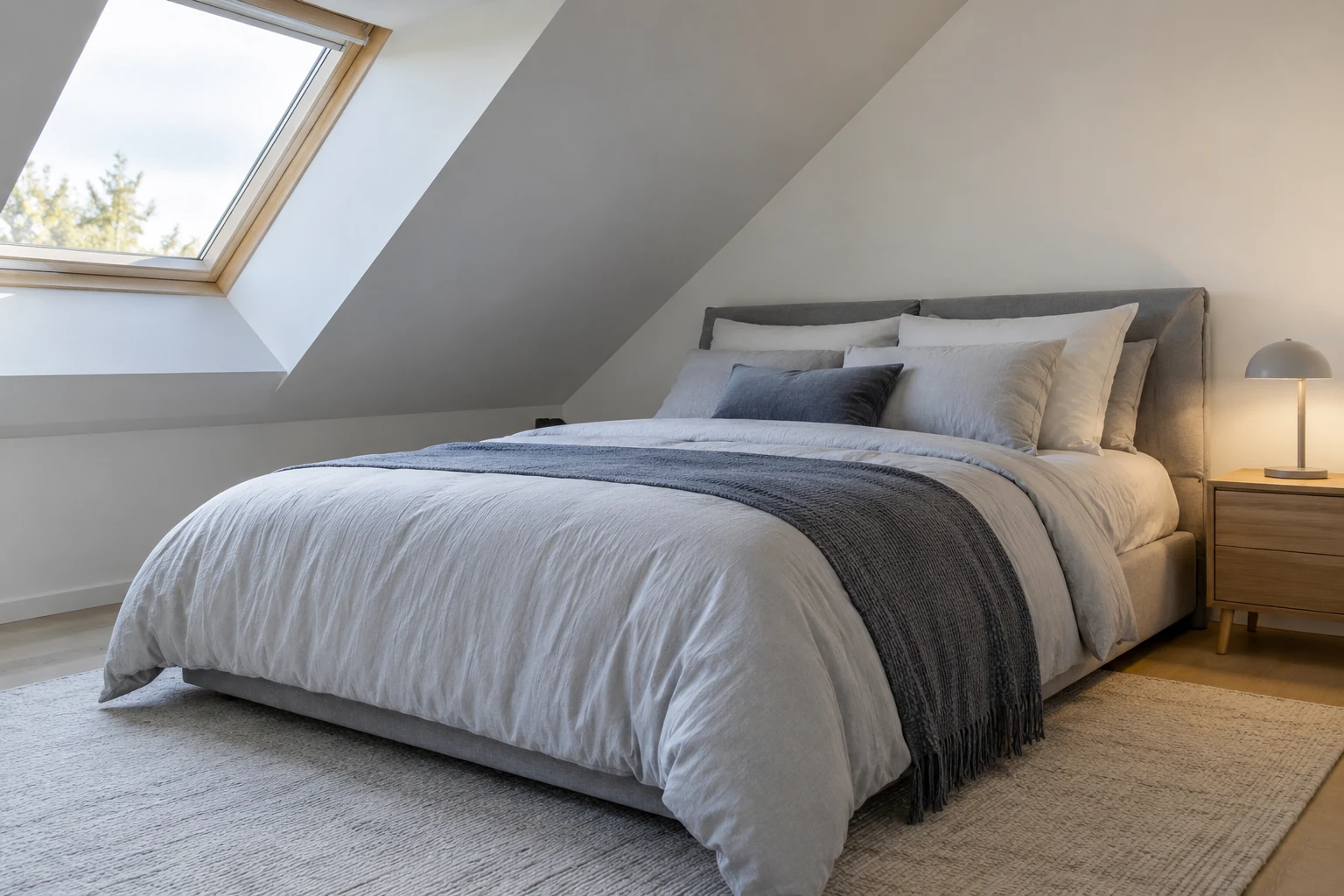
The hypothetical bedroom has no overhead beam or slope, so neither drives its top-wall choice. In another room, inspect the space above each candidate bed footprint as well as the wall behind it. The Feng Shui Society advises avoiding sleep beneath ceiling beams, citing the sensation of danger they can create. It also advises trying to avoid sloping roofs or beams and positions where sharp corners point toward the sleeper. These are the cited placement concerns; the sources do not establish that a fixed feature can be cured by attaching something to it.
Compare a position away from the beam, slope, or pointed corner only if that position remains usable. Moving a bed out from beneath a beam but into the door swing is not a workable remedy. Nor does shifting toward a solid headwall help if it leaves one sleeper without an exit or makes essential storage inaccessible. Mark the overhead feature on the sketch and run the same door, route, window, and furniture checks on each alternative. This keeps “avoid the feature” a real placement choice rather than an isolated instruction.
If every usable position remains beneath a beam or slope, or still faces a pointed corner, name the practitioner preference as unresolved. Keep the functional layout; qualified layout advice is an optional next step if the residents want help comparing constraints. Do not hang unsecured objects above a bed or attempt structural alterations as a feng shui fix. A symbolic concern about a feature’s shape is also distinct from an overhead fixture that is actually loose or unsafe. The latter calls for responsible help with the fixture, not a symbolic placement remedy.
Side access can defeat an otherwise promising move. The Society says a bed should normally be accessible from both sides, while allowing a child’s single bed to be placed against a wall. Apply those statements to the beds they describe rather than treating them as universal clearance rules. For the shared adult bed in the example, both people need a route to enter and leave on their own sides. Merely being able to walk up to the foot of the bed, take turns, or climb over a partner does not meet that test.
The Society’s child single-bed exception does not mean a wall-side position is automatically appropriate for every child or an infant, and it does not permit a blocked door or inaccessible window. This is placement guidance, not pediatric safety instruction. Likewise, two-sided access is a practitioner preference, not a building code or a claim that one invented minimum distance suits every room. Observe whether the people who use the bed can actually move as needed.
A genuinely small shared room may force a choice. Suppose pulling the bed away from a wall to open its second side stops the wardrobe from opening, blocks window control, or narrows the only usable route. The nominally preferred two-sided position then fails the room-use test; do not keep it simply because it looks balanced on paper. Cibik’s small-space guidance acknowledges that constrained rooms can put beds in less-than-ideal positions, but a workaround is conditional on the remaining layout functioning. If no position gives both sleepers their own side access while preserving essential use, record that constraint honestly rather than borrowing the child single-bed exception to declare the shared-bed problem solved.
Trial the Workable Position and Record What Remains
A sketch cannot confirm everything. Where the residents are authorized to rearrange the room, they can make a reversible furniture trial, arranging appropriate help for heavy furniture rather than treating a heavy-bed move as a solo task. Once a candidate is in place, check the door view from each person’s normal pillow position. Confirm that the bed is off the door’s direct line and that its head remains against the intended solid wall. Then use the room normally enough to test its openings and routes. This trial is an author-designed decision aid, not a tested intervention.
In the hypothetical room, the top-wall trial passes every stipulated check. The original bottom-left door opens through its full swing; the usual door-to-bed route remains clear. Each sleeper can enter and leave from their own side. Every normally used lower-right wardrobe door opens, and the wardrobe remains usable. The left-wall window control remains reachable. Both sleepers see the door obliquely from their normal pillow positions, the bed is not directly aligned with it, and its head and existing solid headboard stay against the solid top wall. Keep this position because it fits the room and meets the relevant practitioner placement preferences—not because it predicts better sleep, health, or relationships.
A concise record of that decision would read: Original: head under the left window; door unseen from both pillows. Compared: top-wall bed extending straight out, shifted right enough for two-sided access; rejected: one shared-bed side against a wall. Trial: door swing, usual route, both side exits, wardrobe use, window control, off-line door views, and solid headwall all pass. Decision: keep the top-wall position. Such a record makes the reasons visible if the room’s use later changes.
An actual trial may fail where this stipulated one passes. If the new bed blocks the door, wardrobe, or window, removes the second sleeper’s exit, or impairs a needed route, restore the previous usable layout and compare other feasible positions. Do not call leaving the bed unmoved a complete cure. If no workable position avoids a fixed window or overhead feature, identify that remaining preference instead of claiming a buffer or visual change resolves it. The stopping point is a room residents can use, an honest account of what changed, and a clear account of what did not. As the Feng Shui Society itself notes, feng shui cannot guarantee wealth, health, or happiness.