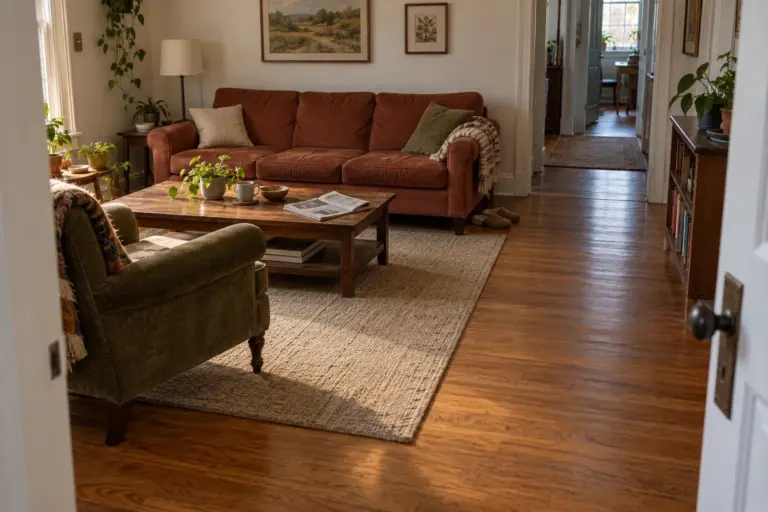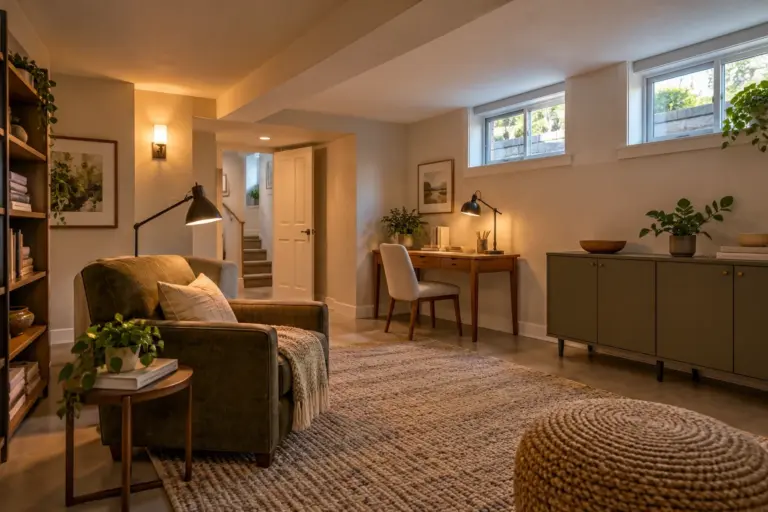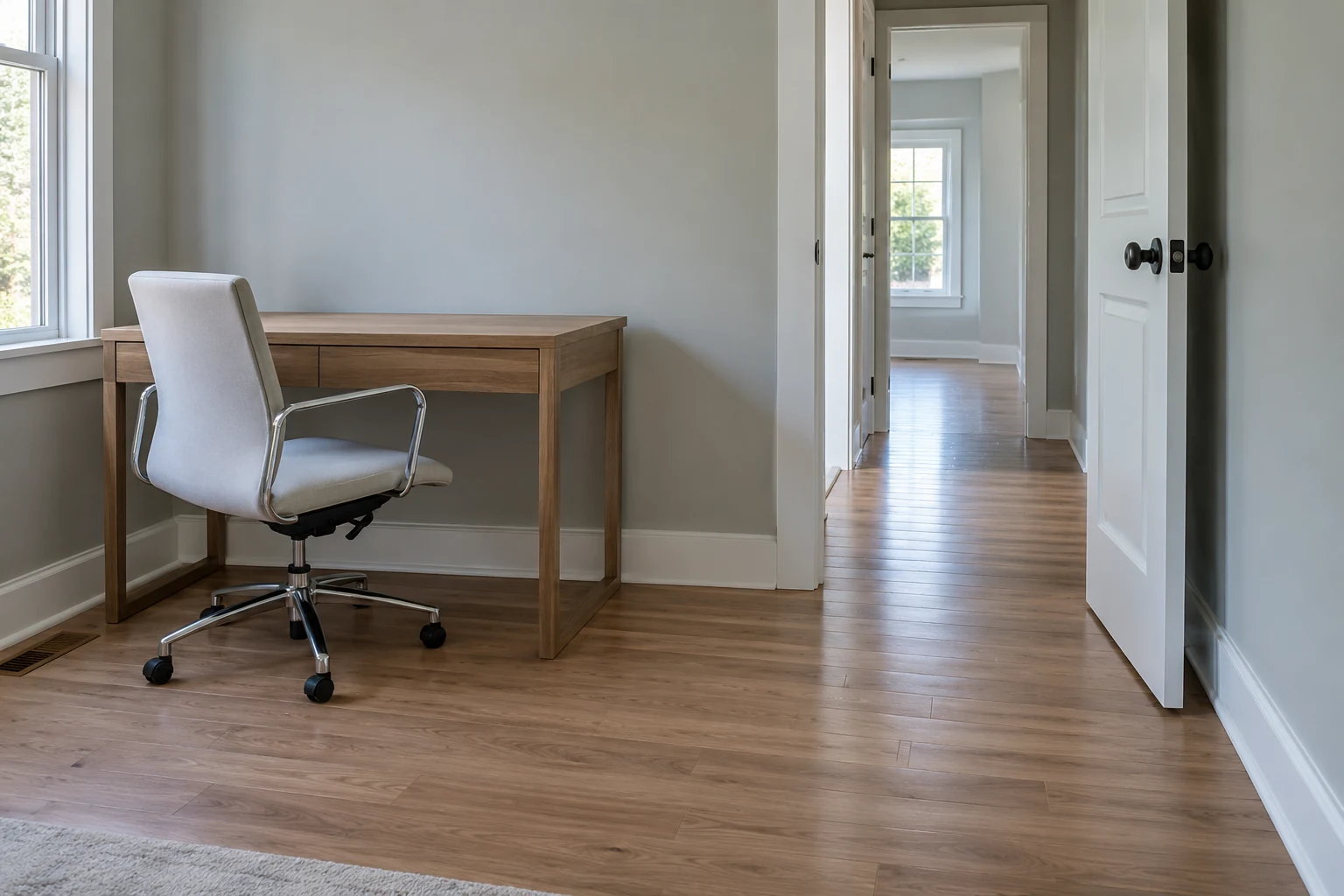
Arrange a study nook around the work you need to do: a usable surface, a supportive seat, room for materials, and light suited to paper or screens. Arrange a relaxed reading area around a seat you can use comfortably, a book you can reach, and light that lets you read the page. Neither requires a dedicated room or a list of new furniture.
Start with the room you have, then test the arrangement while using it. A pleasant window-side desk may work well for writing but reflect light into a screen. A chair that looks inviting may leave its reader reaching too far for a book or block the route through a shared room. Those are different problems, and each needs its own check.
Decide What the Spot Must Do
Name the main activity before choosing a corner. Will the person mostly write, read papers, use a screen, or read a book for pleasure? A desk that must hold a monitor and an open notebook has different demands from a chair used with one book. If several activities matter, identify the one that cannot easily move elsewhere, then note which others the same spot might accommodate at another time.
Next, name the user and the usual hour. Daylight available during an afternoon writing session does not establish that the page will be easy to read in the evening. Nor does good paper light establish that a screen will be free of reflections. A shared room adds another question: what must other people still be able to reach or walk past while the spot is occupied? IKEA’s lighting advice begins with what people do in each part of a room; that activity-first question is more useful here than choosing a lamp or position in the abstract.
Use those answers as a short brief for the room: “An adult writes and uses a screen at this desk in the afternoon, while others need the door and storage,” or “Someone reads in this chair after dinner while the usual route through the room stays open.” These are tests of a proposed arrangement, not reasons to buy a matching set.
The example throughout this guide is hypothetical. An adult shares a room with a fixed door and a window on the left. The room already has a desk, a supportive chair, and a drawer for supplies. Separately, it has an armchair near book storage and a working reading lamp. The adult wants to study with paper, writing, and a screen at the desk, and to read for pleasure in the armchair. The point is not to copy this room: it is to show how two existing places can be evaluated for two different uses.
One place can sometimes serve both activities. A family table, for instance, might be used for study and cleared afterward. But sharing a location does not merge the tests. The table must work when its study materials are out and when someone else needs it; a later reading session needs light and access at its own hour. If the room has only one workable location, decide which activity has priority or how people will share it by time rather than assuming two furniture sets must fit.
Compare Locations That Can Actually Be Used
Look first at the room as it is occupied, not as an empty floor plan. Note the door and its movement, the window and its controls, furniture that will stay, available storage, and the routes people normally take. Include the times when someone else uses the room. A spare corner, bedroom edge, living-room nook, or shared table is a candidate only if the intended activity can happen there without making ordinary access impractical.
For each candidate, imagine the person in the seat, with their materials in use. Can they approach and leave it normally? Can the door open and can others follow their usual route? At a desk, is there room for the papers and screen actually needed, and can supplies be reached? At a reading seat, is the current book within reach, and can it be returned without shifting the chair? Check access to window controls and storage as well as floor space: a position that looks clear before someone sits down may not work once the chair is occupied or a drawer is pulled open.
Existing locations deserve a fair comparison. IKEA suggests study desks in unexpected nooks and describes a single table becoming a family desk. Its reading-nook ideas likewise include making use of an awkward corner. These are commercial examples of possible locations, not evidence that every corner works or that any particular furniture must be purchased. A nook is useful only if the activity, openings, and household movement fit together.
In the hypothetical shared room, both the desk and armchair are already available. The desk is a study candidate if the occupied chair leaves a workable approach, the door route remains usable, the drawer can open, and the adult can reach the window controls when needed. The armchair is a reading candidate if someone can sit down and get up without moving it, reach the book storage, and leave the household’s usual route clear. They need not meet the same seating or orientation rule because they do different jobs.
If two candidate desk positions are available, compare them while the screen, paper, and chair are in normal use rather than judging the bare desk. A position that allows a door view but crowds the writing area is not automatically better than one that leaves the work usable. Equally, a bright-looking window location is only a candidate until its light has been checked at the actual work hour. This comparison narrows the options before a layout preference decides anything.
When no separate reading spot fits, the reader could use a suitable existing seat at a different time if its page light, book reach, and occupied route pass the same checks. If only the shared table can support study, clearing and returning supplies may be the workable arrangement. The goal is a place that functions in the real room, not a room made to resemble an ideal picture.
Use the Desk Command Position Only Where It Fits
Once feasible study positions are identified, feng shui can inform the comparison. The International Feng Shui Guild’s glossary defines the command position as a Form School interpretation of interior furniture placement, especially for a bed, desk, or stove. In that description, the position is usually farthest from and facing the door, with a solid wall behind the person, a view of the door, and no direct alignment with it. The glossary describes the position in terms of safety and power; those are part of its interpretation, not proof that a particular desk location is physically safest or will improve focus.
A practitioner writing on the Guild’s site gives a related desk suggestion: face toward the door without sitting directly in its line, with a solid wall behind. Treat that as a way to compare desk candidates, not as a requirement governing a relaxed reading chair. It does not replace checks of the occupied seat, working surface, light, storage, or movement through the room.
In the hypothetical room, the adult tries the existing desk with the back of the seated position near a solid wall. From a normal seated position, the adult can see toward the fixed door without being directly in its line, where the room allows it. That makes the desk a reasonable candidate under the traditional interpretation. It stays a candidate only if the chair can be occupied comfortably, the paper and screen fit, the drawer opens, the door and household route work, and the window controls remain accessible. A view of the door does not make a blocked drawer or an unusable screen acceptable.
Suppose a reader’s room presents a sharper conflict. The orientation closest to the command-position description might put the occupied chair in the door route. Another might leave insufficient work surface or an unresolved window reflection on the screen. In either case, keep the feasible alternative and be specific about the tradeoff: “This desk position does not give the preferred door view,” or “The wall is not directly behind the seated person.” Naming the unmet preference is more honest and useful than forcing the furniture into a position that fails its main activity. No mirror, ornament, or compass direction is needed to make that decision.
This is also a limit on what the arrangement promises. The Feng Shui Society states that feng shui cannot guarantee wealth, health, or happiness. Here, the practical outcome to look for is narrower: can the person carry out the intended work while the room remains usable? The traditional desk interpretation may help choose between otherwise workable positions, but it cannot stand in for that observation.
Set up the Desk for the Work in Front of You
At the hypothetical desk, put the needed screen, paper, and pens in their normal study positions. Leave a place to open the paper and write without displacing the screen every time a note is needed. Check that the adult can sit down, work, and stand up while those materials are out. This distinguishes the surface needed during a session from storage needed after it; every pen and spare sheet does not have to live on the desktop.
Use the existing supportive chair with the actual adult in it. A Guild-hosted practitioner advises support for the lower back and feet resting on the floor or a footrest. In this example, the chair supports the adult’s lower back, and their feet can use the floor or an existing appropriate footrest, depending on what fits that person. Check this while seated for ordinary work rather than assuming that a chair’s appearance establishes how it feels in use. There is no single chair setting or measurement that can be prescribed from the room description alone.
Give the existing drawer a job: it holds the pens and papers that are not needed on the surface at that moment. Then perform the less glamorous part of the test. With the chair in its occupied position, can the adult open the drawer, take out a pen or sheet, and put it back? A drawer that exists but cannot be opened once someone is seated is not functioning as study storage. Keep frequently needed materials accessible without scattering them across a household route.
The same reasoning applies if the study surface is shared. Put away pens and papers when the session ends, using an available drawer or an already-owned portable container with a defined place to go. That place should not be in the walking route. IKEA’s examples include a family table, built-in desk storage that leaves more of the top clear, drawer units for switching uses, and mobile supplies for children moving between study spots. They are ideas to adapt, not a requirement for built-in storage, new containers, or a child’s study station.
A portable container is helpful if a surface must change hands and there is an actual place to return it. A drawer is helpful if it can be reached in this layout. If neither condition holds, decide what few materials must remain nearby and where the rest can already be stored. Buying storage before checking its access and destination would skip the problem the storage is meant to solve.
The example concerns an adult, but the same activity-first check applies to another user. If the actual study spot is for a child, choose furniture appropriate to that child rather than copying the adult’s chair and surface. There is no need to turn every reading area into a child’s room or infer an age-based furniture specification from a general nook example. Whoever uses the spot should be able to use the seat, surface, and materials in their intended positions.
With the desk set, the remaining question is not whether it looks settled. It is whether its paper and screen conditions work at the hour the adult studies. Those need separate light checks.
Check Paper Light and Screen Reflections Separately
A window-side study position can be useful for reading papers and writing when daylight is available. IKEA describes natural reading light as part of one study-space example, but that does not make a window a universal desk location. Check the page at the usual work hour and check what light is available when daylight is insufficient. The page should be assessed where the person actually writes, not by how bright the room appears from the doorway.
A screen raises a different question: does a bright window or light source reflect in it at the normal viewing position? Daylight that helps someone see a sheet of paper may interfere with viewing the display. For computer workstations, OSHA advises supplemental task or desk lighting for reading and writing, and recommends reorienting the workstation or display so windows and light sources are at right angles to the screen to reduce glare. This is guidance for the computer setup, not a rule that every chair must face a window or that the same light arrangement will serve a book and a display. When using an available task light for paper, direct it toward that task rather than into the screen.
Now run the hypothetical adult’s study session. At the normal study hour, the paper can be read and written on using the available daylight and task light. The chair supports the adult as checked, and the needed screen, paper, and pens fit on the desk. But at the screen’s initial normal position, a bright reflection from the left-hand window interferes with viewing it. The paper test has passed; the screen test has not. Calling the entire window-side location a success at this point would hide the failure.
The adult adjusts the existing monitor at the desk, aiming to put its face at right angles to the window in line with OSHA’s workstation guidance. The adjustment must still allow a normal forward view of the display. It also must preserve enough surface for the open paper and writing, access to the chair and drawer, and the route to the door. Reorienting the display is only useful if it solves the reflection without making the rest of the session impractical.
The adult then retests at the same period of use, rather than checking only after the bright reflection has disappeared for another reason. In this illustration, the window reflection no longer obstructs the screen. The adult can do ordinary screen work and continue to read and write on paper. The drawer opens so supplies can be retrieved and returned; the occupied chair, door access, household route, and window controls remain usable. The decision for these tested conditions is to keep the adjusted monitor position. That is an observed outcome within a hypothetical example, not a claim about concentration, school results, or health.
A real room may give a different result. If the reflection remains after a monitor adjustment, compare another feasible display or desk position and test again at the actual work time; do not preserve a preferred door-facing orientation at the cost of an unreadable screen. If the paper is inadequately lit, reconsider the available task light or the position used for reading and writing, then check the page again. OSHA’s advice supports using task lighting for those tasks, but it does not supply one lighting setting for every person and hour. The useful decision is the one supported by the next trial, not by a promise that a single adjustment cures every light problem.
Make a Separate Place for Relaxed Reading
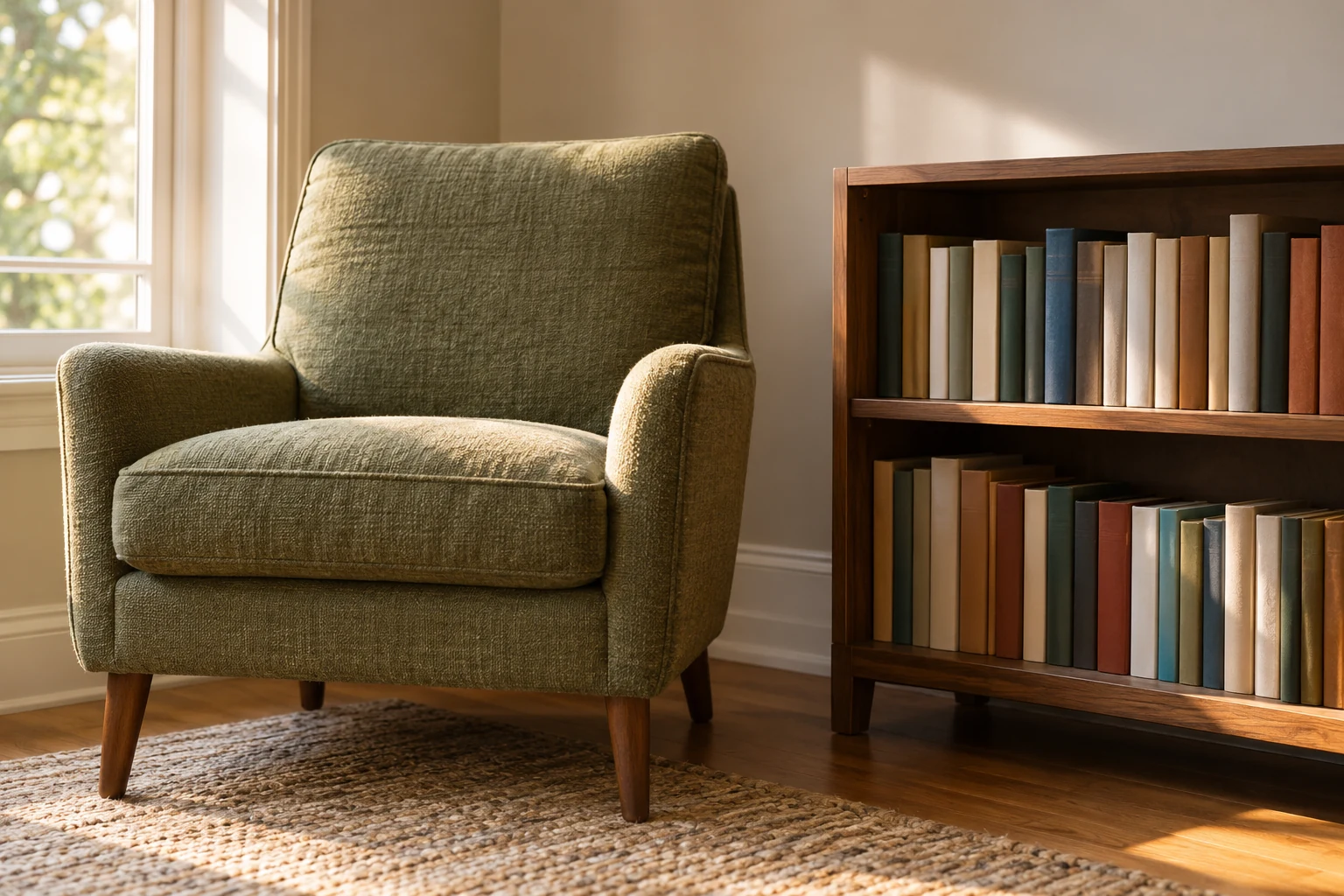
For relaxed reading in the hypothetical room, start again with the activity rather than converting the desk test into a rule for the armchair. The existing armchair sits near book storage. Put the book currently being read within reach when seated, and try taking it out and returning it. Then sit down and get up as the reader normally would. If either action requires moving furniture, the position needs another look even if the corner appears inviting.
IKEA’s reading-nook suggestions include a comfortable seat and books close to where the reader sits. Those are useful possibilities, not instructions to buy an armchair or bookcase: this example already has both a seat and storage. The important question is whether this reader can settle into the existing chair, handle the book, and leave the space workable for everyone else.
Test light at the adult’s usual reading hour, which may be different from the desk-study hour. In the example, the working adjustable lamp is directed toward the open page, with available diffused room light used as appropriate. IKEA recommends a mixture of directed and diffused light for a room that is functional and pleasant. That does not establish a universal lamp angle, brightness level, or product choice. Read a page in the seated position to find out whether the available arrangement works for the person using it.
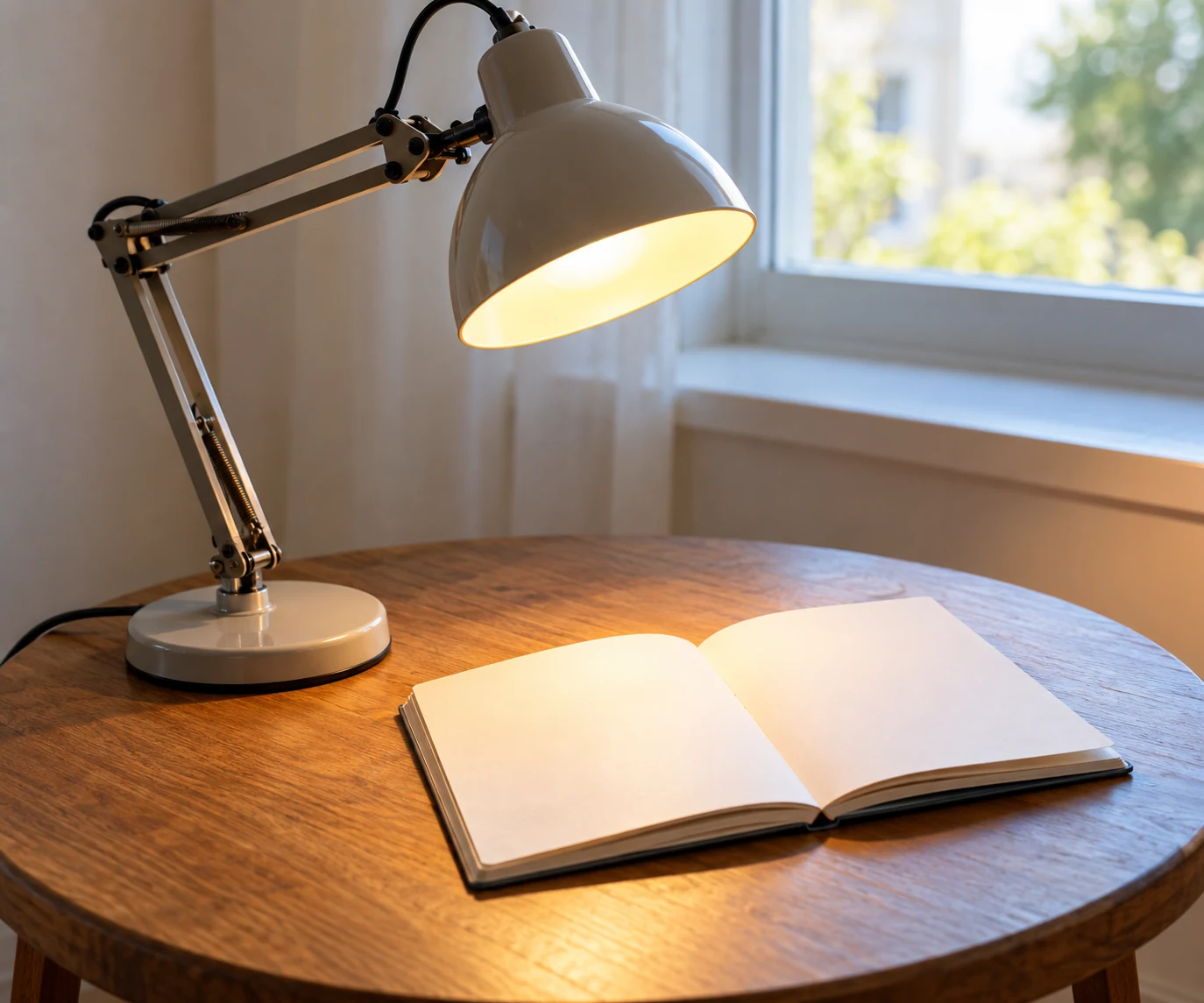
Include the household route in that trial. The lamp and its cord must not obstruct the path people ordinarily take; neither should the occupied chair. In the hypothetical trial, the adult can read the page comfortably, reach and return the book, and enter and leave the chair. Other people can use their usual route without moving the reading furniture. Keep that arrangement while those conditions continue to hold. The desk’s successful screen-glare retest cannot establish any of these reading-seat results; the armchair has passed its own test at its own hour.
If the page feels difficult to read in dim light, adjust the available page light and test comfort again. The National Eye Institute makes a narrower point about harm: reading in dim light is not actually harmful to eyes, though it may make them feel tired. That statement is not a diagnosis of every visual symptom, nor a reason to accept a page-light arrangement the reader finds uncomfortable.
There is no need to apply the desk command-position interpretation to this chair. Its relevant checks are the seat, book, page light, entry and exit, and the route people use. If the existing armchair fails one of those checks, change the part that fails where a feasible alternative exists; do not assume a new chair, lamp, or bookcase is the answer.
Keep the Arrangement That Passes a Real-use Check
The hypothetical adult now has two distinct results:
| Use and time | What happened in use | Decision |
|---|---|---|
| Desk study at its usual hour | The initial screen position reflected the bright window. After the existing monitor was reoriented, a same-period retest found the screen readable without an obstructing reflection. Paper work, the supported seat, drawer retrieval and return, door route, and window access remained workable. | Keep the tested study arrangement under those conditions. |
| Armchair reading at its usual hour | The adult could read the page with the available light, reach and return the book, get in and out of the chair, and leave the occupied household route usable. | Keep the reading arrangement while it fits that use. |
A pass means that the arrangement worked for those activities, that person, and the conditions tested. It does not guarantee concentration, learning, health, or an identical result at a different hour. If the shared room changes hands, return study supplies to their defined place and test what the next person needs. If the activity changes, check the new use rather than assuming the earlier pass covers it.
When only one suitable position remains, give the main activity priority or agree when the surface changes hands. A single spot need not perform every job at once. Keep the arrangement that works in use, and make a reversible change to the particular seat, access, storage, or light condition that fails.