Pairs have a clear symbolic role in some bedroom feng shui teaching: they can represent partnership and consideration for two people. They do not mean that every object must have a duplicate, or that a room with one lamp causes loneliness. For an ordinary bedroom, the more useful question is whether the arrangement gives its occupants appropriate space and support.
Look at the bed, the doors and the usable floor before counting cushions. If two people share the bed, can both get in and out, reach their belongings and use the light they need? A pair of ornaments adds little if one sleeper has the only comfortable side. If you sleep alone, your bedroom should still serve your actual life rather than stage a partnership you do not want.
What Pairs Are Meant to Symbolize
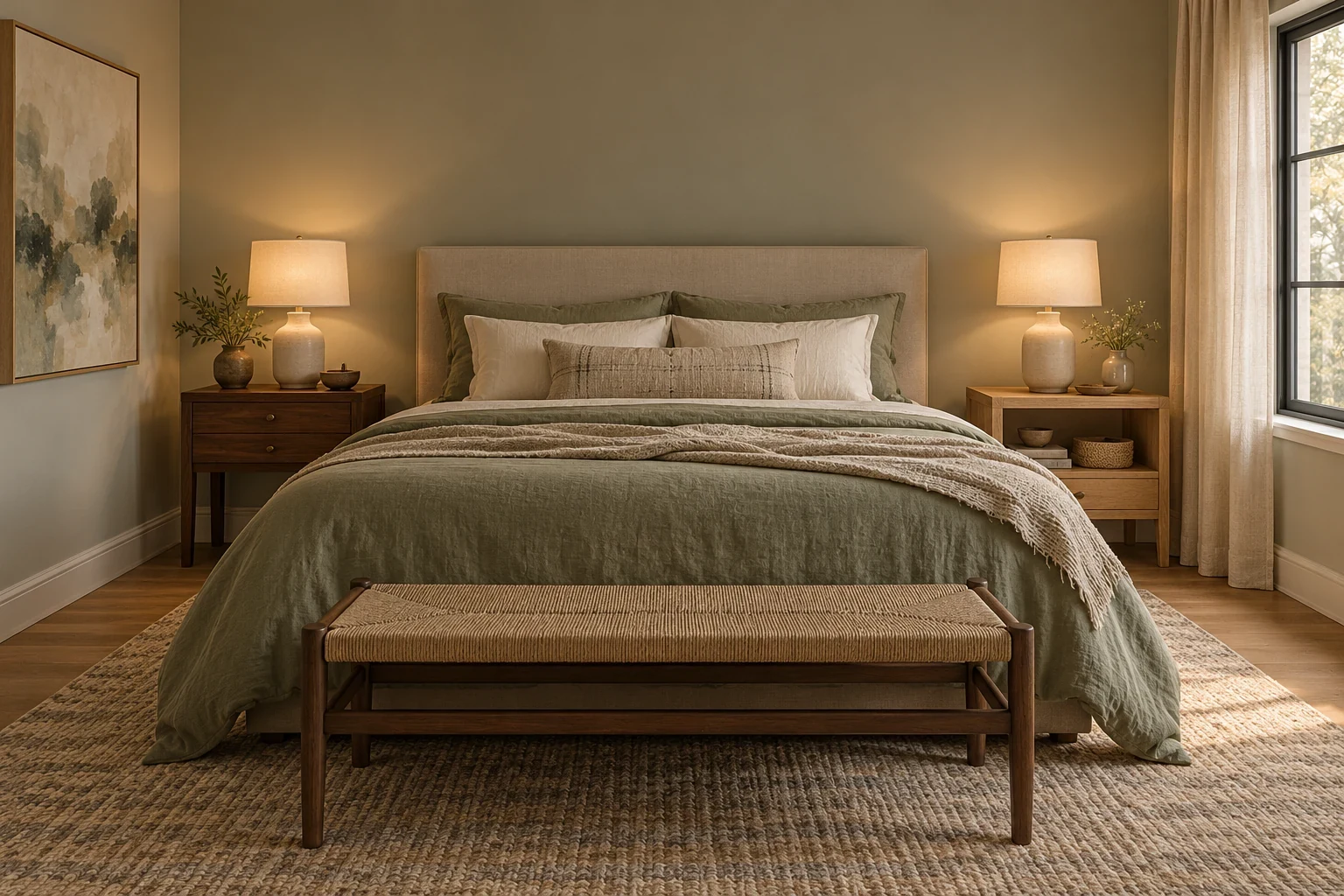
In her teaching on decorating a couple's room, Anjie Cho describes paired artwork and objects as symbols of the two people in a relationship. In the same explanation she gives attention to balanced space beside the bed, a nightstand for each partner and a lamp for each. Her advice connects the symbolic pair with the room's support for its occupants.
This is a practitioner interpretation of the environment. It is not evidence that a bedside arrangement creates a relationship or repairs an unequal one. You can use the symbolism as an expression of intention while understanding that the people, their choices and their circumstances still matter.
Pairs also differ from perfect visual symmetry. Two things can belong together without being identical. An arrangement can look symmetrical while giving one person an awkward reach, an unusable drawer or a light they cannot operate. Start with the function the two objects are meant to provide, then decide whether their appearance feels coherent.
Begin with the Two Sides of the Bed
For a shared bed, have each sleeper try their own side and follow the same everyday sequence. Walk to the pillow end, sit down, put a glass or book somewhere, reach for the light and get up again. Notice where one side demands more twisting or negotiating around furniture. Include the actual bedroom and closet door swings in that test.
Cho's recommendation for balanced space beside a shared bed expresses the wish that neither person feel squeezed into the arrangement. It does not give every room enough floor for equal aisles. Where you have flexibility, try the bed against another suitable wall on a plan before physically moving it. Mark the bed and existing furniture footprints, then check doors and the route around the foot.
If a new position compromises an entrance or makes storage unusable, it may not be an improvement. Do not treat a perfectly centered bed as the only successful result. A modest adjustment that gives the constrained sleeper a usable route may be more valuable than exact measurements on either side.
Accessibility and care needs can also mean the sides are deliberately different. A larger clear area, specialist equipment or different lighting may support the household better than equal-looking furniture. Explain the need to anyone helping with the layout rather than letting a decorative rule override it.
Matching Furniture Is Optional; Comparable Support Is Useful
Illustrated bedroom study: a dark drawer nightstand and a lighter open-shelf nightstand sit beside the same bed. Similar height and scale, along with a lamp on each side, make the relationship visible without a matching suite.
Cho explicitly says that the nightstands and lamps need not match, while favoring similar size. That leaves room for inherited furniture, different tastes and existing pieces. You do not need to replace a useful table merely because its partner has a different finish.
For a workable comparison, check the height from the mattress, the surface available for what each sleeper uses and the room the table takes from the aisle. A narrow chest with deep drawers can be visually similar to an open table but function differently. Open the drawer before deciding the pair works.
Lighting should meet both people's needs too. One may read while the other prefers darkness. The useful result could be two separately controlled lights with different settings, rather than two lamps that always turn on together. A shared visual detail, such as related shades or a repeated wood tone, can provide coherence without forcing identical use.
| Arrangement | What the pairing can communicate | What to check in the actual room |
|---|---|---|
| Two matching nightstands | An obvious visual pair | Whether both leave usable access and storage clearance |
| Two different tables of similar scale | Two supported places with individual character | Reach, surface area, stability and how doors or drawers open |
| Small shelves instead of bulky tables | A place for each person with a lighter footprint | Secure installation and whether each person can reach what they need |
| One bedside surface | A response to a real space limit or solo use | Whether someone sharing the bed is left without necessary support |
The table is a way to evaluate your choices, not a requirement to buy any of them. An existing arrangement that works well may need no change.
When the Room Cannot Hold a Conventional Pair
Illustrated small-room study: the bed sits near one wall, with one floating bedside shelf on the accessible side. Two botanical pictures provide optional paired imagery without taking floor space.
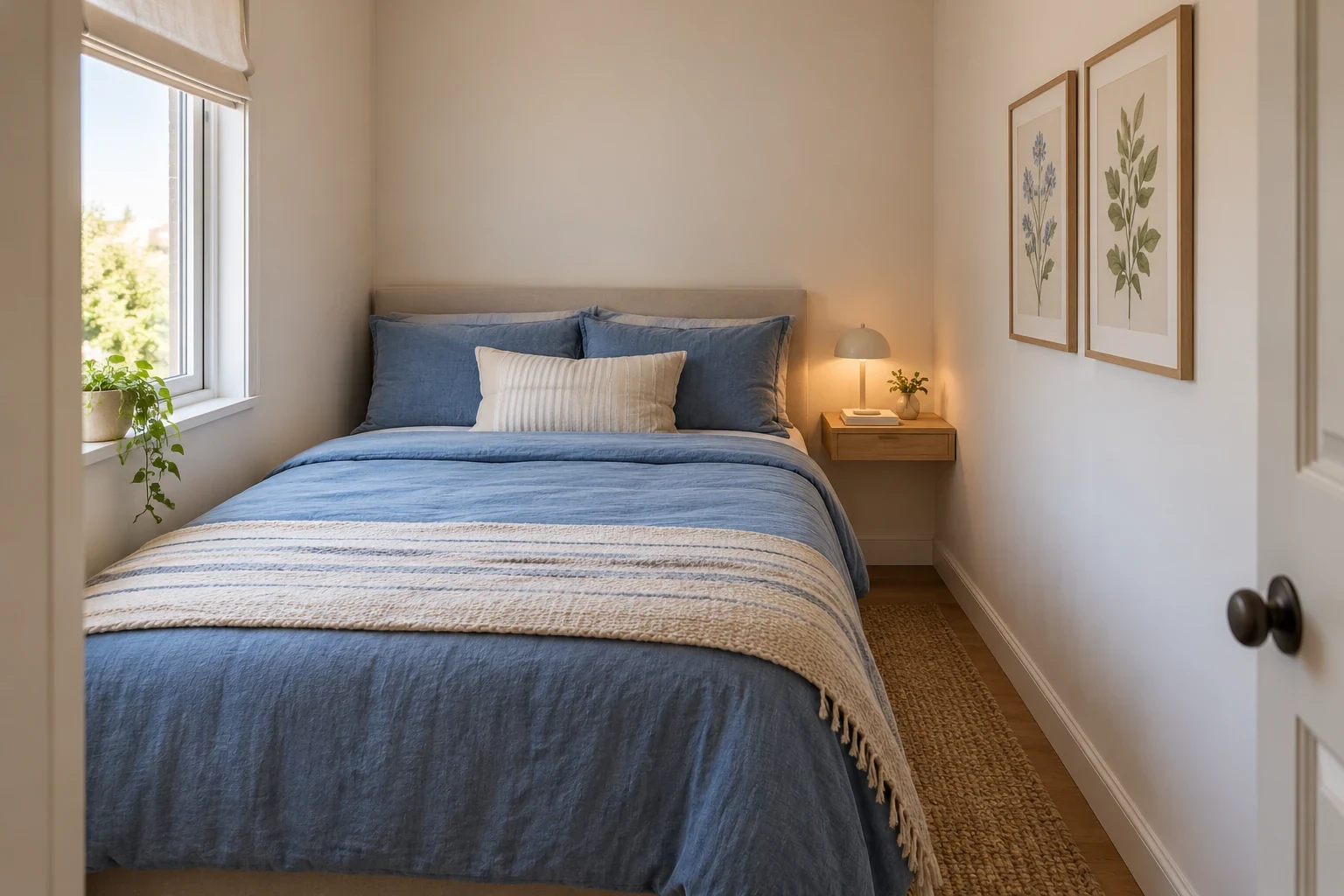
A narrow bedroom may not accommodate a table and aisle on both sides. First remove optional furniture from the plan and check whether it is the furniture, rather than the room itself, creating the problem. A freestanding chair that has become clothes storage may be taking the only available route.
If the bed must remain near a wall, acknowledge the compromise. Paired pictures do not create physical access to the wall side. For two sleepers, decide whether the current arrangement is acceptable to both, whether a smaller bed would genuinely meet their needs, or whether another position is feasible. Those are household decisions, not purchases to make merely for symbolism.
For a solo sleeper, a single bedside shelf may be entirely sufficient. If you like the idea of partnership symbolism, use a pair of small objects or related pictures where they do not interfere with movement. If that meaning is irrelevant to you, you can keep the useful shelf and leave the wall alone.
Avoid turning a constrained room into an obstacle course to achieve a count of two. The symbolic adjustment should fit around the necessary room functions, with the limitation still visible and understood.
How to Choose Paired Art or Decorative Objects
Choose a pair that has a meaning you actually welcome. It might be two related small prints or two ceramics with similar presence. They do not have to depict a particular animal, follow a retail set or occupy every shelf. Cho's couple-room teaching includes paired images, but it is not a shopping list of mandatory objects.
Place the pair where it can be seen together without crowding the bedside surface. If the two pictures sit on opposite walls and cannot be read as a pair, that may be a different visual relationship from the one you intended. Look from the bedroom entrance and from the bed before fixing a position.
For example, two botanical prints beside a dresser could express connection quietly, leaving the bedside tables free for daily use. Two large sculptures on narrow nightstands might express the same idea while making those surfaces frustrating. The smaller or simpler option can fulfill the decorative intention more comfortably.
There is no need to remove a meaningful portrait because it shows one person. A photograph of someone you love can have a personal importance that a general decorating instruction does not capture. Choose how it belongs in your room rather than interpreting the head count as a forecast.
Solo Sleepers, New Relationships and Changing Lives
If you want to welcome a partner, creating some usable room for another person can be a practical expression of that intention. That might mean freeing a bedside surface or clearing storage that you would willingly share. It does not require furnishing a second imaginary occupant in every detail.
If you are content living alone, the same bedroom can support independence and rest. A single chair, favorite object or lamp is not a defect. For someone separating from a partner or grieving a loss, doubling everything may feel unwelcome. There is no reason to rush a personal change to satisfy a symbolic arrangement.
In a shared room, discuss what each person values before changing their side. A room designed to represent equality should give both people a say in its appearance and use. Counting objects cannot stand in for that conversation.
Try the Principle Without Buying a New Bedroom
Choose one specific imbalance: an inaccessible light, a crowded bedside surface or a decorative pair taking space needed for something useful. Use existing pieces to make a reversible change, then live with it through ordinary evenings and mornings.
Judge the result by what the room now lets you do and how its appearance feels to you. Pairs can be a meaningful part of bedroom feng shui, particularly when expressing partnership. Their importance comes from the relationship you intend and the support the room provides, rather than a rule that everything must come in twos.