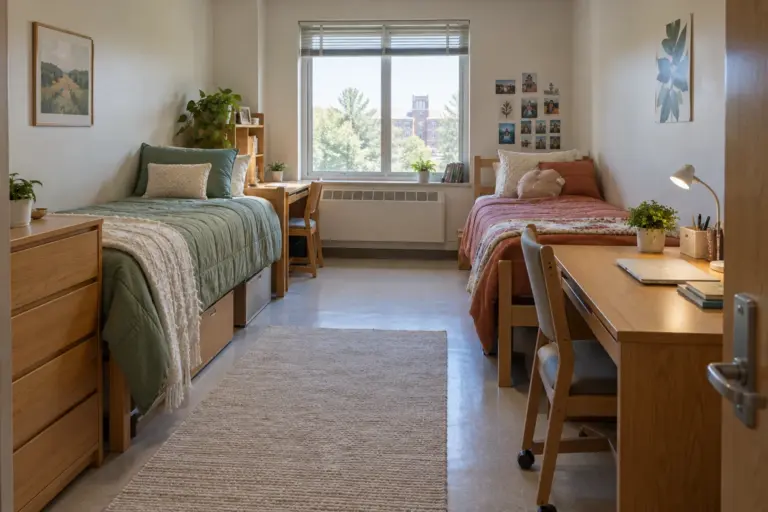
A rented room can feel personal through the things you touch, the light you use and the way furniture defines its activities. Start with bedding, cushions, a useful table, a low display surface and the fittings already available. These can change the experience of a space without making holes or covering every wall.
Before choosing a method, look at the room's openings, floor, existing hardware and furniture. Decide what feels missing: warmth, privacy, a recognizable place to relax, or a way to display something meaningful. Then check your rental agreement and the owner's permissions for the particular change. “No drilling” describes a method; it does not guarantee that an adhesive, pressure fitting or surface treatment is permitted or harmless.
Choose the Change the Room Actually Needs
Walk from the entrance to the place where you spend the most time. Notice what catches your attention and what gets in the way. If the only chair faces a blank wall while the route to the window is crowded, a furniture adjustment may help more than new wall art.
Choose one main aim for the room. You might want a gentler sleeping area, a comfortable reading corner or a living space that reflects your favorite colors. Write the aim in ordinary terms, such as “I want a place to read with a light and somewhere for a cup.” It gives you a result to test before adding decorative objects.
In Roomwise's approach, feng shui supplies questions about support, awareness, movement and the meaning of objects. It does not require a renter to create a permanent installation. A personal room can express those ideas through position and choice while keeping the door, window and shared routes usable.
Use Textiles Where the Room Is Experienced Most
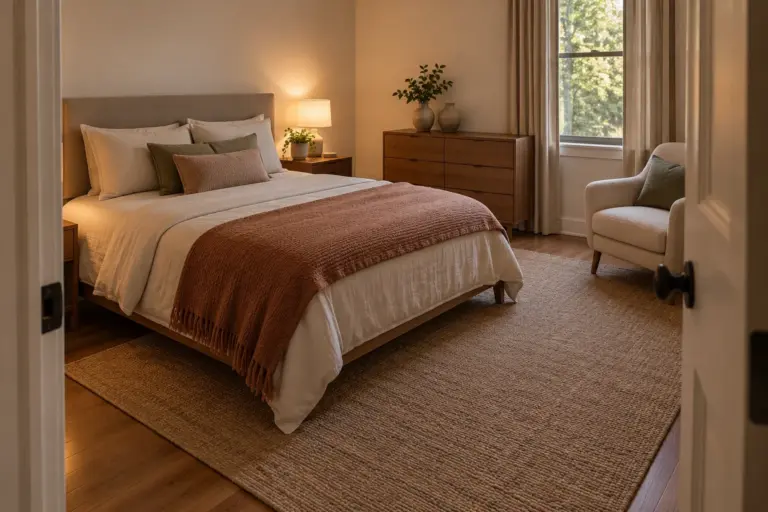
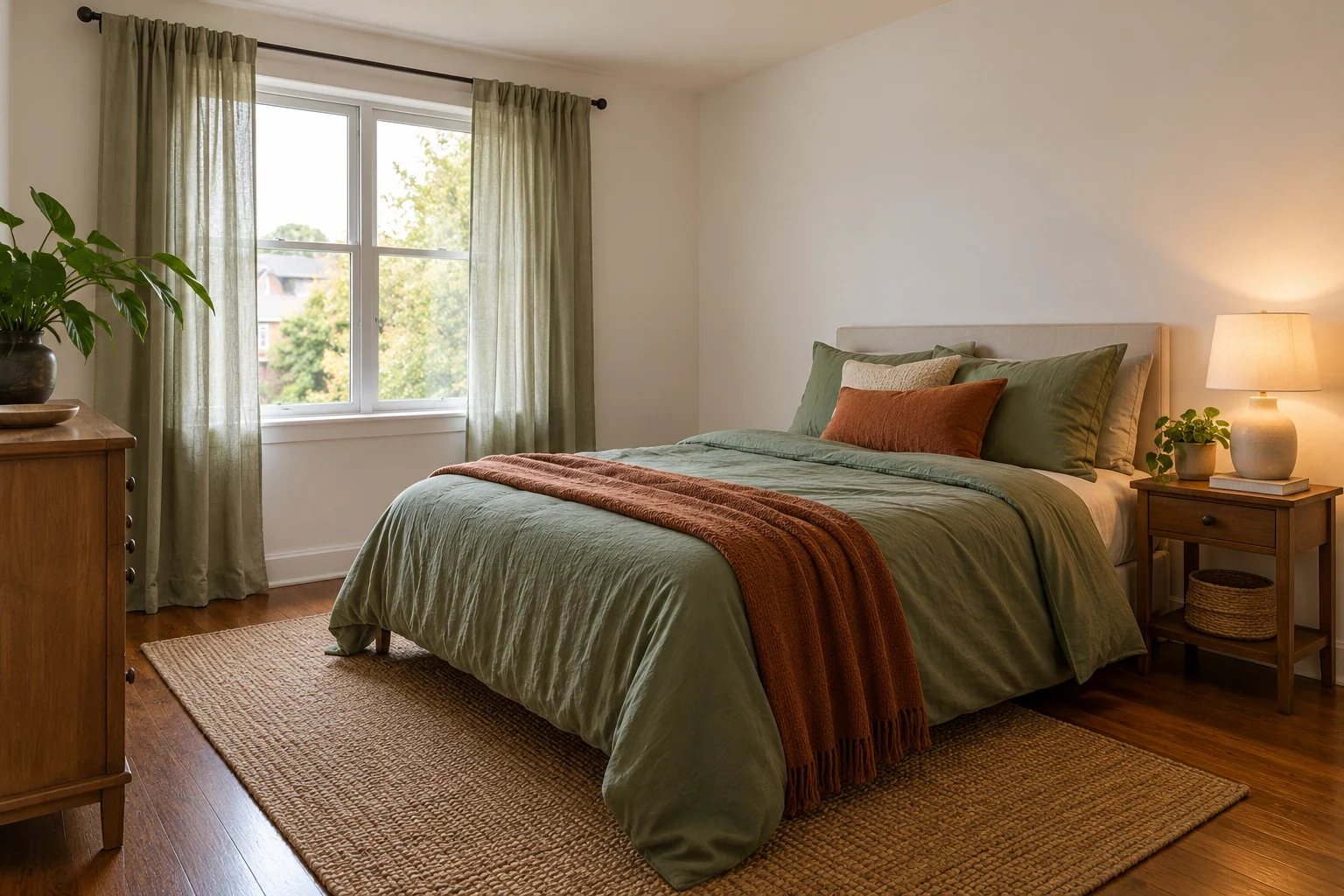
Bedding changes a large visible area without needing wall access. A duvet cover in a color you enjoy, a washable throw and a limited selection of cushions can establish a clear character. Check whether the extra layers are useful rather than building a display you must dismantle each night.
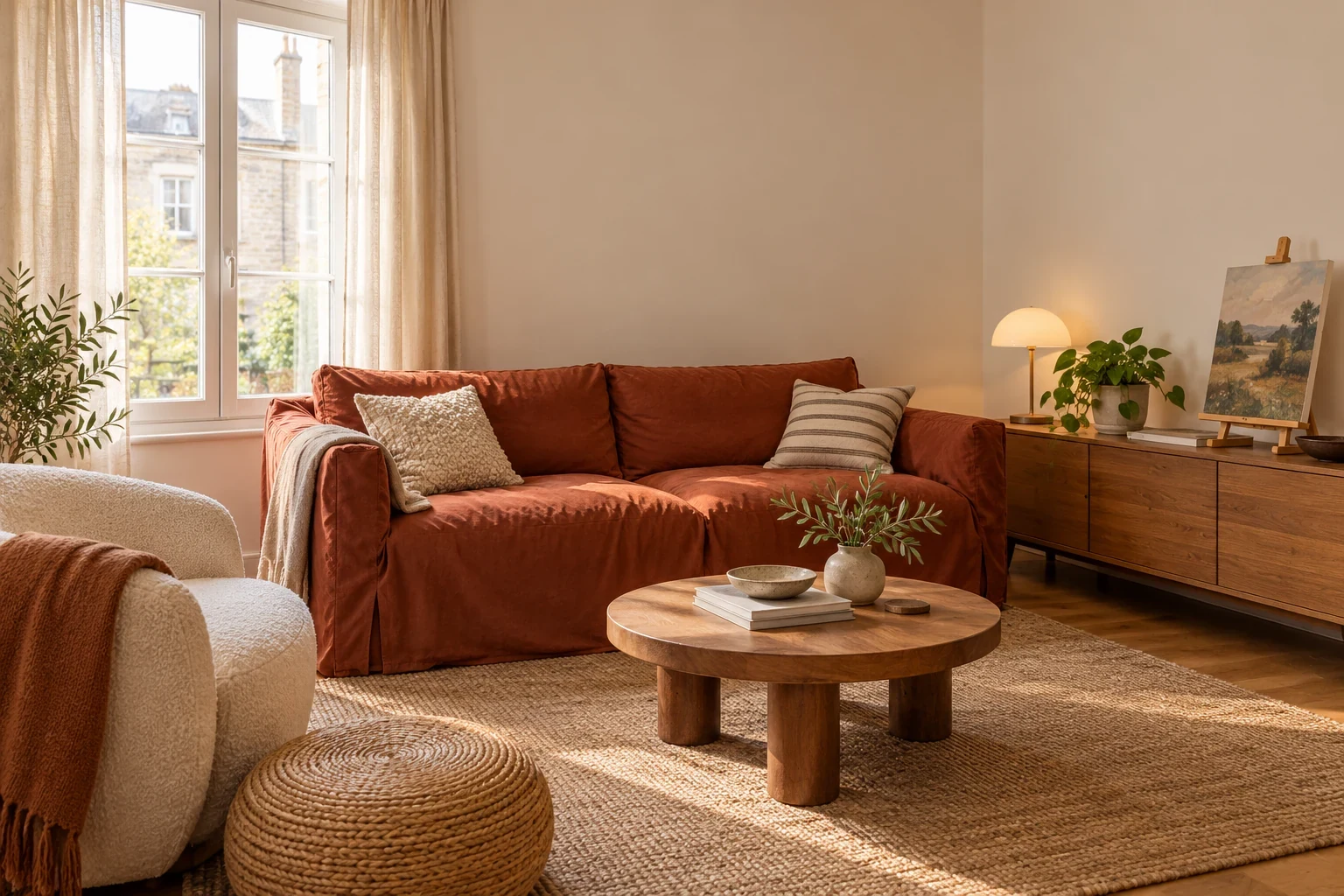
In a living room, a properly fitting loose cover or throw can connect a landlord-provided sofa with your own cushions. Look at the fabric in the room's actual daylight and evening light before choosing other pieces around it. One repeated color can make mismatched furniture feel intentional without buying a whole set.
A rug can define a sitting or reading area when it is appropriate for the floor and can lie securely. Check the door swing, edges and the route past it. Do not add a rug merely to mark a symbolic area if it catches under a door or makes the room harder to move through.
For windows, first examine existing curtains, blinds and hardware. Using an existing approved rod may be simpler than adding a new mounting system. If a pressure-mounted option is being considered, check the frame, product instructions and permission rather than assuming pressure cannot damage a finish. Leave controls and opening mechanisms usable.
Bring Color Through Objects Rather Than Repainting
Anjie Cho describes color as one way of expressing the five elements: green and related shades for Wood, red and fiery orange for Fire, and other associations within the same teaching. These are symbolic relationships, not a requirement to bring equal amounts of five colors into every room.
You could use a green throw to give an otherwise neutral chair a softer visual presence, or a small rust-colored cushion to add warmth. Start with what you like living with. A color chosen only because someone called it lucky may become an expensive irritation if you dislike seeing it every day.
Repeat one or two elements already present in the room. A timber table, cream bedding and a warm-toned print can feel related without matching exactly. If an existing floor or cabinet color dominates, work with it through a small sample rather than trying to hide the entire surface.
Display Art on Furniture You Can Use Safely
A low, stable sideboard or desk can hold a lightweight picture on a suitable tabletop easel or stand. This makes the object visible without hanging it. Keep the base fully supported and outside the reach of opening doors, passing bags and activities that could knock it over.
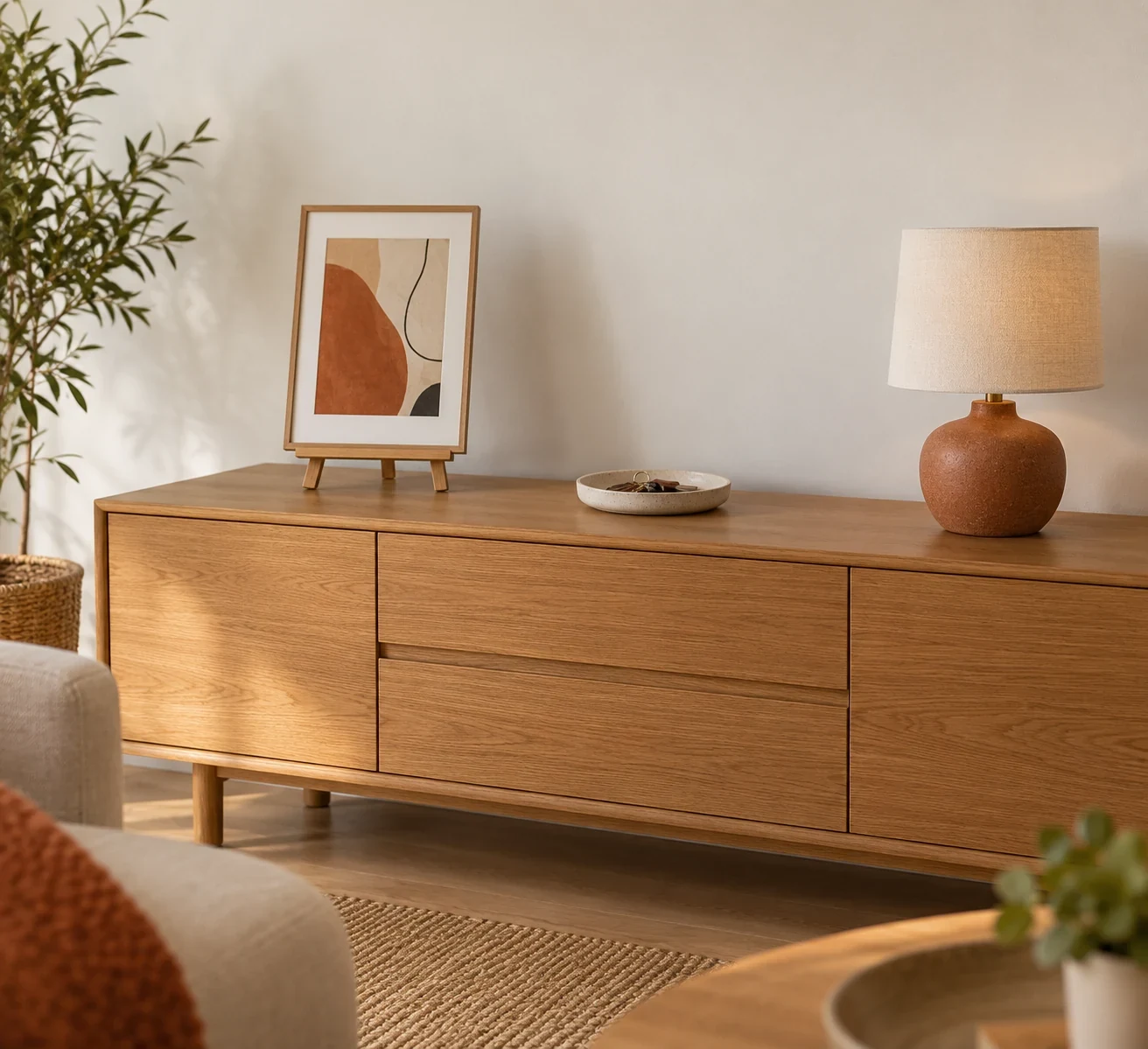
Choose the scale for the support. A small print on a low cabinet is a different proposal from a heavy floor mirror leaning against the wall. Do not treat “leaning” as a general substitute for the restraint or attachment a manufacturer requires. A room with children or pets also needs a different assessment from an adult-only desk corner.
Keep the surface's ordinary use available. A large arrangement may personalize the sideboard while leaving no place for keys or a lamp. Try one meaningful image and one useful object, then live with the arrangement before expanding it.
For example, a desk that doubles as a dining surface could use a small framed print stored on a nearby shelf during meals. The personal detail remains part of the room without turning every activity into a difficult rearrangement.
Treat Adhesive Hanging as a Conditional Option
If your agreement permits adhesive products and the surface is suitable, use a product intended for the exact object and location. Command's guidance distinguishes surface suitability, weight limits, application, waiting time and removal. It also warns that adding extra strips does not automatically increase the permitted load.
Before attaching anything, identify the wall finish and its condition. Rough texture, wallpaper, weak paint or an unknown surface can change the decision. The manufacturer's general suitability list is not a guarantee for your particular wall. If you cannot establish compatibility and permission, choose a non-adhesive display instead.
Weigh the object as it will hang, including its frame, and use the package's specified arrangement. Keep the removal tab accessible and allow the required application and curing time. Photograph the original surface for your own record if helpful. A small inconspicuous compatibility check may reveal a problem, but it cannot promise an entire installation will later remove without damage.
Removal is part of the plan. Follow the particular product's instructions, including its stretch direction; do not pull a mounted item outward just because it seems stuck. Do not hang where the product forbids use, such as above a bed for products carrying that restriction. When a tab breaks, consult the manufacturer's procedure rather than levering against the wall.
Keep Decorating Separate from Structural Attachment
Some furniture and equipment require anchoring. The U.S. Consumer Product Safety Commission's Anchor It guidance emphasizes attaching furniture to prevent tip-overs. Adhesive picture strips, a heavy object on a bottom shelf or a piece positioned in a corner are not substitutes for a required structural restraint.
If your chosen bookcase, wall bed or other item needs attachment, ask the owner about an approved installation before bringing it home. If permission is unavailable, select another item whose instructions and use genuinely fit the room. “Freestanding” in an advertisement does not by itself establish that anchoring can be omitted.
You can still personalize without that item. A textile, a small tabletop display or rearrangement of existing appropriate furniture may satisfy the original goal. Keep the goal separate from the first product that caught your attention.
Two Room Combinations That Avoid a Wall Project
For a neutral living room, begin with the existing sofa. Add a removable cover or throw that stays in place during normal use, two cushions that relate to it, and a small reading light on an existing stable table. Put a personal print on a low display stand elsewhere, leaving the sofa wall clear. Walk the route with the room occupied to check that the table and lamp cord do not narrow it.
For a bedroom with a fixed bed position, start with bedding and the light used at bedtime. Use a cover you enjoy, a practical bedside surface and a small personal object where it will not interfere with daily reach. Keep heavy pictures away from above the sleeping position. If the bed cannot move, an attractive usable arrangement around it is still a worthwhile result.
Neither example needs every suggested item. Use the combination to identify what changes the room's experience and leave out the rest. The most personal choice may be a favorite textile you already own.
Make the Change Easy to Reverse
Keep original fittings and any removed landlord-provided items together, labeled so they can be restored. Save product instructions, surface notes and permission records. For a removable cover or rug, include cleaning and storage in the decision; reversibility is less useful if you have nowhere appropriate to keep the item later.
| If you want… | Start with… | Check before adding more |
|---|---|---|
| A warmer room | Textiles and the light you use | Heat-source separation, cords and everyday comfort |
| Meaningful images | A lightweight tabletop display | Stable support and interference with the surface's job |
| A distinct activity area | Furniture position and a suitable rug | Door movement and occupied walking routes |
| Something on the wall | A permitted product matched to the object and finish | All application and removal conditions |
After a week of ordinary use, ask whether the change serves the aim you chose. Can you read comfortably, relax where you intended or recognize your own preferences in the room? Keep what helps, remove what complicates daily life and carry those pieces forward when you move. A personal rented home can grow through a series of considered choices rather than one permanent transformation.