To feng shui your front door, first identify which entrance visitors use and which route you use every day. Walk toward each as a newcomer would, then check whether the door is easy to find, opens normally, and leads into a clear arrival space. Clear an obstruction before adding anything. If there is room, you can define the threshold with a mat, suitable light, or another small cue—but none is required. Finish with one change you’re allowed to make, then test the arrival while carrying an ordinary bag. This approach keeps a feng shui interpretation in view without losing sight of how the entrance works in daily life.
Identify the Formal Door and the Route You Actually Use
Start by naming the doors, rather than calling whichever one you use most “the front door.” At a detached home, the formal front door may be the one guests approach, while residents usually come through a side or garage entrance. Both matter, but for different reasons: visitors need to find and reach the formal door; household members need a workable daily route.
In Mindful Design School’s BTB method, the formal front door—not a garage door used more often—is the reference for aligning the home Bagua. The school describes it as the door guests usually use, likely marked with the house number. That is a specific method’s interpretation, not a reason to ignore the garage entrance or to start measuring compass directions. You can improve the garage route’s lighting, operation, and arrival space as an ordinary-use entrance without treating it as the formal door for that BTB reference.
In an apartment, focus on the door to your unit. Mindful Design School explicitly includes apartment and shared-house residents when discussing the front door. The building’s main entrance and shared corridor are part of the journey, but they are not the same door, and you may have little control over them. Observe those shared areas; make changes only where you have permission.
Keep one compact apartment in mind as you work through the guide. Its unit door opens inward directly into the living area. A shoe basket sits in the door’s swing and the route from the threshold. The resident can rearrange the unit interior but cannot place items on or alter the shared landing. That distinction will decide which otherwise appealing entrance ideas fit.
Walk Toward the Door as a Visitor Would
Begin at the last stretch of path or corridor, before you can readily see the door. Walk toward it at an ordinary pace. Where does your attention go? Can you tell which door is yours, and where must you turn? Is there an object you have to step around or an uneven surface you have to cross? Then repeat the walk while imagining that you do not already know the address.
This adapts a Mindful Design School exercise written for staging a home for sale: the school asks readers to imagine a potential buyer approaching with fresh eyes and to notice both what they see and how they move. It also flags abrupt turns and uneven walkways for attention. For everyday use, the value of the exercise is observational. A turn is not automatically a defect, and a straight path is not automatically unsafe. Notice whether the route is understandable and usable rather than assuming its shape must be rebuilt.
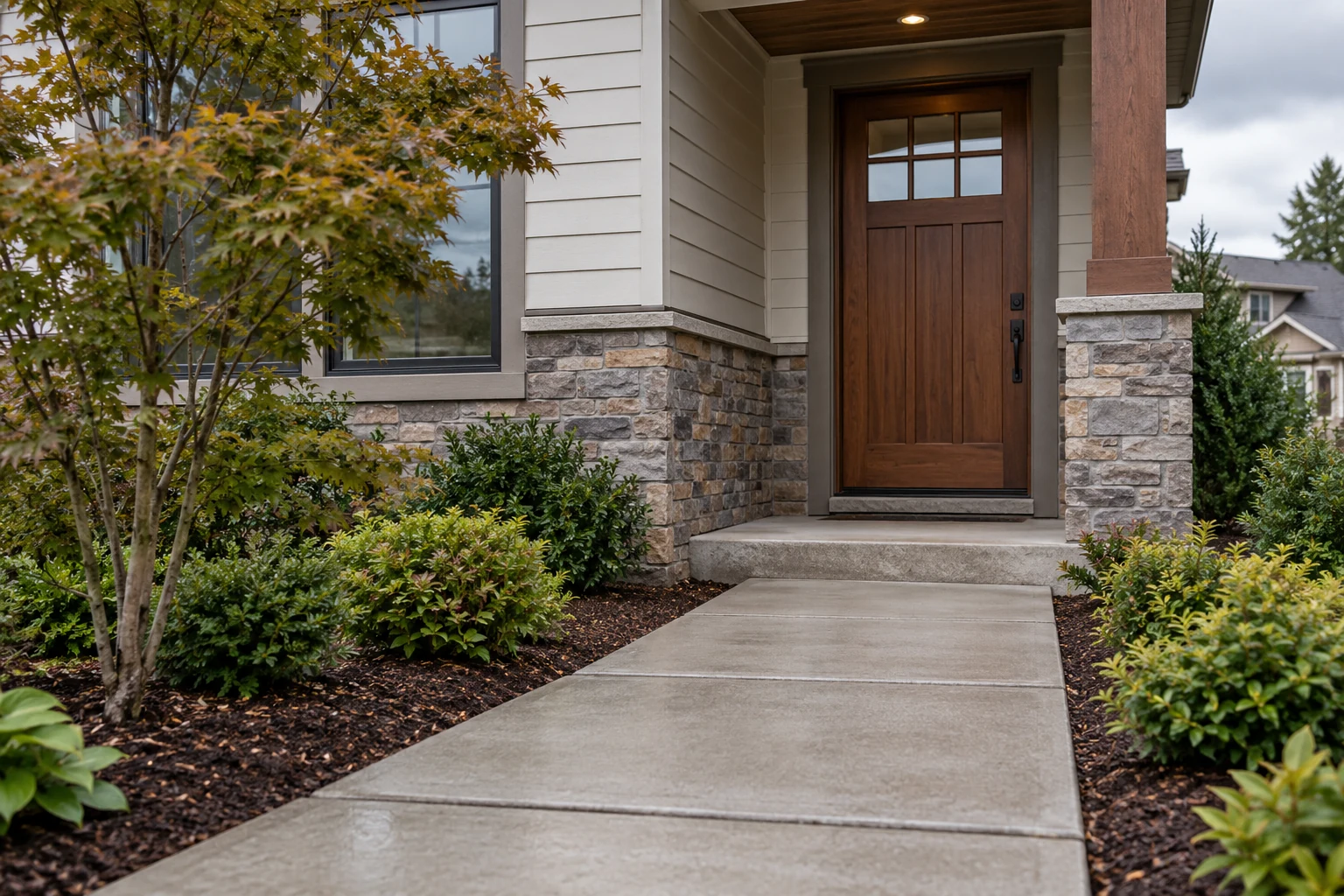
At a detached home, try the formal approach first. Can a first-time visitor see the entrance from the path? Is the house number visible where one is used? Can they reach the door without navigating movable objects? Mindful Design School recommends making the front door easy for visitors to find, removing anything that blocks its view, and clearly labeling it with the house number. If a movable item under your control obscures the number or approach, relocating it is a more direct first step than adding decoration.
Now walk the route you actually use from the garage or side entrance. It may need a separate place for everyday belongings or a clearer way into the house. Improving that path does not change which door serves visitors or which door the cited BTB method uses as its Bagua reference. It means assessing two real arrivals rather than asking one doorway to represent both.
For the apartment, start in the shared corridor and see whether the unit door and its number, if present, can be identified. Look at where someone would stand to open it. Do not treat the landing as spare decorating or storage space simply because it is near your door. If an uneven walkway or faulty shared feature needs work beyond your permission or competence, tell the person responsible for the property instead of attempting an improvised repair. Inside the unit, continue the walk beyond the threshold: a door can be easy to find yet awkward to enter.
Restore the Door’s Opening and the Immediate Arrival Space
With the approach understood, inspect the door itself from both sides. Open it in its normal manner and watch the space it travels through. Where does a person stand to operate it? What is immediately behind it, and can someone enter without stepping around an object? Check again when leaving, because an item that seems unobtrusive from the living area may be directly in the arrival route.
Mindful Design School asks whether a front door can open a full 90 degrees and, if not, recommends removing objects in its way. Use that question to spot belongings that interfere with the normal swing—not as a universal legal clearance measurement or an instruction to push against a stop, closer, or other hardware. The useful check is whether the door operates as it should and the immediate route remains usable.
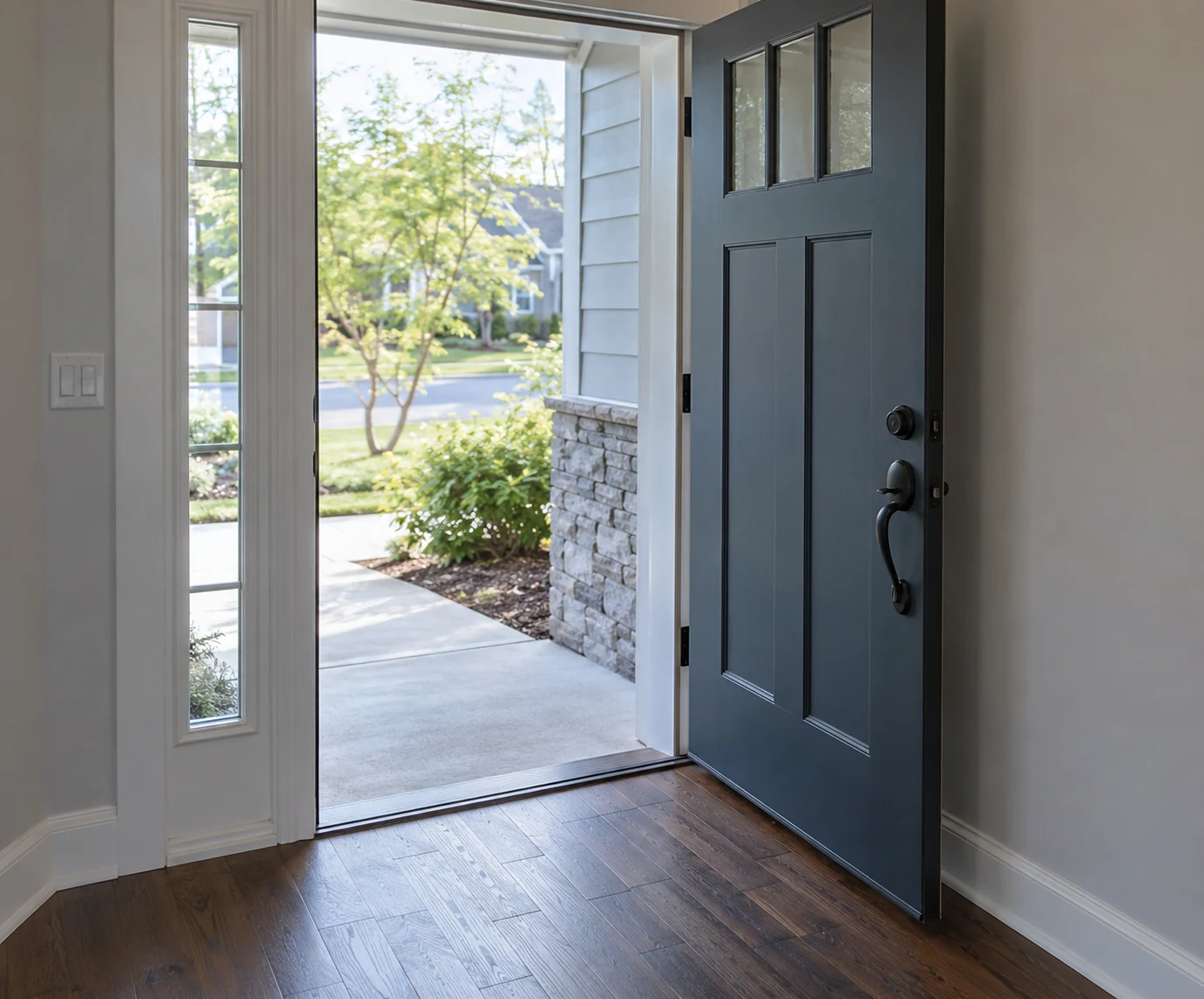
In the compact apartment, the shoe basket is the first issue. It occupies both part of the inward swing and the short walk into the living area. Adding an entry feature now would not solve that obstruction. The resident has an existing authorized storage place outside the swing and walk route, so the basket can be moved there without changing the door or the shared landing. Leave the move in place for the arrival test at the end.
Check ordinary operation separately from clutter. Does the door open and close normally, and do its existing lock and closer, if it has one, work as intended? Do not force a hinge, disable a closer or lock, alter a fire door, or change building hardware to gain space. If the problem is faulty hardware and a repair exceeds your competence or permission, contact the responsible person. Moving a basket can clear a swing; it cannot fix a defective door.
Finally, attend to what you are allowed to maintain. Mindful Design School recommends clearing obstacles and sweeping the entry inside and out, and separately suggests cleaning the front door. Sweep accessible areas where permitted, and clean permitted door surfaces with suitable methods you already use for them. In an apartment, that might mean caring for the inside of your unit door and your own floor while leaving decisions about a shared landing to building management. The point is not to create a display: it is to see the threshold and use it without preventable interference.
Define the Threshold Only If the Space Can Accommodate It
Once the approach and door work, ask whether the arrival needs a visual cue at all. An identifiable door, usable light, and a clear place to enter may already do the job. No mat, screen, or new object is necessary to complete it. If you do want a cue, judge it against the actual footprint: where the door swings, where someone stands, and how they walk onward.
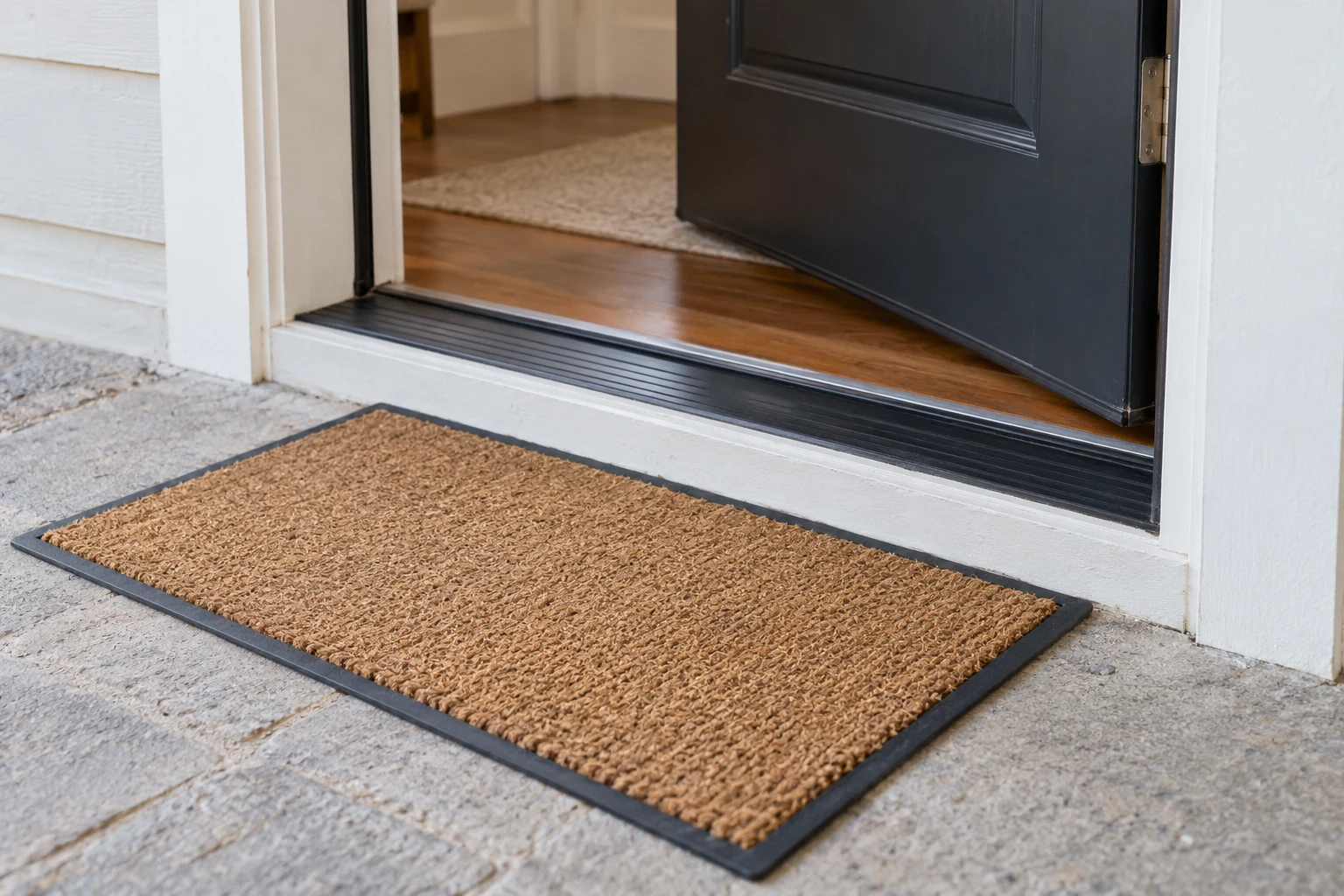
Mindful Design School suggests a doormat or small area rug outside or inside a door as a way to mark a threshold. At a detached home, an exterior mat may be an option if the homeowner can place one there and it stays clear of the door’s movement and the approach. At an apartment, a mat on the shared landing may not be permitted; an interior mat is an option only if it fits the unit. In either setting, omit a mat that slips, catches under the door, or makes someone detour with a bag. A smaller-looking object is not necessarily a better fit: test the specific object where it would sit.
Light offers another possible cue, but first use what is already there. Can you identify the entrance and operate the door with the existing suitable light at the times you normally arrive? If not, Mindful Design School suggests adding light to an entryway that lacks a useful source or has one that is not very bright. An improvement is appropriate only where you have permission and safe available power. Do not treat this as a reason to install wiring yourself or run a cord across the arrival route. A detached homeowner and an apartment resident may have different options for their respective entrances; neither should assume control over shared building fixtures.
A divider requires even more room than a mat. Mindful Design School presents a room divider or folding screen as a possibility if there is space, to create separation between an entry and the rest of a home. That condition matters most when the door opens straight into a living area. In the running apartment, a folding divider sounds attractive because there is no separate hallway. Placed along the proposed arrival route, however, it would crowd the space just freed by moving the shoe basket. Reject it. The resident can live with a visible transition into the living area rather than trade ordinary access for a more pronounced boundary.
For the detached home, assess any threshold cue at the formal door and the daily garage entrance on their own terms. A mat that fits one entrance may catch at the other; useful existing light at the garage does not tell you whether visitors can identify the front door. For the apartment, concentrate on changes within the unit unless permission clearly covers something beyond it. In every case, let the full swing and the route decide whether an optional cue earns its place.
Keep Color and Symbolic Choices Conditional
Color can help identify an entrance visually, but it is not a substitute for a working door or a clear approach. Mindful Design School offers painting a front door a contrasting color as one way to define it, explicitly conditional on being able to do so. It does not prescribe a lucky color in that suggestion. If you are considering paint, first ask whether exterior painting is permitted and whether contrast would actually make the visitor door easier to distinguish in its setting.
An apartment resident who cannot paint the outside of a unit door or put a mat on the shared landing still has options inside the unit. The low-impact choice may be simply to keep the newly cleared arrival space, or to use an existing suitable light there. Neither requires claiming that a particular color produces a particular result. A detached homeowner may have more control over the formal door’s appearance, but a visible number and an unobstructed approach remain separate, testable questions.
You do not need a compass-dependent color, a mirror rule, or symbolic decoration to carry out this entrance check. The cited suggestions do not establish a front-door mirror prohibition or a required symbol for this task. If you enjoy a particular appearance, treat it as a preference and check that it does not complicate access.
These are different kinds of judgments. The BTB Bagua reference and the school’s threshold suggestions are practitioner interpretations; whether a door opens, a number is visible, or a mat catches is observable; whether you like a color is personal. None predicts a life outcome. As the Feng Shui Society states, feng shui cannot guarantee wealth, health, or happiness.
Make One Reversible Change and Test the Arrival
Return to the apartment before adding anything. The resident moves the shoe basket to the existing authorized storage place, outside both the inward door swing and the walk into the living area. Nothing goes onto the shared landing. The proposed folding divider stays out because it would crowd that same route.
Now test the change rather than judging it from a static view. Approach the unit as usual, open the door normally, and enter carrying an ordinary bag. The door can make its unobstructed normal opening; the resident can step in and continue into the living area without going around the basket or a screen. On leaving, the route remains clear. Those checks now pass, so the simpler arrangement stays.
Use the same before-and-after test for your own one authorized change. Note what happens on the approach, while operating the door, and as you enter with a bag. After the change, repeat the sequence and watch for a new catch, blocked swing, or detour. Keep it if the arrival remains easier during ordinary use. Adjust an optional cue if its position is the problem; undo it if it continues to impede the route. If the improvement is removing an obstruction, you may find that adding nothing is the best finishing touch: a door visitors can find and residents can use.