To feng shui a rental bedroom, start with what you can actually change: your movable belongings, the route into and around the bed, and the way you use light and work space. Choose a bed position only if it is permitted and leaves the room usable. You do not need to alter the property—or complete a makeover—to make one worthwhile, reversible change.
Map What You Control Before Changing the Room
Begin with a room inventory, not a furniture move. Identify which pieces belong to you: perhaps a storage crate, desk, lamp, bedding or pillows. Then identify what was provided with the rental, including any bed, built-in storage, fixtures and window coverings. A provided bed may be movable, but do not assume you may rotate or relocate it. Existing curtains or blinds may be usable without being yours to replace.
If you share an apartment, separate decisions about your bedroom from decisions about common areas. Mindful Design School advises someone with little say beyond their bedroom to start there; it also describes the bedroom as an easier starting point for a beginner. That advice does not turn shared storage or a roommate’s belongings into space you can rearrange.
Check the lease and ask the landlord or relevant roommate where permission is unclear. Can you move the provided bed? Is the storage location you have in mind yours to use? May you change a window covering or display artwork? Do not treat drilling, painting or electrical work as ordinary steps in a rental-bedroom plan. If the answer to a proposed change is no—or you cannot establish that it is allowed—work with the belongings and routines you do control instead.
Next, describe how the room works on an ordinary day. Stand at the entry and note the door’s normal swing. Trace the route to the bed, including how each occupant approaches it and gets in and out. Open the closet and any drawers as they are normally used; pull out the desk chair if there is one. Check that you can reach and operate the existing window covering. A position that looks appealing on a sketch may fail as soon as someone opens a closet door or sits at the desk.
Include your actual needs in this map. A person who works in the bedroom needs the desk to function; someone sharing a bed needs both occupants to be able to use it. These observations and permissions set the limits for the feng shui choices that follow. They also give you something concrete to test: whether a small change makes daily movement easier without creating a new obstruction.
Clear the Approach, Then Compare Feasible Bed Positions
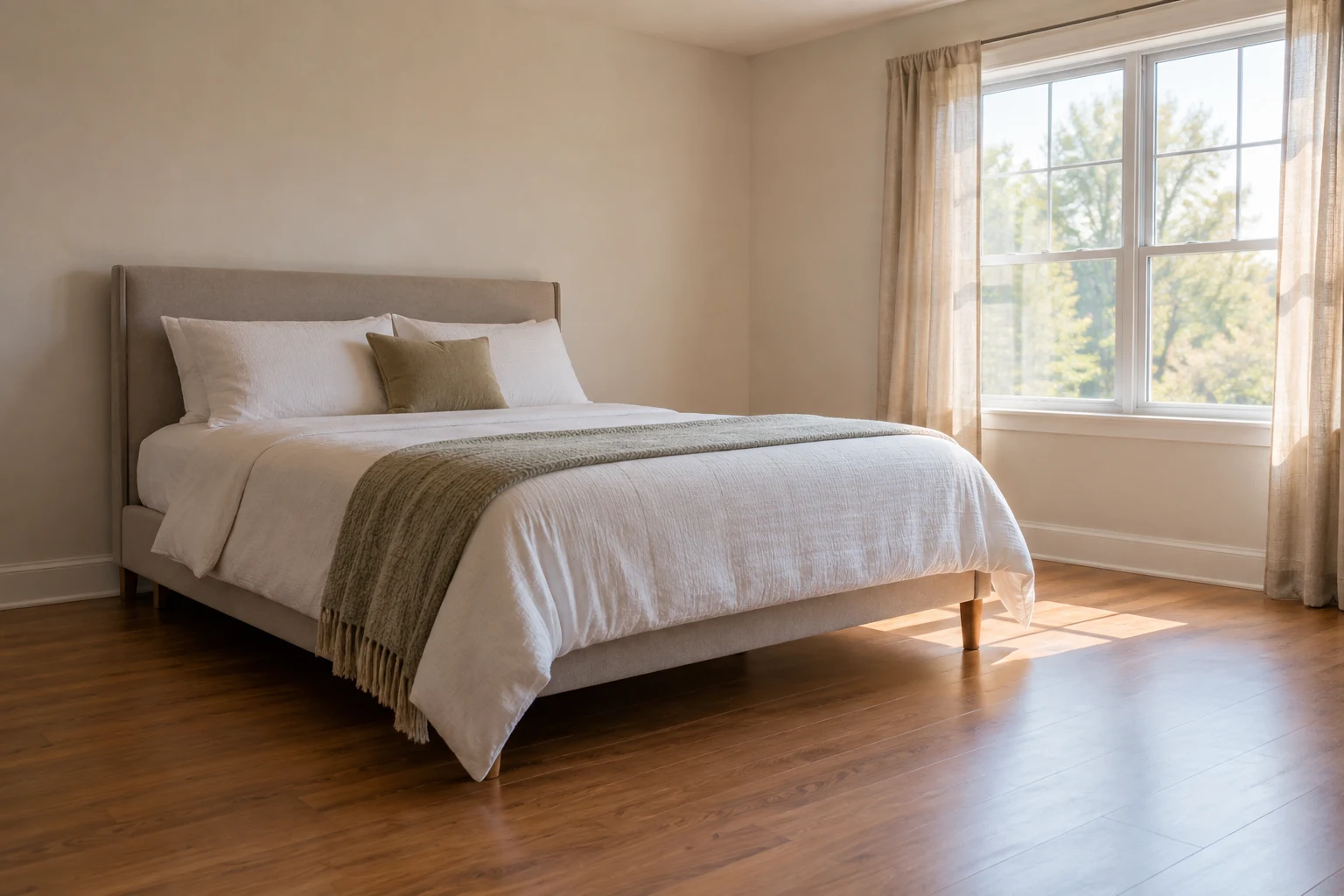
Consider one hypothetical compact rental bedroom. Its entry is at the lower left, a window is at the upper right, a closet runs along the right wall, and a small work desk sits at the lower right. The bed’s head is against the upper solid wall. A storage crate belonging to the renter sits in the route from the door to the bed.
The crate is the first problem to address. Mindful Design School recommends removing or rearranging large items that block the path to the bed, and says the bedroom door should open easily. If the renter has space in their existing, authorized storage, they can move the crate there—provided it will not block a door swing, drawer, closet, window-covering access or walking route in its new location. This trial does not depend on moving the bed. If that storage spot is not available, the renter needs another permitted location rather than shifting the crate into someone else’s space.
Once the approach is clear, consider whether the bed itself needs a change. Mindful Design School describes a BTB feng shui commanding position in terms of the room’s energy flow: while lying in bed or resting against the headboard, a person can see the main bedroom door without being directly in line with it. This is a door-sightline preference, not an instruction to aim the bed toward an auspicious compass direction. It does not establish that a particular position will produce a measurable outcome.
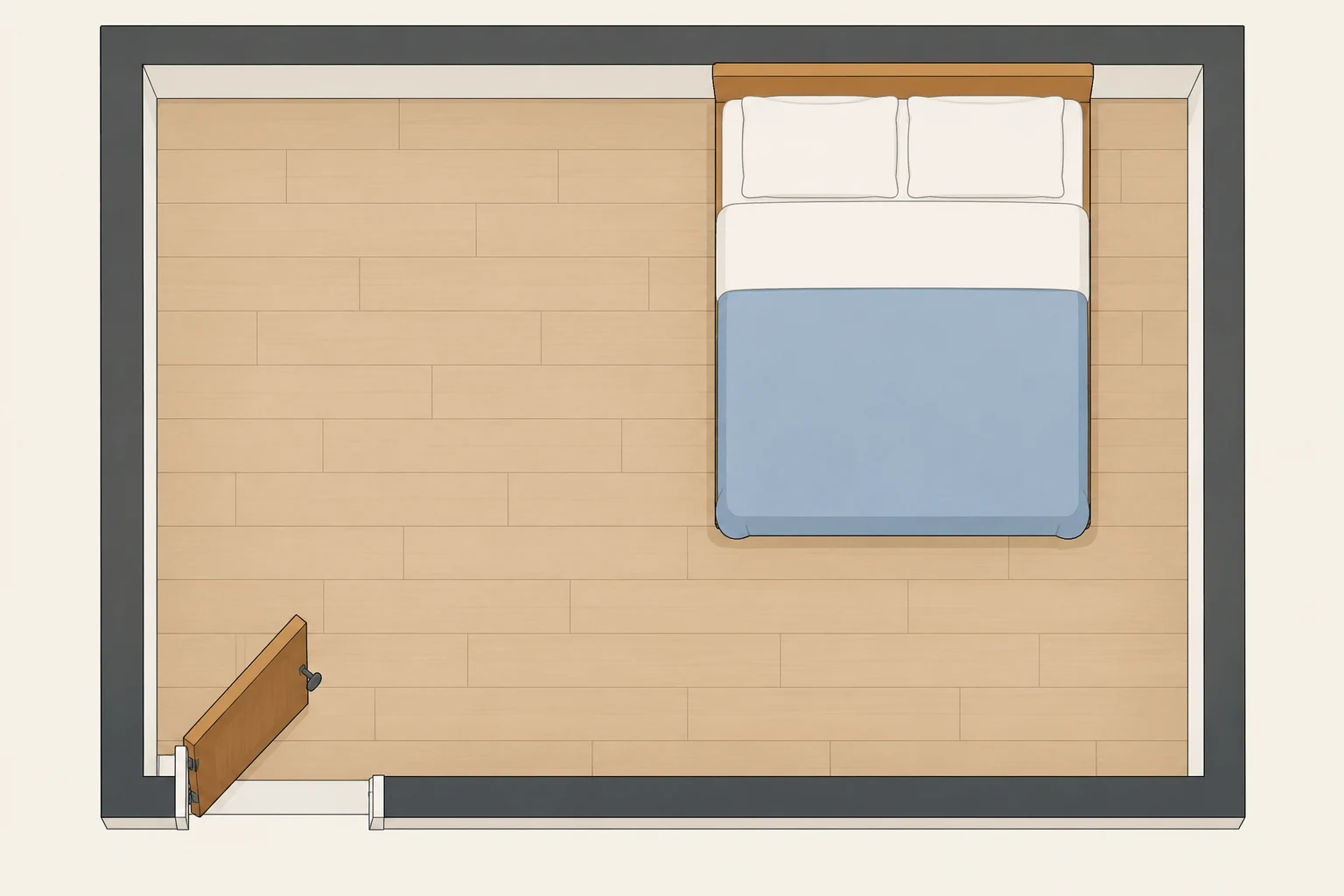
Compare only positions you may use. From each candidate position, test the view from where your head actually rests—not from the foot of the bed. Check whether the head can sit against a solid wall, which Mindful Design School associates with support and stability. Then check ordinary use: Does the door open? Can you approach the bed and get out of it? Do the closet, desk and window covering still work? A preferred view is not worth losing those functions.
The access test depends on who sleeps there. Mindful Design School advises easy access to both sides for adults sharing a bed. For a single occupant, check that person’s actual way in and out rather than imposing a symbolic clearance rule or assuming every bed needs the same space on each side. The question is whether the arrangement works for its occupants, not whether it meets an invented measurement.
In the hypothetical room, a candidate with the bed’s head against the right wall fails that test: it crowds operation of the closet along that wall. Reject it even if it seems visually attractive. The current upper-wall head position, by contrast, lets the occupant see the lower-left door diagonally from bed without lying directly in line with it. It also leaves a usable route to the closet and lower-right desk. With the crate out of the way, there is no practical reason to shift this workable bed merely to make the layout look different.
If your own bed is provided, fixed or not permitted to move, do not treat this comparison as an instruction to move it anyway. Keep the workable position and make choices within the remaining room you control.
Adapt When the Bed Cannot Move
A fixed or landlord-provided bed can be a real boundary, as can a movable bed whose alternative positions would block necessary access. In any of those cases, preserving the bed position is a valid decision. You can still clear your own belongings from the approach, use permitted lighting and manage what happens at the desk after work. A preferred door view does not outrank a functioning room or permission to make a change.
There is a narrower feng shui option only if a feasible bed move cannot give you the preferred view. Mindful Design School suggests positioning a mirror so that the bedroom door appears in its reflection from the bed. The school says moving the bed is preferable when possible; the mirror is its alternative way of creating the commanding-position effect, not a requirement for every bedroom.
If you already have a stable mirror and its placement is permitted, check it from your actual lying or resting position. Can you see the door reflected, rather than merely see the mirror? Is the mirror secure where it belongs, without narrowing a route or interfering with the door, closet or desk chair? Those are separate checks: a useful reflection does not make an unsafe or inconvenient placement acceptable.
If the mirror cannot fit securely, its placement is not allowed, or you simply dislike it, skip it. Keep the workable bed and clear access instead. There is no need to purchase a mirror, prop up loose glass for a trial, or fix anything to a wall without permission. The door-reflection idea is an optional interpretation for a particular constraint, not a reason to create a new problem in a small room.
Keep Work, Storage and Light Usable for Rest
A rented bedroom may have to serve several purposes. Mindful Design School advises creating zones for different activities when the bedroom is multifunctional: work at the desk and keep work materials there. In the hypothetical room, that means the lower-right desk can remain the work area while the upper-wall bed remains the place for rest. The distinction can come from what you do in each area; it does not require a room divider or a redesigned home office.
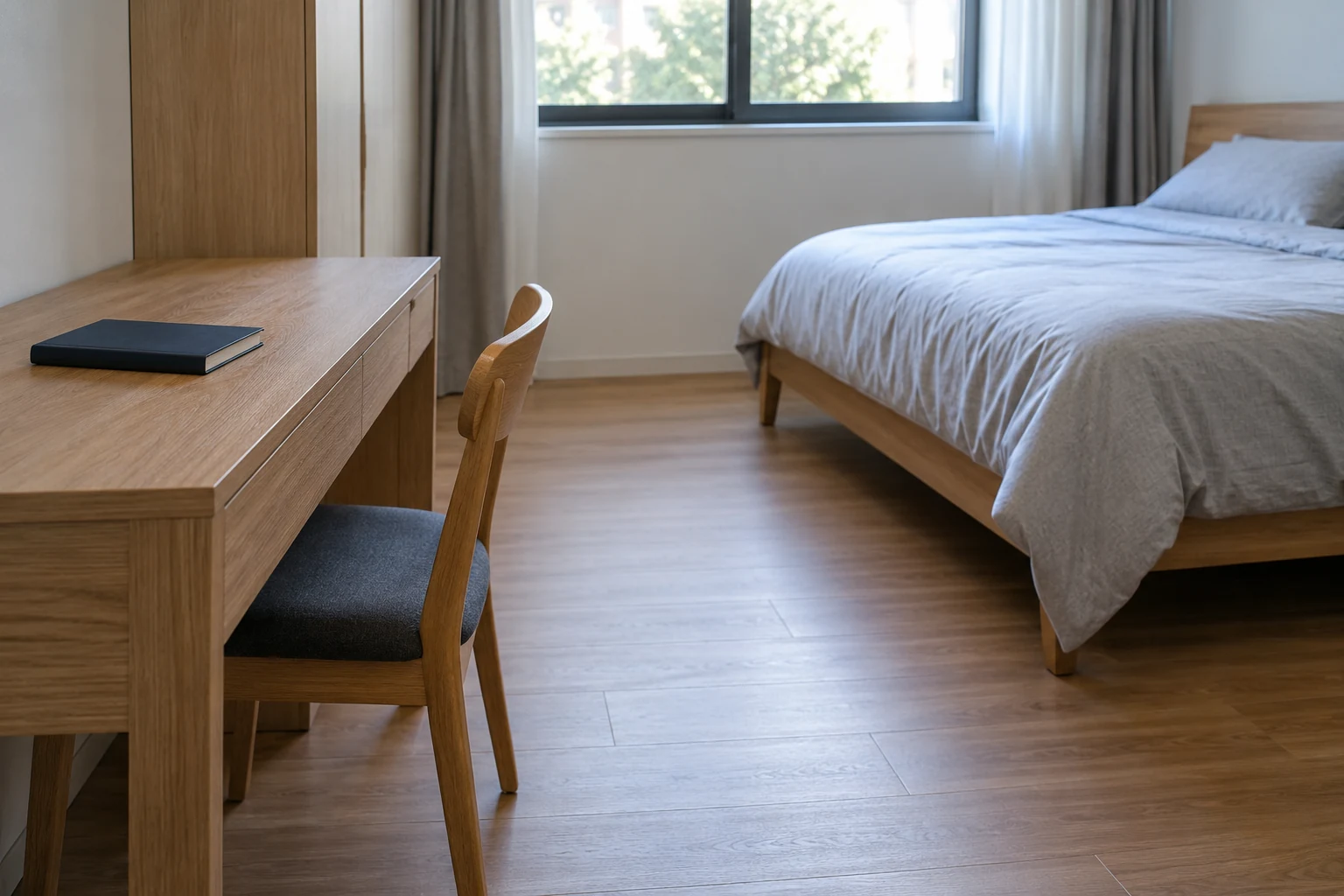
When furniture cannot move, use an end-of-work routine instead. Mindful Design School suggests powering off a laptop, putting it in a drawer and, if desired, covering the desk with fabric to make the work area less visible. If you use that option, store the laptop first and cover only a cleared, equipment-free surface—not a hot lamp or charger. If there is no suitable drawer or safe place for a cover, simply putting work materials away and clearing the desk is the more workable version.
Storage should support that boundary without undoing the clear route. Use existing storage you are authorized to use for the crate and other belongings. As you put things away, try the closet door, pull drawers out, sit down and push back the desk chair, and walk from the entry to the bed. Check access to the window covering too. A room can appear tidy while something stored just out of sight prevents a drawer from opening or makes the chair difficult to use. Shared storage is not an overflow solution unless the people who control it agree.
Light is another daily-use choice. Mindful Design School recommends letting in daylight during the day and being able to make the bedroom dark for sleep. Start with the existing covering: open it when you want daylight and close it at night if it does the job. First make sure the bed, desk or stored items do not prevent you from reaching and operating it. If the covering cannot be changed under your rental terms, do not assume replacement is an available fix.
If you need additional light for a task, use an appropriate lamp already available to you only where it can reach power safely and sit without blocking access. Do not turn a lighting preference into electrical work. The point is to make daytime tasks and nighttime use possible with the controls the room actually offers.
These routines are choices to test, not a list that every renter must complete. In the hypothetical room, the immediate obstruction is still the crate. The desk routine or a light adjustment can be considered later if daily use shows that either would help.
Test One Reversible Change and Decide What Stays
Return to the hypothetical room after one trial: the renter has moved the crate into existing, authorized storage outside all swings and routes. The bed remains with its head against the upper wall. Before the move, the crate obstructed the door-to-bed route. After the move, that route is clear.
The renter now checks the change in normal use. The entry door opens fully; the occupant can enter, approach the bed, and get into and out of it. The closet operates, the desk chair can be used, and the existing window covering opens and closes. All of these checks now pass. The relocated crate does not create a new obstruction in storage, and the current bed still gives the diagonal door view while leaving the closet and desk route usable.
The decision is to keep the crate relocation and keep the current bed position. Moving the bed toward the right wall would crowd the closet without solving a remaining access problem. This is a completed, reversible improvement, not the first stage of a required makeover. In your own room, apply the same verdict conditionally: keep a permitted change when it improves the intended use and passes the daily checks. If it blocks an opening or route, makes a needed activity harder, or turns out not to be allowed, undo it and find another authorized place for the item.
A mirror, end-of-work desk routine or color change can remain a later choice if a specific need calls for it. For optional color, Mindful Design School points to bed linens, pillows and artwork as smaller alternatives to painting. Choose removable linens or pillows you like; display artwork only where permitted. Color here is a personal or symbolic choice, not a promised change to health or relationships.
The useful rental-bedroom method is modest: respect what you cannot change, clear what you can, and retain arrangements that survive ordinary daily use. The Feng Shui Society cautions that feng shui cannot guarantee wealth, health or happiness. If sleep problems are a concern, Mindful Design School also advises consulting a trusted healthcare professional rather than treating bedroom changes as medical care.