A good guest room lets someone arrive, put down a bag, find the light and settle into bed without needing a tour of every drawer. Start with those small acts of welcome. Then use feng shui placement ideas to consider how the bed sits within the room, while preserving privacy, storage and an easy route to the door.
You can make useful changes with the furniture you already own. Clearing a bedside surface and freeing a luggage space often matters more than adding symbolic objects. The room should feel available to its visitor, even if it serves as your office between stays.
Read the Room Through the Guest’s Eyes
Before moving the bed, mark the entrance, windows, wardrobe, heating and light switches on a rough drawing. Open every door and check what happens when a suitcase is on the floor. Include any route to an adjoining bathroom; furniture that looks balanced in a photograph may interrupt that everyday journey.
Think about the actual visitor. Ask whether they need a particular bed height, an easier approach, a place for personal equipment or help with luggage. Keep those needs ahead of symmetry. A bedside table that fills the only usable approach is not an improvement simply because it matches the one opposite.
For a visitor you know less well, prepare a straightforward, flexible room: a stable bedside surface, reachable light, space to unpack and control over the window covering. Make any household-specific details easy to find, such as which door leads to the bathroom. Familiarity with your house should not be a condition of using the room comfortably.
Place the Bed for Support and a View of the Entrance
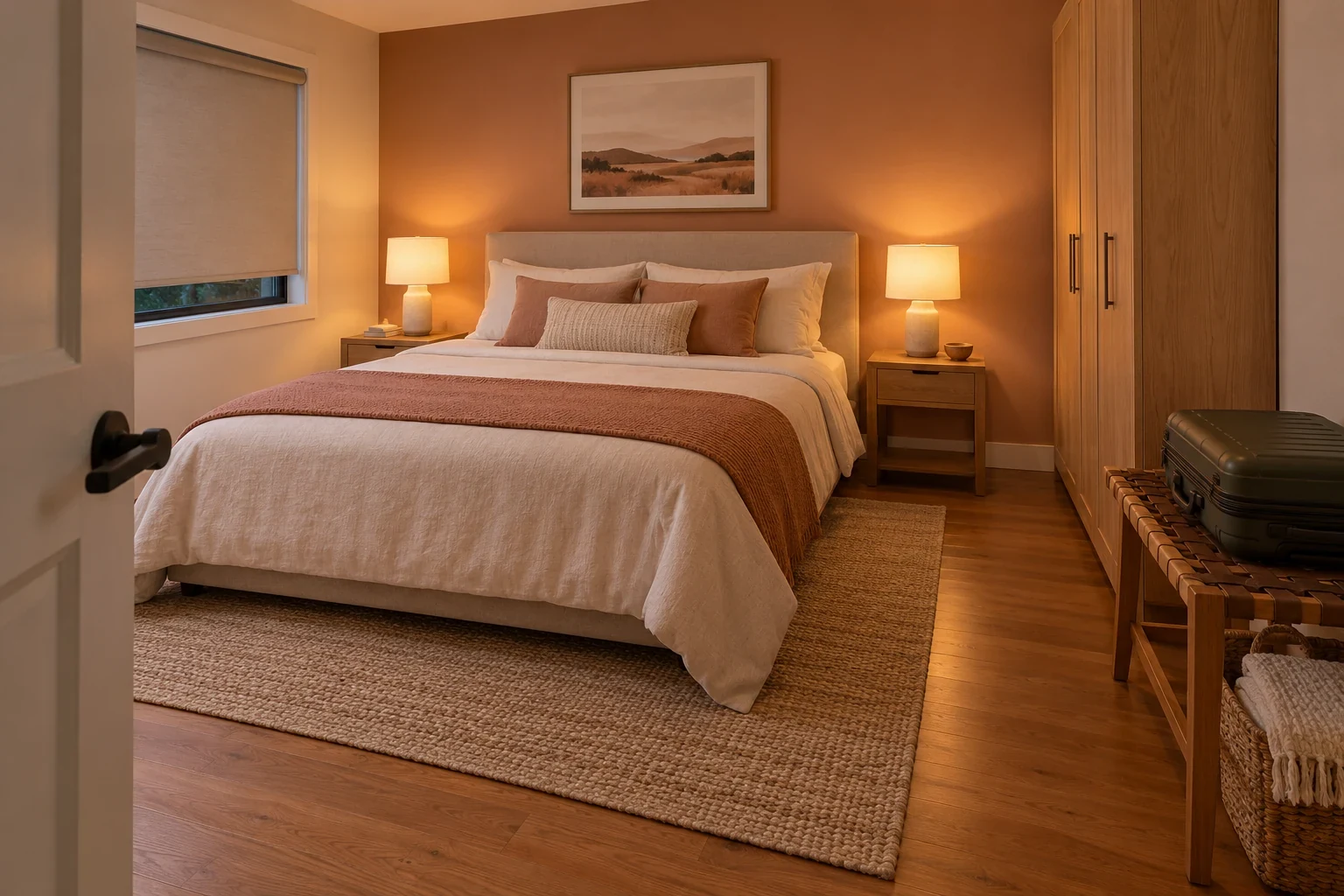
Anjie Cho describes the feng shui commanding position as seeing the bedroom door from bed without lying directly in its line, with a wall behind the headboard. It is a practitioner placement principle you can consider, rather than a guarantee about a guest's sleep or wellbeing.
Try the bed on a wall where it leaves useful approaches. Sit against the pillows and check the view of the door. Then get up from each side that will be used. Can a guest reach the entrance without stepping over luggage or negotiating the corner of a desk?
If two people will share the bed, usable access from both sides is helpful when the room allows it. The two sides need not be decorated identically. A small shelf on one side and a table on the other can work if both provide the functions their users need and are securely installed.
If the bed only fits with one side against a wall, be honest about that limitation when arranging the stay. For one guest, that may be entirely workable. For two, consider whether a different bed or another sleeping arrangement would serve them better. Do not force a diagonal position that makes the remaining route difficult.
With a fixed bed, focus on what you can change: its surroundings, the approach, light controls and privacy. A traditional ideal is useful for comparing feasible options; it should not make an ordinary small bedroom seem unacceptable.
Prepare the Bedside and the Night Route Together
Place a lamp or accessible lighting control where the guest can reach it from the bed. Put a book, glasses and phone on the bedside surface to see whether there is genuinely room. If a large decorative lamp occupies the whole table, change the lamp or free another surface rather than expecting belongings to stay on the floor.
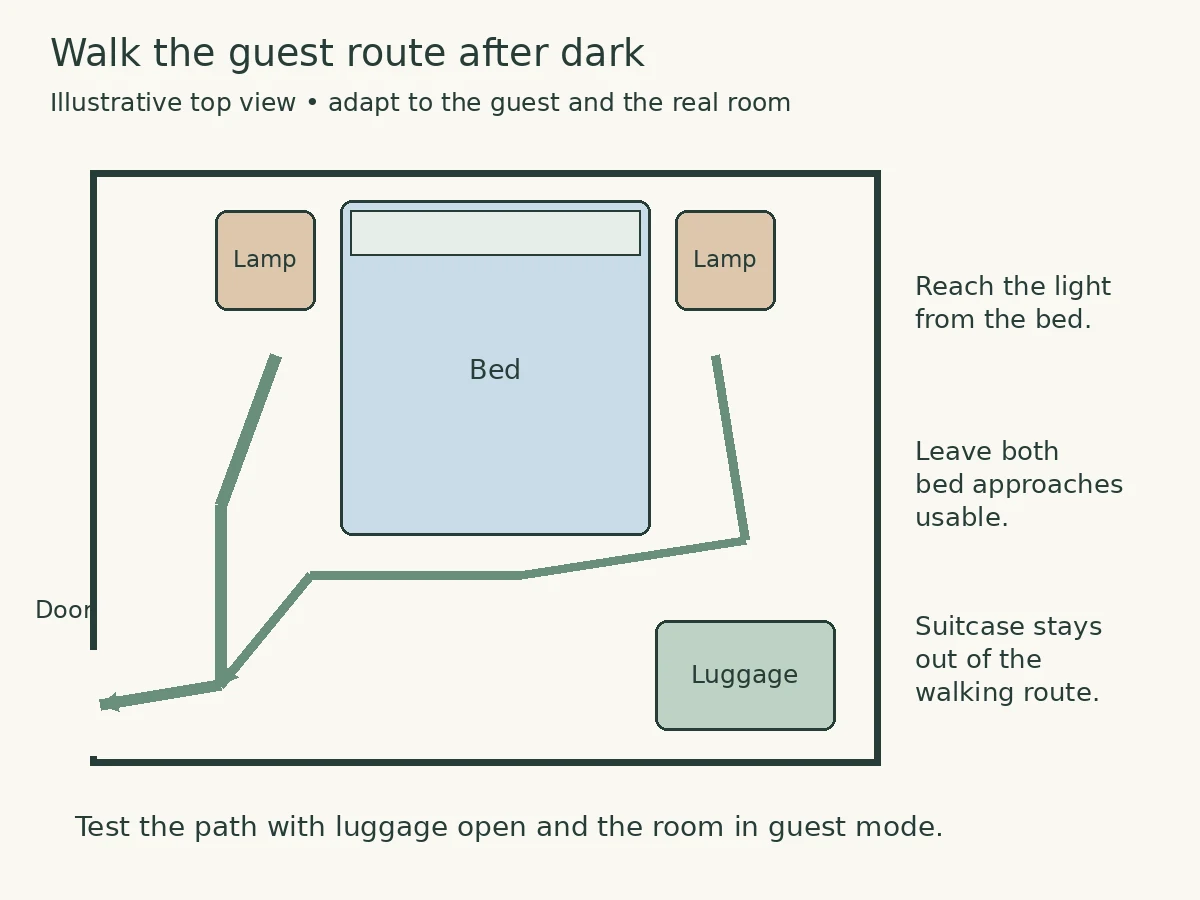
Walk from bed to door with the luggage space in use. The diagram shows that route around the bed, not through a suitcase position. Test both sides if two people are staying. Keep loose objects and trailing cables away from the path and place a needed charging point where its cable will not cross it.
Repeat the walk after dark using the room's normal lights. Check whether someone can find a switch from the entrance and turn off the bedside light without getting up. If the guest needs a different arrangement, adjust it before the visit. The useful test is the actual journey, rather than a universal measurement borrowed from an unrelated room plan.
Avoid placing heavy storage over the pillow area. Secure bookcases and dressers as their instructions require; CPSC's anchoring guidance applies in homes where children visit as well as where they live. Do not assume occasional use makes unstable furniture acceptable.
Offer Privacy and Somewhere to Unpack
Check the window covering from outside the room's usual viewpoint, including after dark when the interior is lit. Let the visitor control it easily. A covering that looks opaque in daylight may not give the privacy you expected in a lit room.
Provide a clear luggage surface that will support the bag being used. Open a suitcase on it and see whether doors and the walking route still work. In the main scene, luggage has a position along the side wall rather than at the foot of the bed where it would narrow the approach.
Clear a drawer or wardrobe section and put a few available hangers there. Tell the guest which space is theirs. If the room must retain your possessions, contain them in closed storage and leave the guest area unmistakably free. An empty drawer offers a clearer welcome than an instruction to move your things wherever they can.
Keep scent optional. A clean room with an extra blanket and an accessible light is a better starting point than a strong fragrance chosen for an imagined energetic effect. Let guests request changes to bedding, light or temperature rather than trying to predict every preference through decor.
Change an Office Into Guest Mode Before Arrival
In a room with a sleeper sofa, open the bed completely before assessing the layout. The dimensions of the closed sofa do not tell you whether the guest will have a workable room. Move the desk chair out of the approach and put work papers away before bringing in bedding.
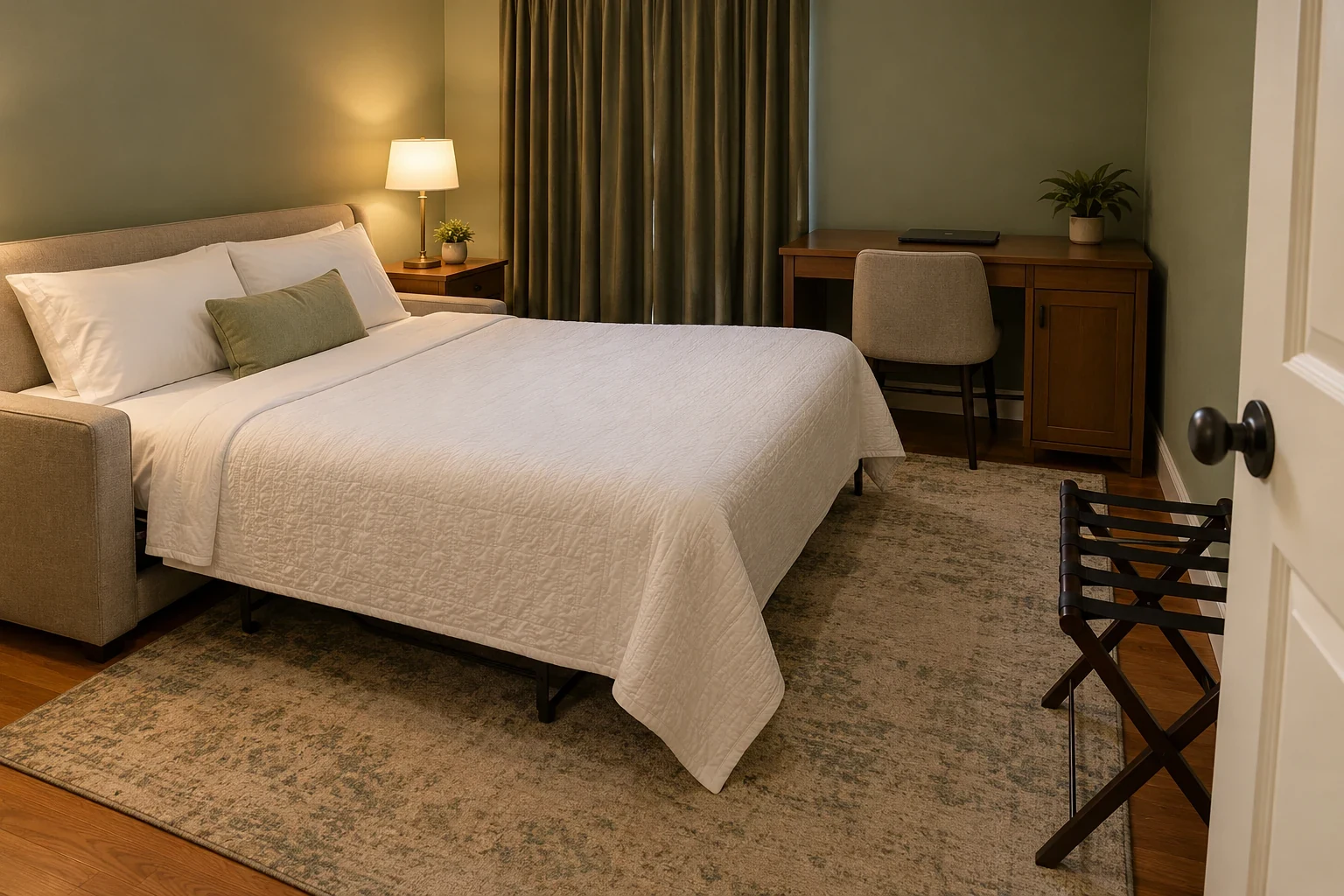
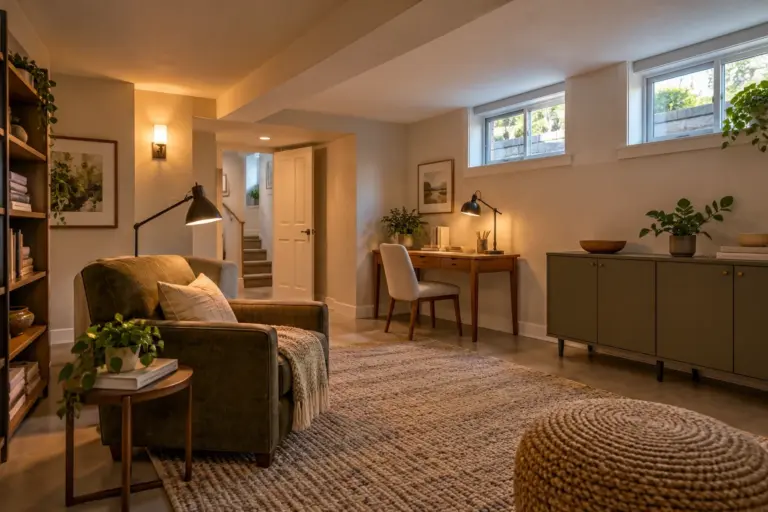
The office-to-guest scene keeps the work surface at the back, with the computer closed and the sleeping area ready. That change matters because the visitor should not have to decide which papers can be moved to reach a lamp. If you must use the office during the stay, agree on times and access in advance.
A foldaway bedside surface can be useful if it is stable and appropriate for the intended load. Test it with the things a guest will put down. If the room cannot hold the opened bed, luggage and a clear approach together, remove some office furniture for the stay or offer a different room. Additional styling will not resolve that space conflict.
Finish with a Simple Arrival Rehearsal
Carry a bag into the room, close the door, put the bag down and get into bed. Find the lamp, reach a glass of water, get up and walk towards the bathroom. Open the wardrobe with the bag still in place. Each awkward moment identifies a concrete change you can make.
For a quick preparation, prioritize clean bedding, bedside function, the night route and privacy. Add a small personal welcome only after those work: a book the guest might enjoy, a note with household details or a spare blanket in an obvious place.
The room is ready when its visitor can use it without constantly asking permission or moving obstacles. Feng shui's supported bed position can inform that arrangement; the sense of welcome also comes from making ordinary actions easy and leaving some space genuinely theirs.