Menu

Practical guides

Guides

Room-by-room layout guidance that separates everyday use from traditional feng shui interpretation and favors safe, reversible changes.

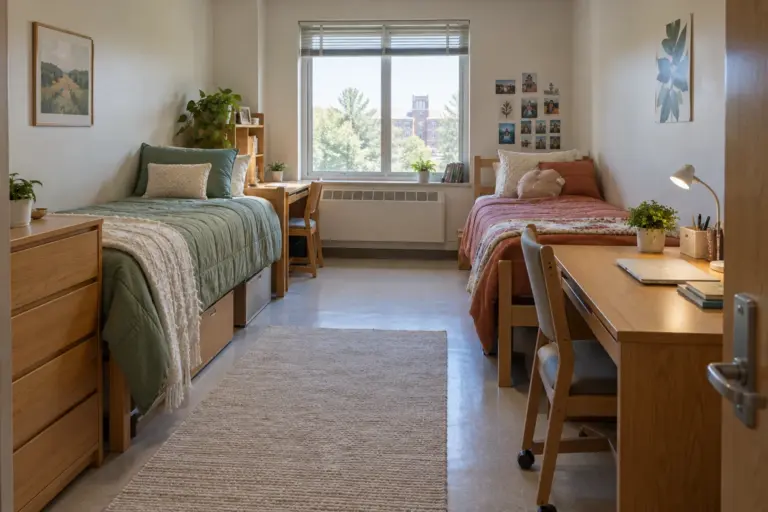
A shared dorm room with two separate beds, two desk areas and a clear central floor route.
Plan Your Home · 8 min

How to Apply Feng Shui to a Dorm Room

Apply feng shui to a dorm room by making its competing jobs easier to recognize: a place to sleep, a place to study, somewhere for belongings and a route everyone can use. Start with the fixed furniture, doorway, windows and roommate agreement. You can improve a small room without moving a bed into an impractical position or adding objects that the residence does not permit.

Read guide →

A low front fence and open gate reveal a path to a house entrance, with a taller side hedge.
Outdoors & Site · 8 min

How Fences Hedges and Property Lines Shape a Home Site

Fences and hedges shape how a home meets its surroundings: what is sheltered, what remains visible and how someone approaches the entrance. In a form-based feng shui reading, those relationships can matter more than whether a particular fence material is called lucky. The legal property line is a separate question; it cannot be moved or identified through a feng shui interpretation.

Read guide →
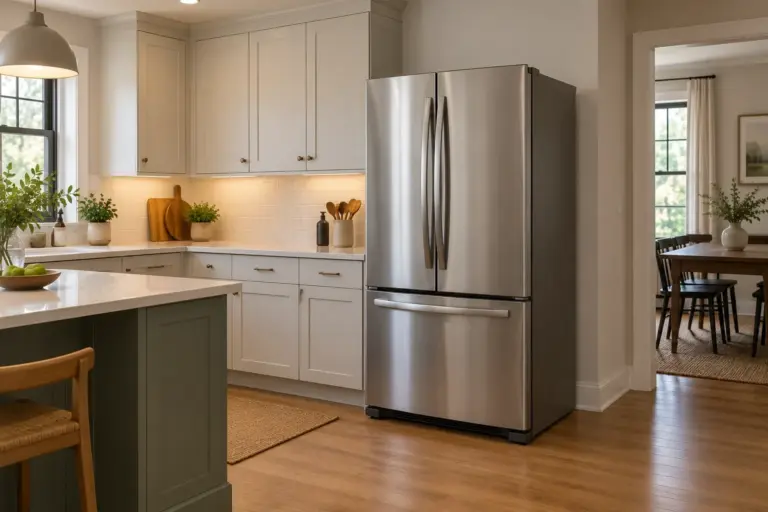
A freestanding refrigerator at the end of a kitchen cabinet run with a clear approach and no objects on top.
Rooms · 7 min

Why Your Refrigerator Needs Breathing Room in Feng Shui

A refrigerator needs room for three different reasons: the air clearances its manufacturer specifies, the space needed to open its doors and drawers, and the kitchen route people use around it. Feng shui adds a symbolic reading of spaciousness and the appliance's relationship to other fixtures. These concerns can inform the same decision, but they are not interchangeable.

Read guide →
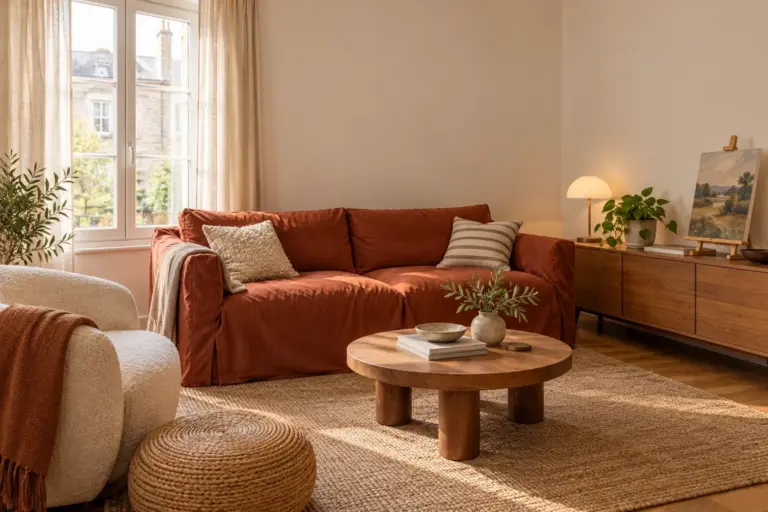
A rental living room personalized with a rust sofa cover, cushions, low furniture and art on an easel.
Plan Your Home · 8 min

How Renters Can Personalize a Space Without Drilling

A rented room can feel personal through the things you touch, the light you use and the way furniture defines its activities. Start with bedding, cushions, a useful table, a low display surface and the fittings already available. These can change the experience of a space without making holes or covering every wall.

Read guide →
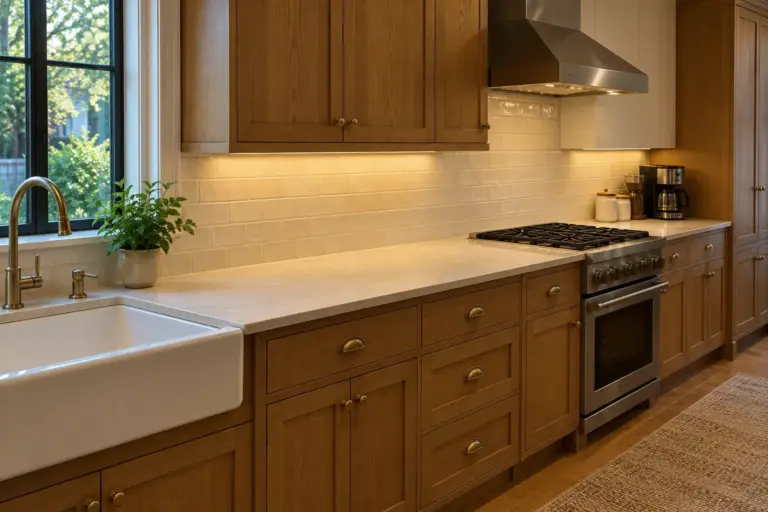
An open preparation counter between a kitchen sink and range, with a coffee station at the far end.
Make Changes · 7 min

How to Clear Kitchen Counters and Keep Them Open

Start by giving one stretch of counter a job: preparing food. Then give the things occupying it a destination they can return to without a major rearrangement. A clear counter stays useful when the kitchen's storage and daily routines support it; simply removing everything for a photograph rarely lasts.

Read guide →
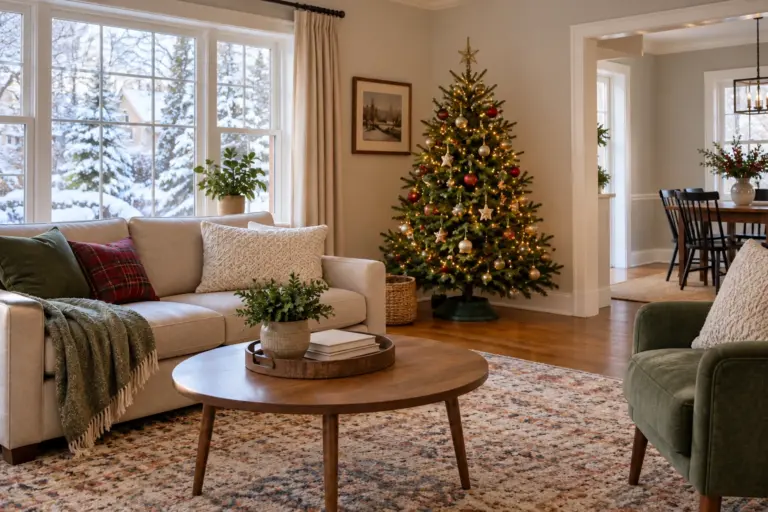
Christmas tree beside the sitting area, with an open passage to the adjoining room and no candles or lanterns in the scene.
Make Changes · 7 min

Where to Place a Christmas Tree According to Feng Shui

Place a Christmas tree where its full branches and stand fit without obstructing an exit, crowding the room's routes or approaching a heat source. Then choose among those workable positions using the seasonal meaning you enjoy. A tree visible on arrival, a suitable place within the gathering room or an explicitly chosen bagua area can all be considered.

Read guide →
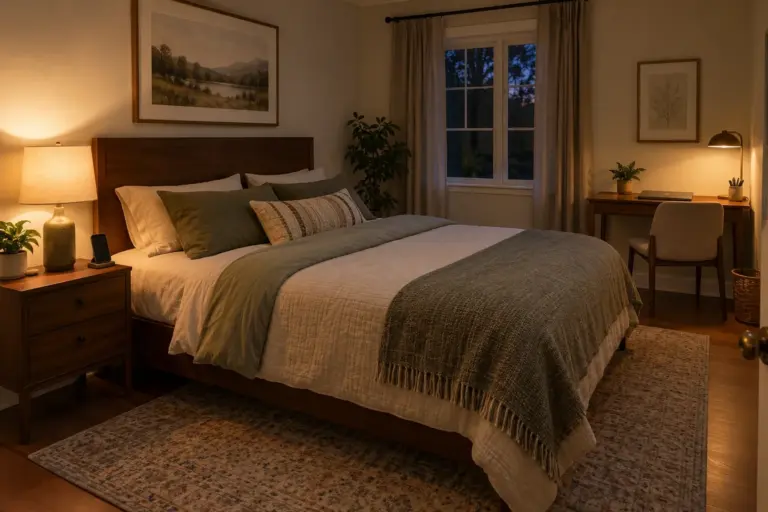
Bedroom with a distinct desk holding a closed laptop, a clear bed approach and limited bedside equipment.
Rooms · 7 min

How to Manage Electronics in the Bedroom

Manage bedroom electronics by deciding which functions genuinely need to stay, where their equipment can work safely and how optional activity ends at night. A phone used for an essential purpose and an unused television do not need the same answer. Start with the actual household routine rather than a blanket instruction to remove every device.

Read guide →
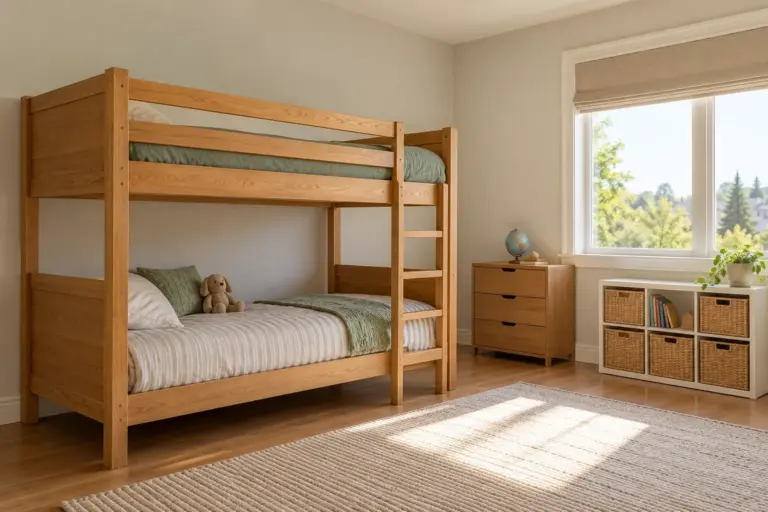
Wooden bunk bed with upper rails and an unobstructed ladder approach in a modest shared bedroom.
Rooms · 7 min

Feng Shui Rules for Bunk Beds

The most useful feng shui rules for a bunk-bed room are conditional: give each occupant a settled sleeping place, preserve an understandable approach and avoid adding clutter or hanging remedies around the beds. First, however, confirm that the bunk itself and its users meet the relevant safety conditions. Symbolic preferences cannot make an unsuitable upper bunk appropriate.

Read guide →
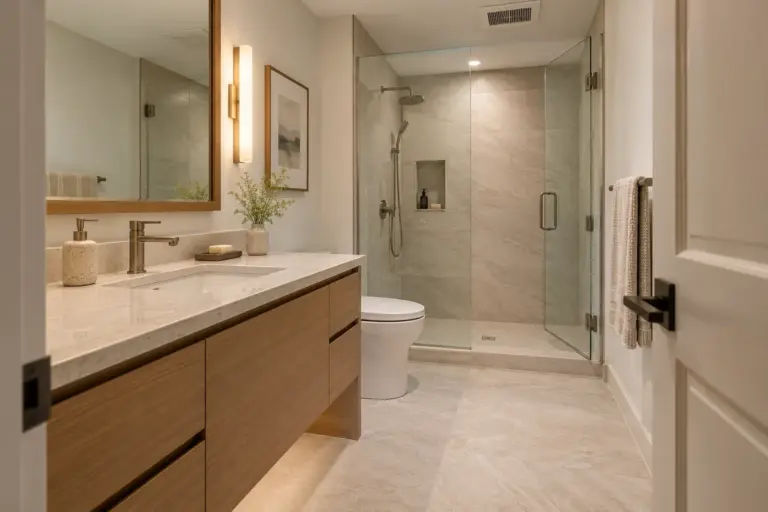
Full bathroom with basin area, toilet and a separate bathing zone farther into the room.
Rooms · 7 min

Powder Rooms vs Full Bathrooms: Feng Shui Layout Considerations

A powder room and a full bathroom need different layouts because people use them differently. A small guest toilet needs privacy, a reachable basin and an understandable way in and out. A room used for bathing also needs a workable wet area, drying and dressing space, storage and moisture management.

Read guide →
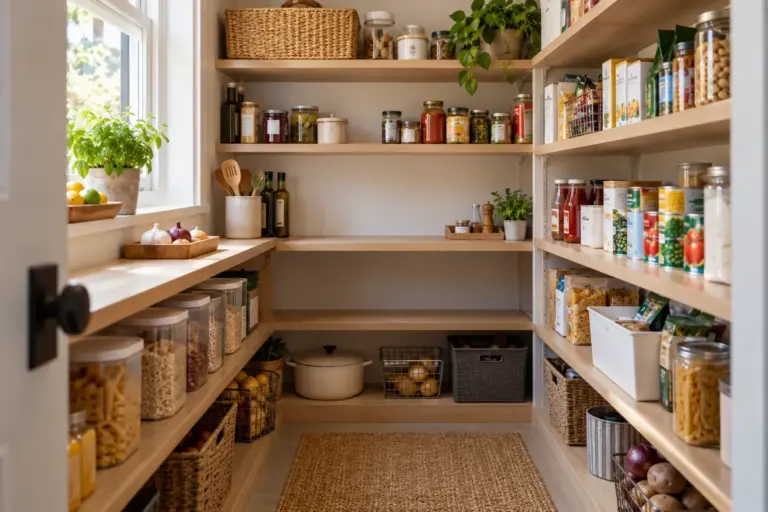
A working pantry with visible staple packages, shallow containers and open retrieval space.
Make Changes · 9 min

15 Things to Clear from Your Pantry for a Calmer Space

A calmer pantry lets you see what you have, take out what you need and return it without rearranging a tower of packages. Clearing it does not mean throwing away everything with an old date or decanting all your food into matching jars. It means removing the things that make storage harder to use, with the right destination for each.

Read guide →
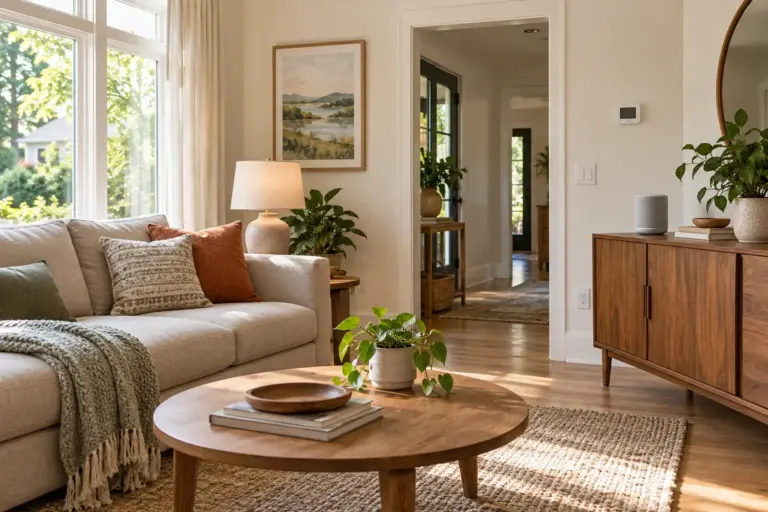
Everyday living room with an open-sideboard speaker, visible wall switch and thermostat, and a clear route through the doorway.
Make Changes · 7 min

How to Integrate Smart Home Devices with Feng Shui

Integrate smart devices by giving each one a useful job, a suitable physical location and an understandable way to control it. Then consider how the room feels and functions when the device is quiet, active or unavailable. A home full of hidden gadgets is not automatically calmer than one with a few visible, dependable controls.

Read guide →