An entrance needs somewhere for the things that arrive with you, but a landing spot is only useful if you can still get past it. Start with a bag, a coat, keys and the shoes you actually leave by the door. Their occupied space matters more than the neat outline of an empty shelf or bench.
These two layout concepts suit different rooms. One uses a shallow stretch of wall; the other uses a recess that can contain a seat. They are alternatives to compare with your own entrance, rather than a before-and-after transformation of the same hallway.
Use the Wall When a Seat Would Occupy the Route
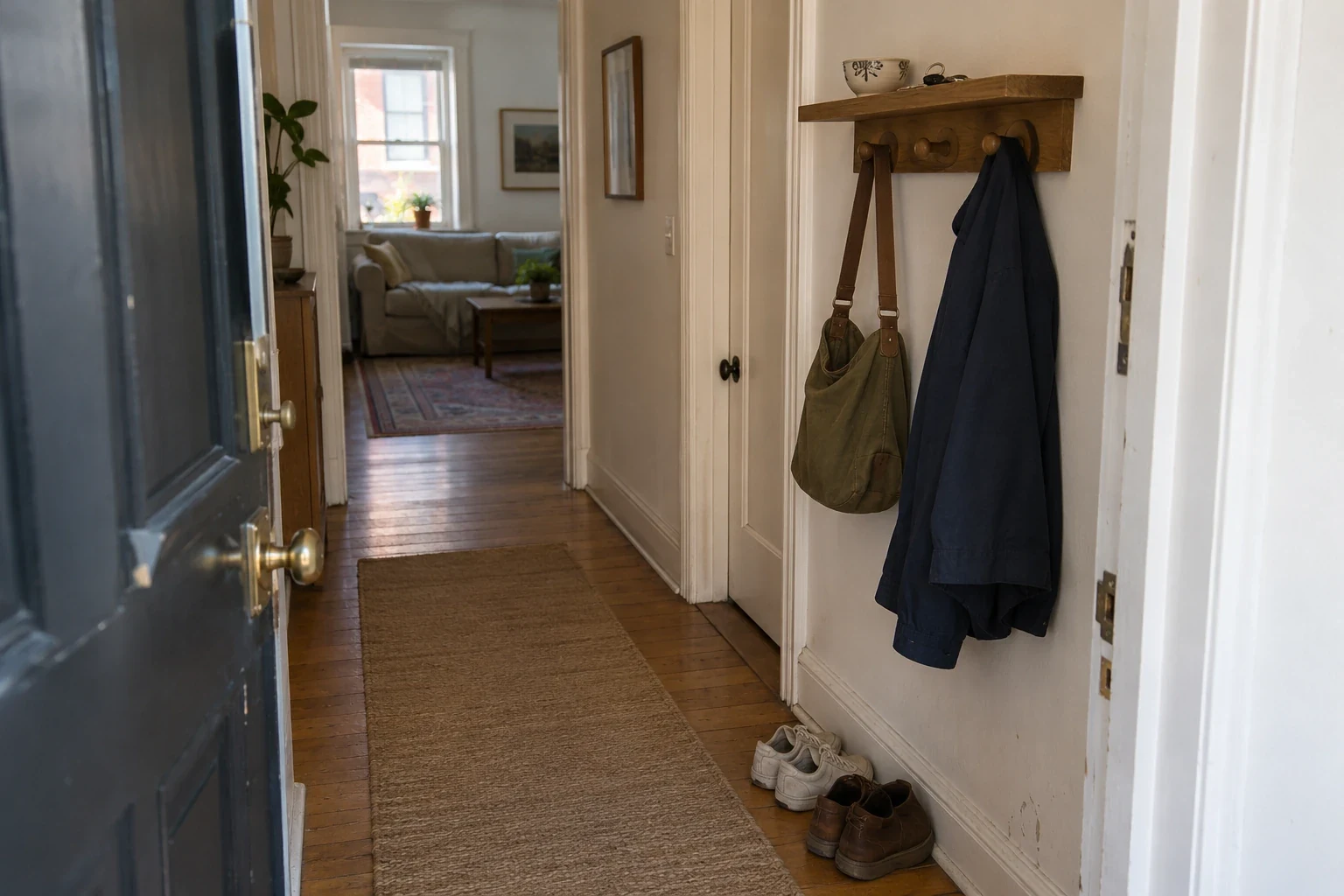
In the wall-based arrangement, the shelf takes keys upward while the pegs give the bag and jacket a place below. Shoes line up at floor level along the same wall. Most of the visible hallway remains one continuous strip from the open front door toward the living room.
The shelf itself is not the deepest part of this arrangement. The filled bag and jacket project farther into the hall. When trying a similar setup, hang your ordinary bag with its usual contents and include the coat you wear most often. An empty peg tells you little about the space those objects will occupy.
This direction is useful when your main problem is putting things down as you arrive. It does not provide a seat for changing shoes. If sitting is an important part of the routine, identify where that will happen before treating the wall arrangement as a complete solution.
Also follow the movement of the door, not just the view with it standing open. A bag that clears the corridor may still meet a door leaf or handle. Check that movement in the actual room; this photograph cannot supply your door's full swing.
Use a Recess When It Can Contain Both the Bench and Its Contents
The second entrance has a recess beside its doorway. Here the bench stays inside that pocket, with shoes beneath and a backpack toward one end of the seat. Keys have their own shallow tray above. The main route runs alongside the alcove instead of through the furniture.
The remaining visible seat is important. If every arrival item lands on the bench, the place to sit becomes another storage shelf. Decide which item may occupy one end and where it goes when somebody needs the whole seat. The backpack in this example is a useful reminder to judge the bench after arrival, not only when empty.
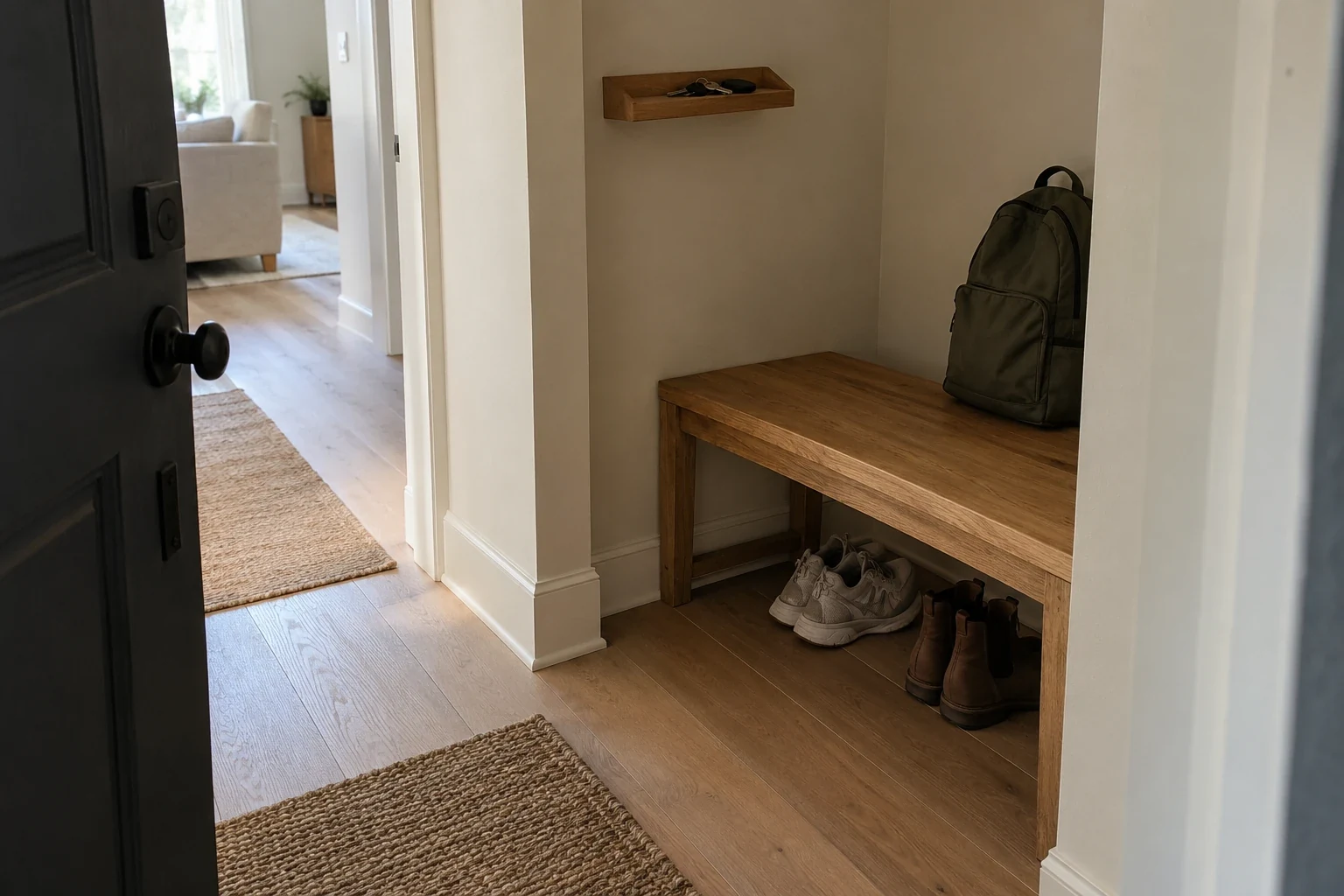
Do not copy the bench into the first narrow hallway merely because this second room makes it look comfortable. The recess is doing part of the work. A similar bench placed in front of a flat wall would occupy space that is open here.
Test an Arrival, Not an Empty Hallway
Walk through one ordinary arrival before buying anything: open the door, step inside with your bag, find the keys' resting place, remove the coat and deal with shoes. Notice where you pause and where you need both hands.
Then test the occupied footprint. A taped outline can represent a bench, but add the expected bag and shoe positions rather than testing bare furniture alone. Choose the wall arrangement if it accommodates your routine within the wall strip; choose a seat only where the room can contain its everyday use. The successful landing spot leaves a route you can still follow when the household is home.