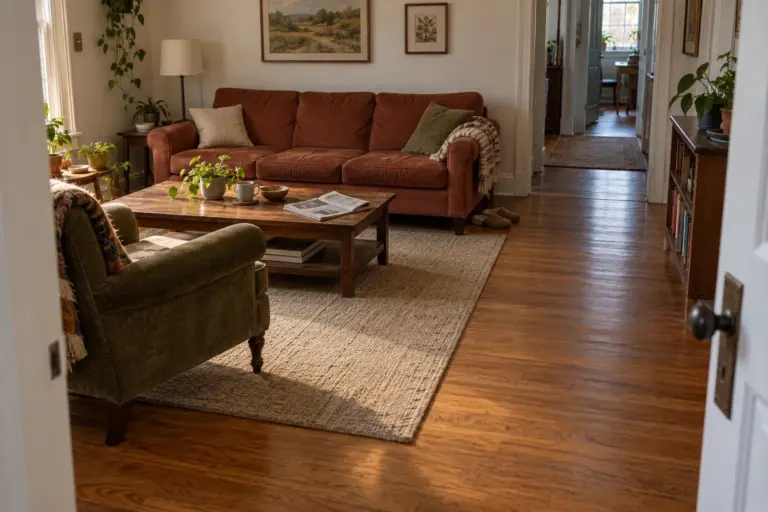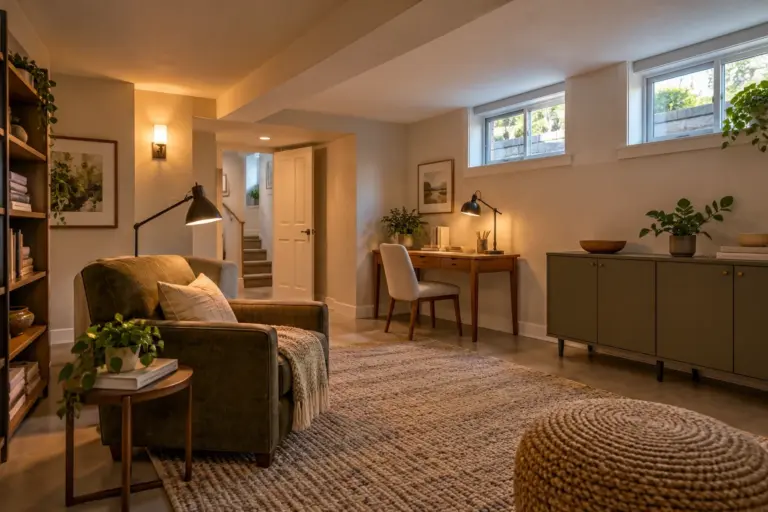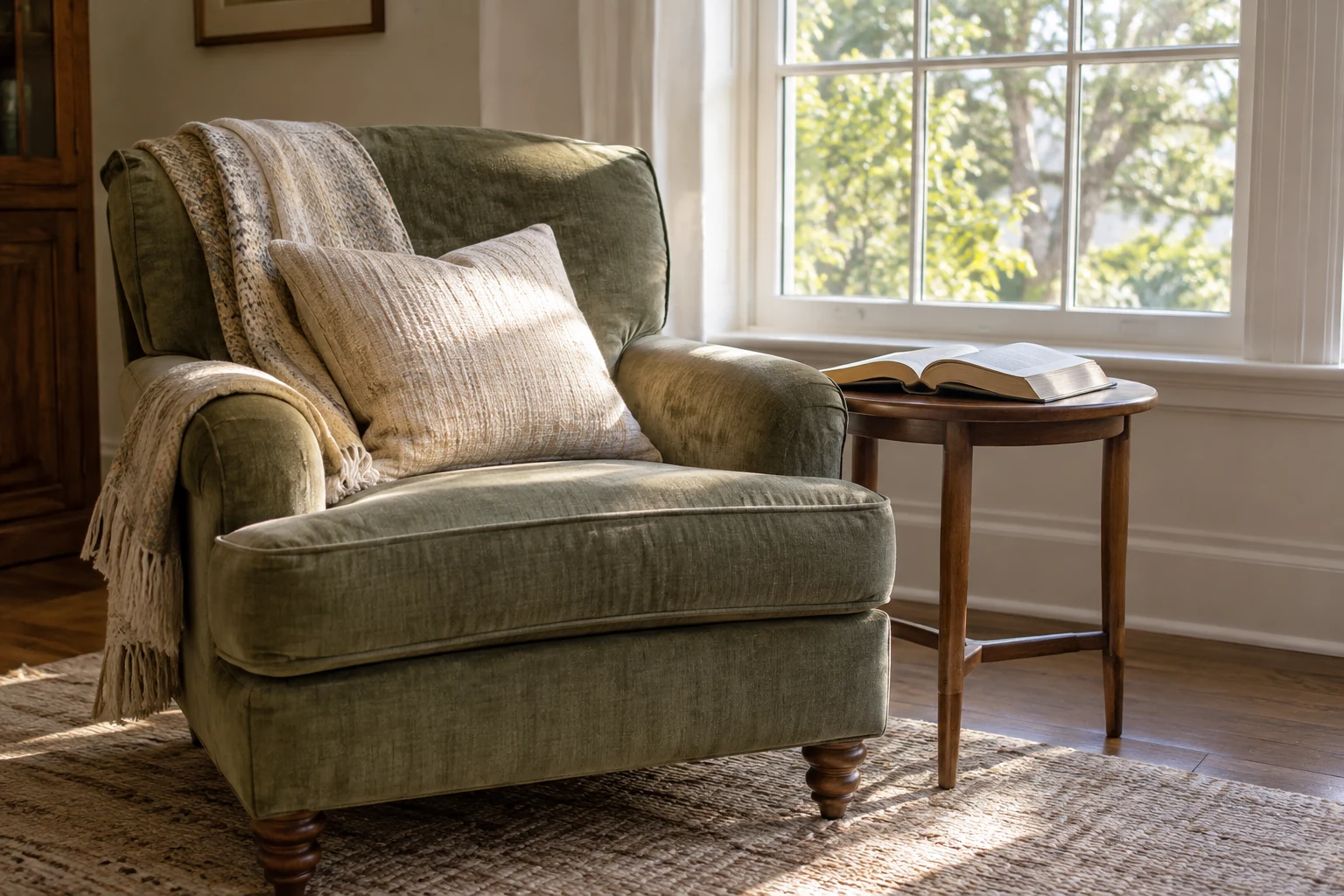
Place the chair where your actual book or screen receives useful light without a bright window or reflected patch interrupting your reading. Then check the position at the times you normally use it. A good view does not necessarily light the text well, and the window’s compass direction cannot tell you what the page will look like throughout the day.
Treat the first position as a trial, not a permanent layout. Move the chair within the space you can use, sit as you normally would, and compare what you see on the reading surface. The best choice is one that also leaves room for the footrest, side table, openings, and a clear way in and out.
Map the Reading Setup and the Space Around It
Start with what you read most often. Is it an ordinary paperback, a magazine with glossy pages, or a screen? Bring that item to the chair trial. Hold it at your usual distance and tilt rather than testing an empty chair or laying the book flat on a table. If you switch between materials, test both: a position that works for one surface may show a distracting bright patch on another.
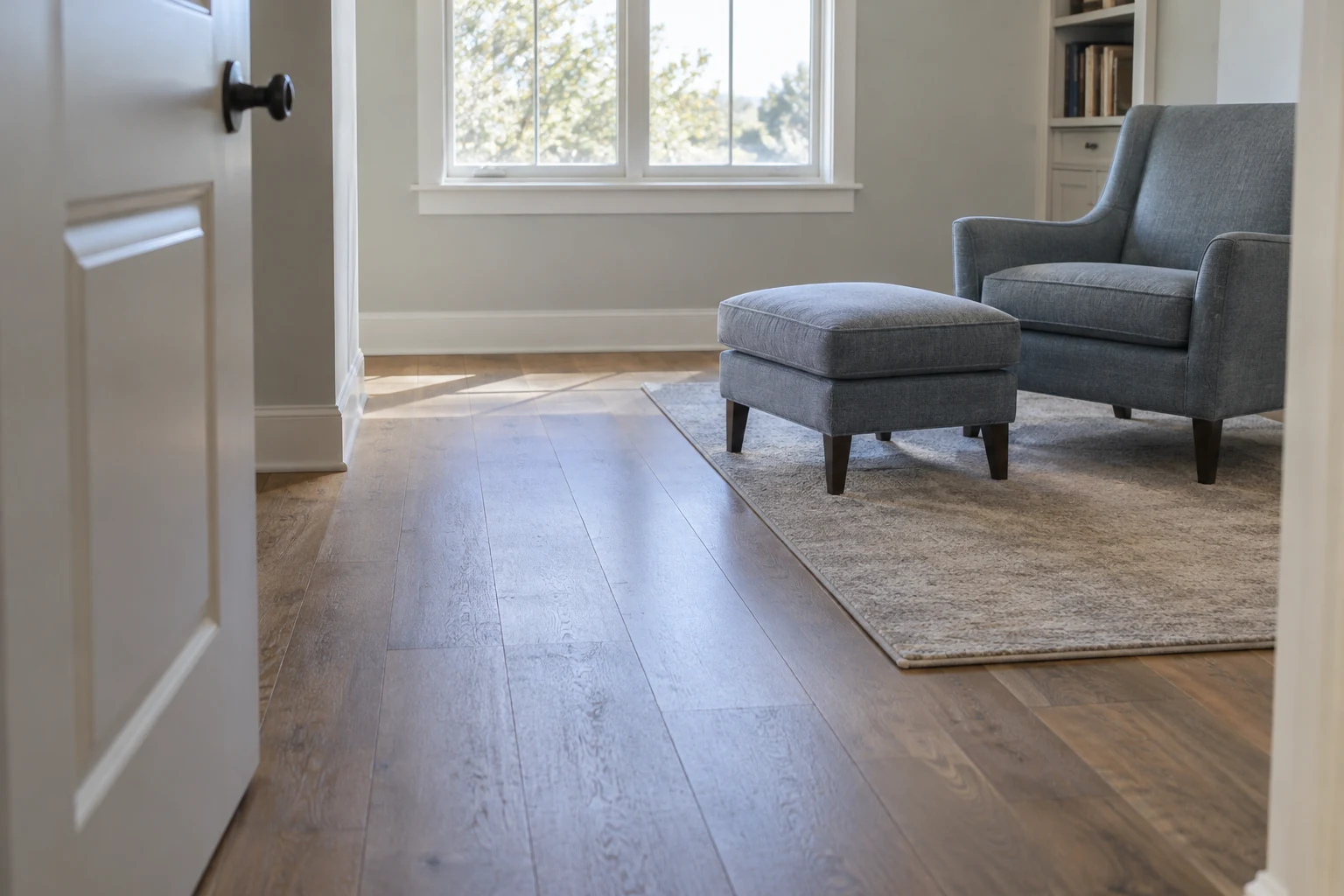
Note when you expect to read. “Afternoons” is more useful for this decision than “the window faces west,” because you need to see what happens from the seat at the time you will occupy it. Include evening use if the same chair will serve after daylight fades. You do not need to measure the room’s brightness or predict every change in the sky; you need a few realistic opportunities to test the setup.
Next, mark the space the arrangement must preserve. Identify the window and any door that needs to open, fixed furniture you cannot shift, and the route you take to reach the chair. Set out the chair, footrest, and side table as you would use them. Check that you can reach the table without stretching or twisting around the chair. If a lamp is already part of the plan, note where its cable would run before deciding where to place it.
This map gives you a boundary for the light trials. A chair angle is feasible only if you can sit down, extend or move the footrest, put down a drink or book, and get up without negotiating a blocked route. Leave any needed window or door usable. Do not place a loose lamp cable across the way in or out to make a preferred angle work.
Choose at least two positions within that usable area: one with the chair beside the window and another shifted or turned at an angle. They need not be far apart. A small rotation may change what appears in your normal sightline while keeping the furniture where it belongs. Comparing those positions is more informative than choosing the one with the nicest view before you have looked at the page.
Try Chair Angles Against the Page and the Window
Put the chair in the first feasible position, beside the window. Sit back as you would for a few minutes of reading, with the footrest and side table where you intend to keep them. Hold the real book or screen in its normal position and read a paragraph. Look at the text, then notice what else enters your view: the window itself, a bright area beyond it, or light on the reading surface. Ask whether the text is easy to see without holding it at an unnatural angle.
Now turn or shift the chair to the second position and repeat the same short trial. Keep the reading material at its usual height so the comparison is fair. Do not judge the positions only by how bright the corner looks from across the room. The useful question is what reaches the text—and what reaches your eyes—once you are seated.
Separate two possible interruptions. Direct brightness is a bright window or other intense source in your field of view as you look up or read. Reflected glare is a bright patch you see on the page or screen from your reading position. It may obscure part of the text even when the window itself is off to one side. Note which problem occurs in each chair position; changing the chair angle will not necessarily address them in the same way.
Surface matters here. OpenStax explains that diffuse reflection lets us see a sheet of paper from different angles, whereas a smooth mirror reflects light at specific angles. That distinction is a reason not to assume every ordinary book page will behave like a mirror. Instead, check your actual material: if a glossy page or screen shows a bright patch, observe whether that patch moves when you gently tilt the material or turn the chair.
Try a modest change in page or screen tilt first, then a modest change in chair angle. If the reflection moves out of the text without forcing you to hold the material awkwardly, you may have a workable position. If you have to keep adjusting every time you turn a page, the chair position may be less practical than it first appeared. As you turn, also check for a persistent shadow from your body over the text. An angle that removes a reflection but leaves the words in shadow is not a complete fix.
If every feasible angle leaves an intense or unevenly bright window in view, try adjustable shading and read again from the chair. The aim is to reduce the brightness that bothers you, not to darken the corner indiscriminately. If shading—or moving the chair—leaves too little useful light on the text, try a task light positioned to illuminate the reading material without putting a bright bulb in your sightline. OSHA’s workstation guidance recommends avoiding intense or uneven lighting in the field of vision, using indirect or shielded lighting where possible, and supplementing light for reading and writing tasks. Those are useful lighting principles for this trial, not a required brightness level for a home chair.
Compare the positions by their trade-offs. Keep the beside-window position if it lights the text, avoids troublesome brightness and reflections, and remains easy to use. Prefer the angled position if it solves an observed problem without introducing a shadow or squeezing the footrest and route. Use shading when the window’s brightness is the remaining obstacle; add a suitably placed, shielded task light when the text needs more light. If none of those adjustments fits within the usable space, return to another feasible chair position rather than accepting a blocked opening or awkward seat.
Retest the Arrangement When You Actually Read
A successful trial at one moment is a promising start, not a final verdict. Repeat a short, ordinary reading session at your usual daylight time. If you also use the chair in the evening, repeat it then with the lighting you would actually use. Hold the same page or screen normally and check three things separately: can you see the text well, is a bright source in your sightline, and does a reflected patch interrupt the words? A daytime position need not be discarded because it needs a task light after dark, but the evening arrangement still has to work.
Leave the footrest and side table in place during each trial. Put something down on the table, then get up from the chair as you normally would. Confirm that the route remains clear and that any needed door or window can still be used. If you added a lamp, check the cable in the finished arrangement—not just while you are sitting still. A position with excellent page light fails the room test if it requires a loose cable across your route.
Keep the arrangement if both the light and access work at the times that matter to you. If changing daylight puts a bright window in view, adjust the shade and test whether the text remains readable. If evening reading is too dim, use the positioned task light. If a reflection or body shadow persists, shift the chair or change the reading surface’s tilt and compare again. Reject an angle that blocks access, even if it briefly makes the page look better.
The final position can remain reversible. Its job is to fit your reading surface, schedule, and room—not to satisfy a universal window-side rule. These lighting checks are not a diagnosis or a promise to prevent eye symptoms; seek appropriate professional advice if visual difficulties persist.